 Historians state that in the years, when Jesus was born, there was a particularly vivid, widespread expectation for the greatest event in the history of the world.
For the Chosen People, this was to be the coming of the Messiah, and for pagan peoples – the birth of the ruler of the world. Everyone was convinced that this would happen in Judea in the 6-7 years BC.
Historical fact of widespread expectation
Josephus Flavius, a Jewish historian, writes that in the nation of Israel at that time (1st century) it was considered obvious that the Messiah, the ruler of the world, would soon be born.
This belief was the most important motive of the armed outbreak by the Jews against the Roman Empire, the greatest military power of the world at that time (66 – 70).
The Israelites expected the coming of the Messiah in the first century, therefore the time in which Jesus was born. The approximate date of His arrival was determined by two texts of the holy Scriptures of the Old Testament.
The text of the prophets, which appealed most to Jewish consciousness, and pointed to the date of the arrival of the Messiah, comes from the Book of Daniel (7:13-14; 9:24).
We find in this prophecy (9:24) the only specific indication in the Old Testament of the fulfilment of this announcement. From this prophetic text we learn that the Messiah is to be born after “seventy weeks”.
It is obvious to all commentators that this is not about weeks, but about seven years. In Hebrew, the word Shabhuim means “seven years”.
Thus, the prophecy says that the Messiah will be born after the end of seventy seven years (490 years) from the release of the decree of King Artaxerxes I (458 – 457 BC) or, as others say – from the decree of Cyrus in 538.
One thing is certain: that this prophecy indicates the coming of the Messiah in the years in which Christ lived. It is an amazing thing that only once in the Old Testament the date of the arrival of the Messiah was given and it actually became the beginning of the Messianic era for Christians.
Excavations in Qumran confirm that such an interpretation of Daniel’s prophecy was preached by Jewish monks from the Dead Sea, who had great authority in all of Israel in the field of translating the holy Scriptures.
Also, other influential sources in Israel calculated the time of the coming of the Messiah, ruler of the world, in a similar way and this fact explains why in the times of Christ, the waiting for the coming of the Messiah was so vivid and widespread among the Jews.
According to these beliefs, the messianic time was to start about 20 years before the birth of Christ. It was during this period that Jews expected a mysterious Messiah to come.
It should also be remembered that Jesus Christ, calling himself “the Son of Man”, repeatedly indicated that this prophecy was fulfilled in His person.
The second prophetic text is in the Book of Genesis:
“The sceptre shall not depart from Judah, nor the ruler’s staff from between his feet, until he comes to whom it belongs; and to him shall be the obedience of the peoples.” (Gen 49:10).
The sceptre was taken away from Judah during Christ’s time; at that time, Herod the Great was the last Jewish king, and after his death Israel lost all autonomy until 1948.
Jews from the time of Christ strictly associated the loss of independence and the reign of the Romans with the text of Jacob’s prophecy (Gen 49:10).
For Jews who believed in Christ, it became obvious that He was the expected Messiah. On the other hand, those who rejected Him changed the interpretation of this prophecy, claiming that it talks about the entire Israeli nation, not a specific person.
Is it not puzzling that the Jews finally determined the canon of 24 books of the Old Testament Bible, without the possibility of expanding it, in Jesus’ times? In this way, they decided that God’s revelation achieved its fullness.
In addition, the Jerusalem Temple was completely destroyed in 70. Therefore, the Old Testament priesthood and the sacrifice of offerings ended. After Jewish uprisings against the Roman occupation in 70 and 132, Jews are completely dispersed around the world.
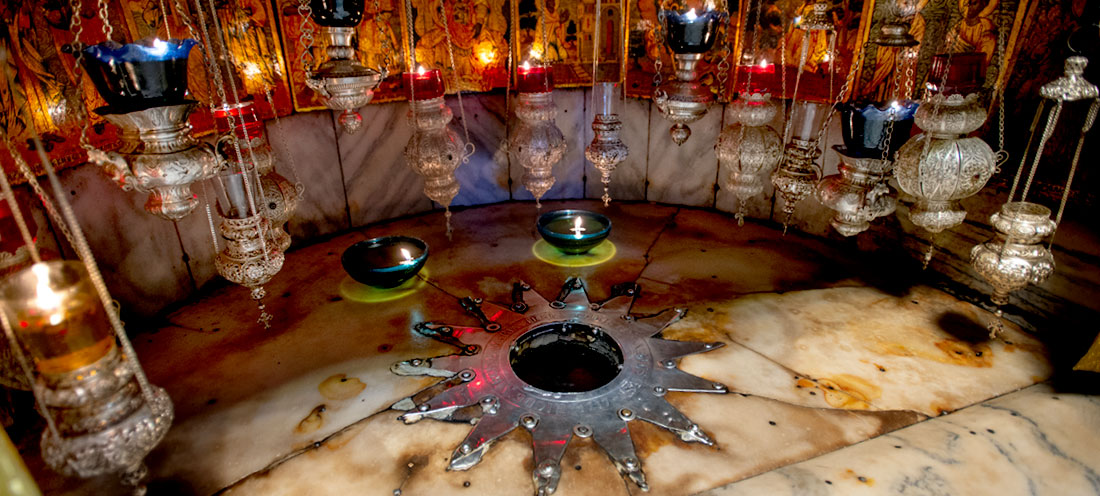
The mystery of the star of Bethlehem
In the Gospel of St. Matthew we read:
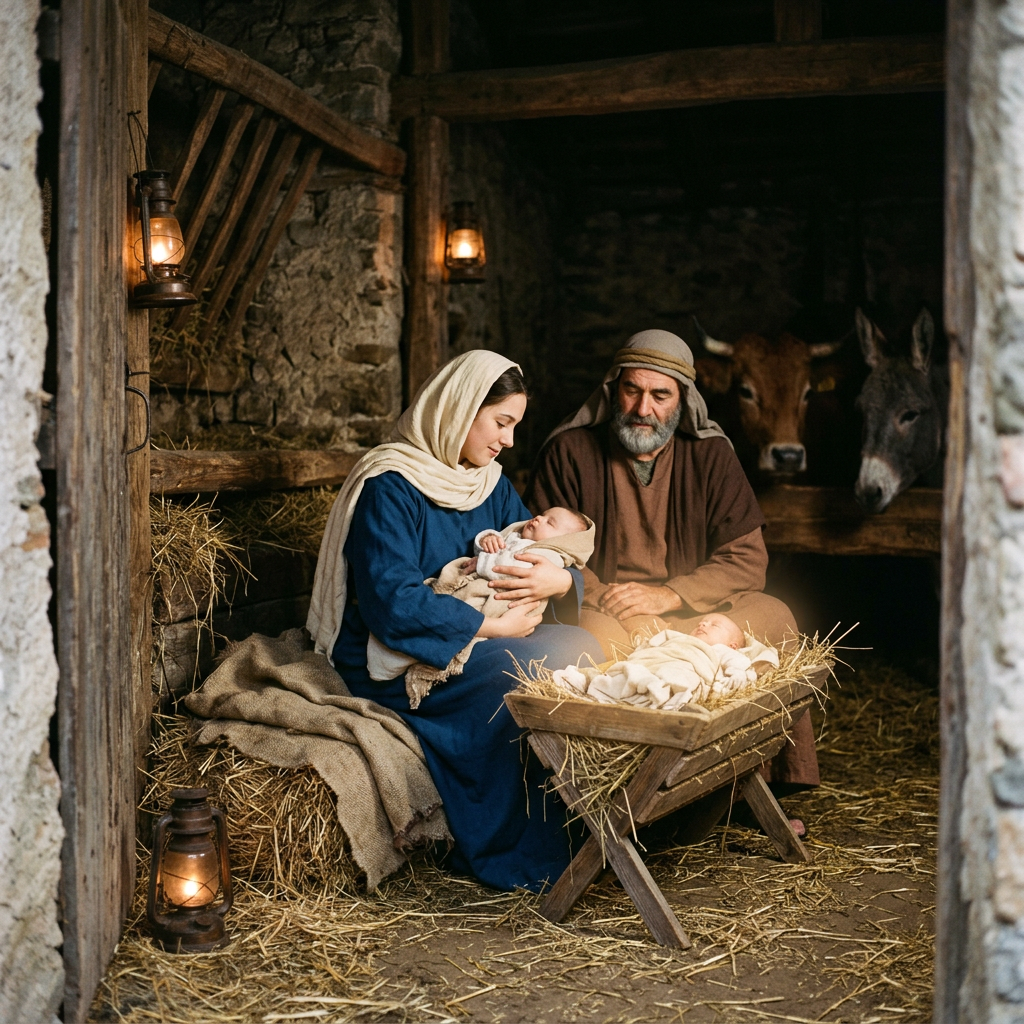
Now when Jesus was born in Bethlehem of Judea in the days of Herod the king, behold, wise men from the East came to Jerusalem, saying, “Where is he who has been born king of the Jews? For we have seen his star in the East, and have come to worship him.” (Mt 2:1-2).
In December 1603, the famous German astronomer Johannes Kepler noticed (a conjunction of) Saturn and Jupiter gave a much stronger light. After accurate calculations, Kepler stated that a similar phenomenon could have taken place in 7 BC.
To his amazement, this astronomer discovered a commentary on the Holy Bible. Written by Rabbi Abarbanel, which shows that the Jews believed that the Messiah would be born exactly when the light of Jupiter and Saturn in the constellation of Pisces would be in conjunction.
As it turns out, such a belief was common in the nation of Israel. This is confirmed by a medieval Hebrew commentary on the Book of Daniel.
It is scientifically stated that the famous ancient Babylonian Astrological School from the city of Sippar on the Euphrates taught that from 7 BC the “Lord of the World” should be expected in Palestine.
Finding and reading the cuneiform writings of the Star Calendar from Sippar in 1925 is evidence that Babylonian astronomers stated that in 7 BC, the conjunction of Jupiter and Saturn (29/5, 1/10 and 5/12) was exceptionally visible on three occasions.
This kind of super-imposition of these two heavenly bodies occurs only once every 794 years. The credibility of this data is confirmed by modern astronomy.
The so-called planetary table is stored in Berlin. It is a papyrus where Egyptian astronomers have precisely written all planets’ movements from 17 BC to 10 AD.
These observations confirm the calculations of Kepler, that in 7 BC the conjunction of Jupiter with Saturn was most visible in the Mediterranean area.
Historians are amazed by the fact that at that time when Christ was born, there was a widespread expectation of the coming of the Messiah not only among the Jewish people, but other nations were also expecting the birth in Judea of the Lord of the World to come soon.
It is therefore a historical fact that in the time of Jesus, the whole pagan world also focused on Palestine in a widespread expectation that the ruler of the world would appear in Judea. Roman historians from the turn of the first and second century have written about it: Tacitus in The History and Suetonius in The Life of Vespasian.
A singular and unique phenomenon
The uniqueness of Judaism and Christianity is due to the fact that the coming of the Messiah was predicted by the Prophets of the Old Testament during the twenty centuries before His birth in Bethlehem.
Muhammad, Buddha, Confucius and all other founders of religion were not announced and expected.
The Messiah – Jesus Christ – announced in the prophecies is the most important figure of the Old and New Testament. So, from the very beginning of the history of the Chosen People, Jesus was announced and to this day He is worshiped as the Saviour God-Man.
The fact that He has been worshiped as the Messiah for 40 centuries goes beyond all historical accuracy. Judaism and Christianity are the singular and unique phenomenon in the history of all religions.
To recognise that the expected Messiah in the Child Jesus, could be born in total poverty in a Bethlehem stable, was exceptionally difficult. However, to recognise Him as the true God who became man was humanly impossible.
It should be remembered that the Jews worshiped Yahweh, who was transcendent, inexpressible; He could not be imagined, and even less represent Him in images or say His name.
For the Israelites to state that a man is God was the greatest sacrilege and blasphemy. That’s why the main reason for the condemnation of Christ to death was that as a man He considered Himself God (cf. Mt 26:63-66).
Also, Muhammad and the religion of Islam, which he initiated, is an expression of this Semitic scandal, protest and rebellion against Christianity, which says that the man Jesus is God. Around the dome of the Jerusalem Mosque of Omar, which is one of the most important for Muslims, there is an inscription that makes Christians aware that:
“The Messiah, Jesus son of Mary, was only a Messenger of God, and His Word which He conveyed unto Mary, and a spirit from Him. […] Far be it removed from His transcendent majesty that He should have a son.”
Belief that Jesus the man is a true God, that He began in the womb of the Virgin Mary and was born like any other person, was something so absurd for the mind and beliefs not only of the Israelites, but also pagans, that no one healthy in the mind would be able to allow himself to think about Yahweh being in a specific place and a specific moment of history.
The widespread expectation in the time of Jesus for the coming of a messiah, who as a man will be the messenger of God, caused many to appear announcing that they were the messiahs.
Among them were Barabbas, Theudas, Bar Kokhba and others, who organized armed rebellions against the Romans, but after their death and the suppression of uprisings, no followers remained after them, and the memory of them quickly passed away.
However, after the shameful death of Jesus Crucified and within the backdrop of Judaism, faith in His resurrection was immediately born, as well as being a true man He is also the true God.
Faith in the resurrection and the deity of Christ was expanding with incredible dynamism throughout the Roman Empire through the first followers who were Jews.
The truth that Jesus is a true God was proclaimed at risk of life right after His death and resurrection, which is expressed by the texts of the converted Jew Saint Paul:
“Therefore, God has highly exalted him and bestowed on him the name which is above every name, that at the name of Jesus every knee should bow, in heaven and on earth and under the earth, and every tongue confess that Jesus Christ is Lord, to the glory of God the Father”(Phil 2:9-11).
For the researcher open to the truth it becomes obvious that the formation of Christianity is undoubtedly one of the greatest miracles in history and that it can only be the work of God Himself, who was born as a real man in the Bethlehem stable, so that through His life, passion, death and resurrection He gives the chance of salvation for every person. Only people “who by their wickedness suppress the truth” (Rom 1:18) are closed to the acceptance and recognition of this fact.
When was Jesus born?
Of the numerous Jewish and Christian texts, as well as the writings of Roman historians: Tacitus, Pliny the Younger, Suetonius, and Jewish historian Josephus Flavius, the result is the obvious fact of the historical existence of Jesus.
Of all the historical figures of antiquity, Jesus Christ has the richest and most documented biographical material.
Jesus was born when the ruler of the Roman Empire was Emperor Octavian August (30 BC – 14 AD), and Herod the Great was the king of Judea (37 BC – 4 AD).
In 525, Pope John I ordered the Scythian monk Dionysius the Humble (Dionysius Exiguus) to determine the exact year of the birth of Jesus Christ.
According to Dionysius, Jesus was born in Bethlehem in 754 after the founding of Rome. However, contemporary calculations have shown that the monk had been mistaken in his counting by 6-7 years. Jesus was born in 747/748 since the foundation of Rome, i.e. in 7/6 before the new era.
Despite this mistake, the date of the birth of Jesus given by Dionysius became the beginning of counting the time of the “new era”. Jesus Christ is the greatest figure in human history. His birth caused the division of history into the “old era” – before Christ and the “new era” – after Christ.
The shocking truth of Christmas
What radically distinguishes Christianity from other religions is the shocking truth of Christmas: the true God has become a true man.
Giving birth as a defenceless child in Bethlehem, God overcomes the infinite distance dividing us from Him, caused by our sins. Guided by selfless love, the Creator becomes a real man, takes on the sins of all people and resurrected He accomplishes the final victory over Satan, sin and death, enabling us to unite with Him in love.
Saint Gregory Nazianzen does not hesitate to write that God becomes man to allow every man to become God.
Love between God and us will never be born in a situation of necessity or coercion, but only if there is complete freedom of choice. That is why God, manifesting Himself in Jesus Christ, remained “hidden” out of respect for human freedom.
He did not want to enslave us with the omnipotence of divine beauty, and therefore Jesus’ deity remained “hidden” in His humanity, and it was only possible to recognise it by faith. The Baby Jesus is therefore a revelation of humble love and the Triune of God and at the same time a tribute to human freedom.
His divine, almighty love is expressed in the vulnerability of the infant in Bethlehem and in the humility of the servant who washes feet (cf. Jn 13:8), and to open our way to heaven He takes the sins of all people, experiencing the resulting terrible suffering and death.
In Jesus’ humanity, we can discover the mystery of God, who is one, but in three persons: the Father, the Son and the Holy Spirit. This mystery is only available by faith, “which works through love” (Gal 5: 6). Then Jesus’ words become understandable: “And he who sees me sees him who sent me” (Jn 12:45); “I and the Father are one” (Jn 10:30).
In the mystery of Christmas, we also discover the joyful truth that by becoming a true man, God “has united Himself in some fashion with every man” (Gaudium et Spes, 22).
Thanks to the mystery of incarnation, every human being has the infinite dignity of God’s child and the inalienable right to life from the moment of conception to natural death and the right to freedom of conscience.
The dignity and value of man is not determined by the social class from which he comes, the colour of his skin, his IQ or the state of his health, but only his humanity, which is holy, because God himself identifies with him: “As you did it to one of the least of these my brethren, you did it to me” (Mt 25:40).
So, Jesus is always united with every person, whom He wants to lead through all life’s experiences to full happiness in heaven. The problem is only on the side of man whether he will agree to this and accept the difficulties of life each day with faith.
The mystery of Christmas is constantly renewed. Jesus Christ – the Incarnate God – constantly comes to “his own” but, unfortunately, there are still those today who – as in Bethlehem – do not want to let Him in (cf. Jn 1:11).
Only in the person who takes up the difficulties of life according to the principles of the Gospel, continues in daily prayer, rises from every fall in the sacrament of confession and accepts Jesus in the Eucharist as his daily bread, sees “the miracle of the Holy Night renewed upon altars bedecked with lights and flowers: ‘And the Word was made flesh’.” (Saint Edith Stein).