Revolutionary leaders sought to reset society from the ground up: to forge a ‘new France’, raise up ‘new Frenchmen’, and, in time, create a ‘new man’. From their perspective, the Catholic Church stood in the way of these ambitions; in truth, she did so not out of hostility to genuine reform, but because she safeguarded enduring truths about God, the human person, and the common good – truths that resisted utopian social engineering.
To Kill a Priest!
“To kill a priest!” The chilling cry of a Jacobin commissioner, Joseph Chalier – remembered as the “executioner of Lyon” – captures the animus that drove part of the French Revolution’s programme against the Church. In 1793 he boasted: “Priests are the only cause of misery in France. The Revolution, which is a triumph of the Enlightenment, only with disgust can watch the prolonged and painful demise of this band of scoundrels.” Such words found legal cover in the Civil Constitution of the Clergy of 1790, which became the pretext for a systematic campaign against the Catholic clergy. The persecution reached its terrible height in the early years of the First Republic (1792–1794), amidst a terror in which the overwhelming majority of victims were ordinary French men and women. Historians have long noted that nearly 80 per cent of those sent to the guillotine came from the “third estate” in whose name the Revolution had begun.
The revolutionaries sought nothing less than to “begin the world anew”: to fashion a new France, new Frenchmen, even a “new man”. They understood, however, that the Catholic Church – rooted in the sacraments and in a concrete, incarnational faith – stood in the way of any attempt to refashion humanity. They also knew that the priesthood was indispensable: only a priest can offer the Holy Sacrifice of the Mass and bring Christ in the Eucharist, the source and summit of the Church’s life, to the faithful. Remove the priest and the sacramental heart of the Church is struck; drain the source, and the stream of faith is imperilled.
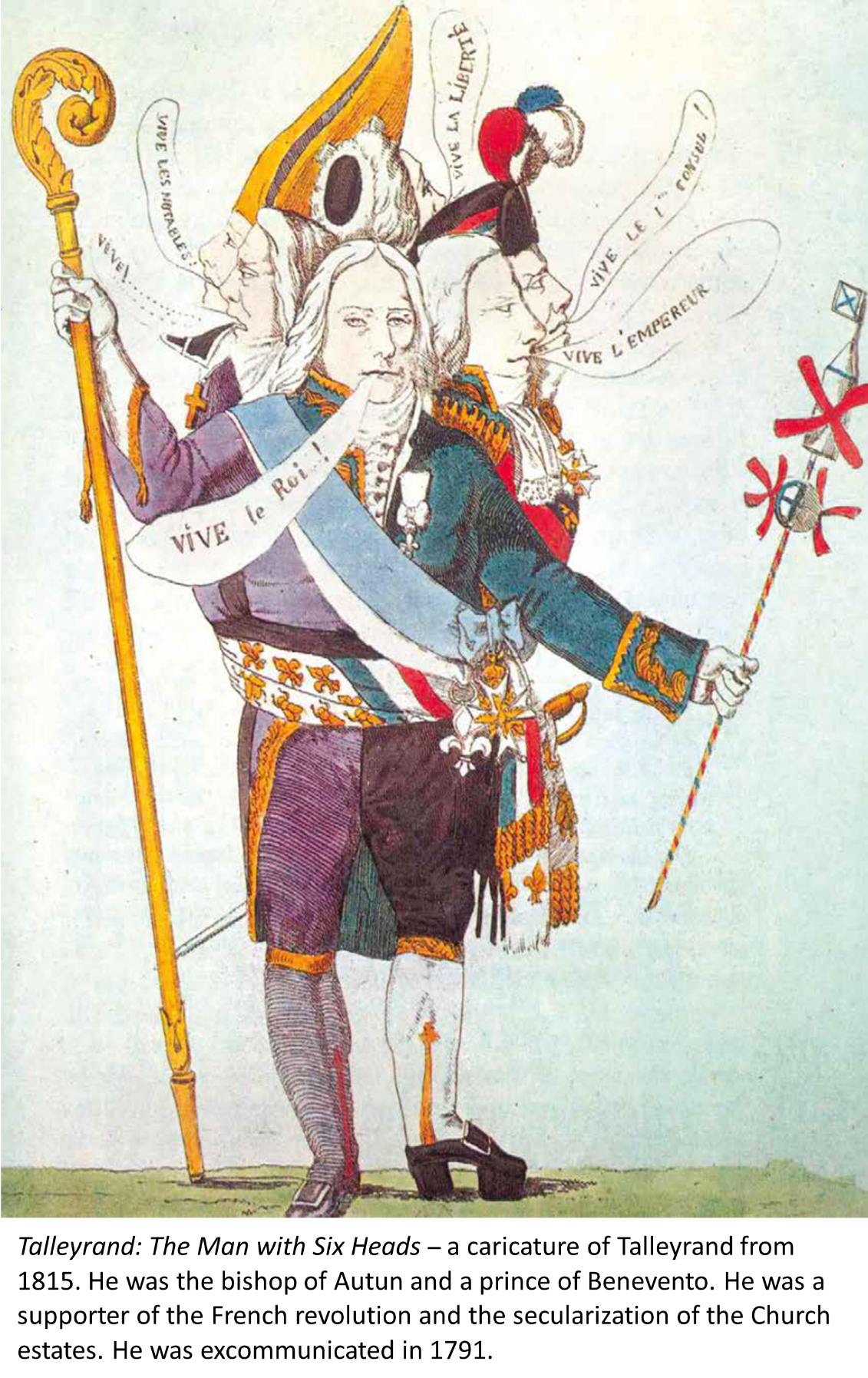
Some of the Revolution’s leaders had been shaped within the Church and understood her inner life. Joseph Fouché, later a prominent Jacobin, had been formed among the Oratorians; Charles-Maurice de Talleyrand was himself a bishop. They knew precisely where to strike. On 27 May 1792, the authorities ordered that all clergy who refused the oath to the Civil Constitution be deported to overseas colonies. On 18 March 1793, refusal of the oath became, in effect, a capital crime. Lay faithful, too, faced death if they sheltered “non-juring” priests, attended their Masses, or sought the sacraments from them.
Scholars estimate that around 3,000 Catholic priests in France gave their lives for the faith during the Revolution. Many were condemned to the guillotine after proceedings before Revolutionary Tribunals that mocked due process and, often, the faith itself. Surviving records show that these courts set out not only to condemn a man, but to deride the priesthood and the sacramental order it serves. In Orléans, for example, the Jesuit Fr. Julien d’Herville, who refused the oath, was sentenced to death in 1793. The tribunal’s inventory, written with scorn, listed “all the means necessary to practise fanaticism and superstition”: a scapular, medals, a small round box with “charmed” bread – consecrated Hosts – a large silver cross, a silver heart and a crystal reliquary. What the court mocked, Catholics recognise as signs of devotion and the very presence of the Lord.
Another tool of repression was transportation to lethal climates. French Guiana became a notorious destination, all the more deadly for those already weakened by months in prison. In late 1793 and early 1794, hundreds of priests were sentenced to this exile. At the mouth of Bordeaux’s harbour, 829 priests were confined on moored barges for more than half a year while they awaited passage. Given meagre rations, deprived of medicines and forced to live in squalor, 547 died before a single ship set sail. Yet their witness in those conditions was unmistakably Christian. Sustained by prayer, they continued to minister to one another, especially through the Sacrament of Confession. Their fidelity foreshadowed the fate of the thousands of Catholic priests who would later perish in the extermination camps of twentieth‑century totalitarian regimes. In 1995, Saint John Paul II beatified 64 of the priests who died in those utterly inhuman conditions while awaiting transport to Guiana – what some have called a “Dachau” on barges. As the Holy Father observed, even in the depths of agony they kept a spirit of forgiveness, holding the unity of the faith and the unity of their country as causes of the highest importance.
A Totalitarian Shake-up
By 1793, revolutionary France had set itself on a course of radical de‑Christianisation. In practice, the public profession of the Christian faith was proscribed. Not only ‘refractory’ clergy who refused the oath, but also those who had accepted the Civil Constitution of the Clergy, together with the faithful at large, found themselves unable to live and worship openly as Christians.
The irony was stark. This was the land that celebrated the Declaration of the Rights of Man and of the Citizen and proclaimed ‘Liberty, Equality, Fraternity’. Yet deeds spoke louder than slogans. The clear aim was to drive Christianity from both the public square and the human heart. Such a sweeping remodelling of mentality and daily life, executed through the machinery of the state, bore all the marks of a totalising ideology.
Worship was suppressed: the Holy Mass and the sacraments, beginning with baptism, were forbidden. Even time itself was redefined. The new republican calendar counted years not from the birth of Jesus Christ but from the founding of the Republic in 1792. As Fabre d’Églantine, one of its architects, explained: ‘A long habit of calculating time according to the Gregorian calendar has filled people’s memories with many ideas long respected and the source of their religious errors. We must replace these visions of ignorance with the reality of reason, the priest’s office with nature’s truth.’
The seven‑day week was replaced by a ten‑day ‘décade’. Sunday rest and worship were outlawed and superseded by a compulsory ‘festival of the décade’; major Christian feasts, including Easter and Christmas, were likewise banned. Even sound was to be purged of Christian meaning. Church bells – dismissed in revolutionary propaganda as ‘priests’ kettledrums’ that roused ‘ignorance and fanaticism’ – fell silent.
Public space was systematically stripped of Christian symbols. France, long called the ‘eldest daughter of the Church’, saw many of her churches threatened, including the great Gothic and Romanesque cathedrals. At one point, a Jacobin deputy even proposed levelling all church spires in the name of equality, arguing that buildings so visibly ‘higher’ – and associated with what he denounced as ‘superstition and fanaticism’ – could not be tolerated.
A fair reading recognises that not every revolutionary shared the most extreme measures. Even so, the state’s drive to recast culture and conscience inflicted grave wounds on religious freedom and the common good. The Church, for her part, endured – quietly, often heroically – bearing witness to the truth that authentic liberty is not secured by silencing faith, but by safeguarding the right to worship God and to order society in accord with reason and the Gospel.
Totalitarian Vandalism
Although the bill ultimately failed to become law, France was not spared a wave of revolutionary iconoclasm. Historians who study what they term “totalitarian democracy” speak of a “martyrology of French cathedrals”, for it was the Church’s great sanctuaries that bore the brunt of those determined to “start the world anew.” Many masterpieces of sacred architecture – today recognised by UNESCO as World Heritage – were grievously damaged by those convinced that faith and memory must give way to ideology.
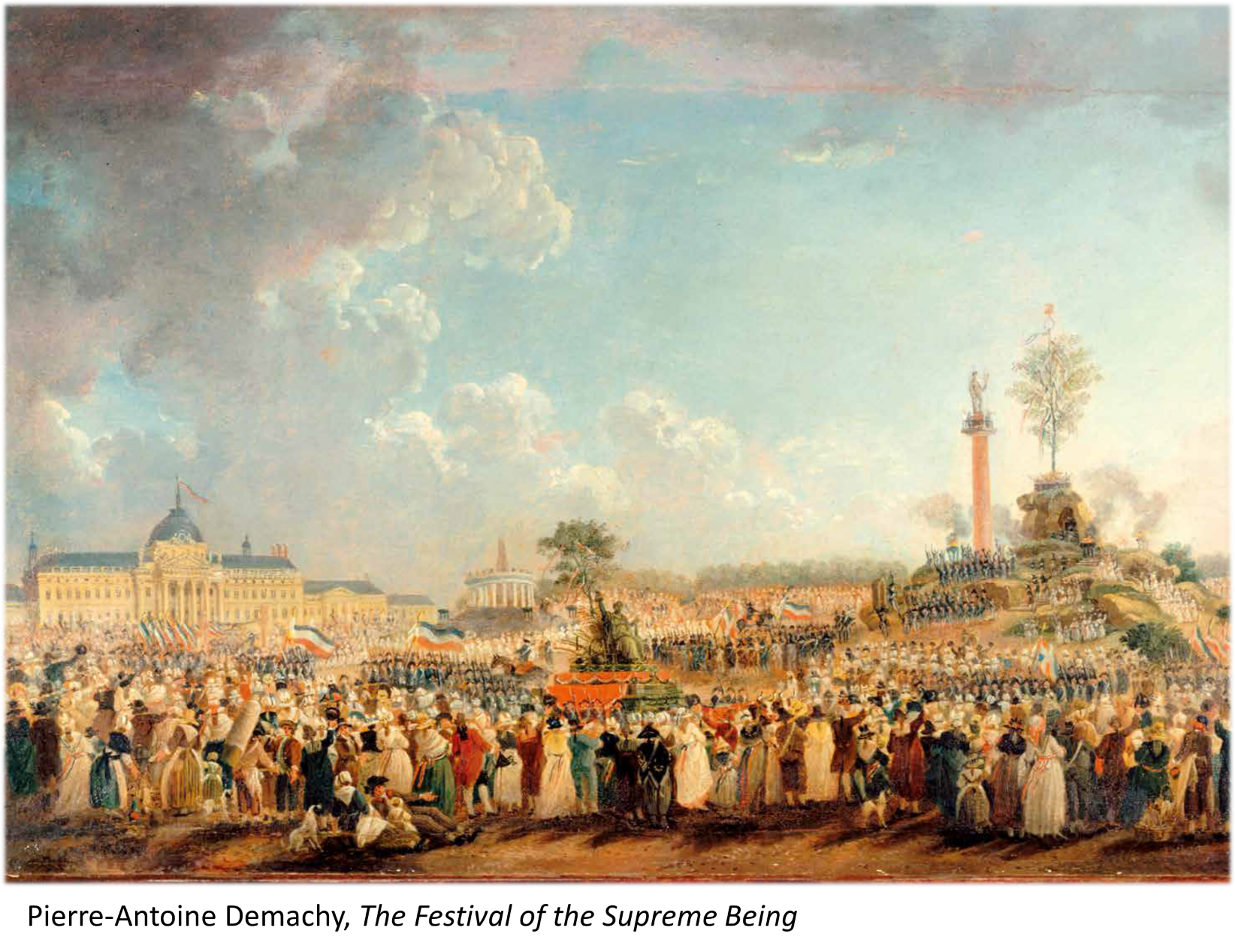
A particularly poignant example is Notre-Dame de Paris. In 1792, soon after the proclamation of the Republic, the revolutionary authorities of the Paris section in which the cathedral stood began stripping it of its treasures. Priceless liturgical vessels and ornaments – chalices, monstrances, crucifixes – and reliquaries, including those of Saint Marcel and Saint Vincent de Paul, were seized. Shortly afterwards, the Jacobin authorities of the capital, the Commune of Paris, ordered the destruction of the spire because it “sinned against equality” (as reported by F. Souchal). The haunting image of the spire’s collapse that the world witnessed in 2019 recalls that first catastrophe in 1792, then a deliberate act carried out in the name of a revolutionary ideology. The west front, with its statues of the Old Testament kings of Judah and Israel, was attacked and, in 1793, the figures were entirely destroyed because, in the words of the Commune, they “supported religious superstitions” and “brought back the detestable memory of kings.” Other sculptures, inside and out, were also defaced. The hostility to Christian worship was stark: the statue of Our Lady on the north transept portal survived, but the figure of the Infant Jesus in her arms was smashed. The profanation reached its climax when, in 1793, the cathedral was transformed into a “Temple of Reason”, and in 1794 it hosted ceremonies for the cult of the “Supreme Being”, devised to supplant the worship of the Triune God. Similar ritualised takeovers of churches were enacted across France.
Perhaps the most grievous loss was the destruction of the Romanesque basilica at Cluny. For centuries it had been the most splendid church in the West and the mother-house of the Cluniac Benedictine reform, which in the 11th and 12th centuries so profoundly aided the renewal of the Church (the Gregorian Reform) and, with it, Western civilisation. In 1792 Cluny was desecrated and then sold as “national property” to local “honest citizens”, who treated the basilica as a quarry. The great edifice was levelled, erasing from the earth the largest church in Christendom until the 16th-century completion of St Peter’s in Rome – an edifice consecrated by popes: the high altar by Blessed Urban II in 1095, and the completed church by Pope Innocent II in 1130.
Chartres Cathedral – by common consent the supreme achievement of Gothic art and now a UNESCO World Heritage Site – very nearly suffered the same fate. In 1793 it was desecrated and sacked, then sold to a businessman for the value it would yield once reduced to rubble. Only a practical obstacle spared it: he lacked sufficient land to store the stone. Even so, the scarred face of Christ the King on the Royal Portal still bears silent witness to the tragic consequences of a revolutionary bid to “begin the world anew.”
It is only even-handed to acknowledge that not every participant in the Revolution approved of such acts, and many ordinary Frenchmen lamented the ruin of their churches. Yet the record is clear: when an ideology promises total renewal, it often turns against the faith, memory, and beauty that nourish a people. The Church’s patrimony, entrusted to us by our forebears and consecrated to the glory of God, demands vigilant stewardship – so that zeal for novelty never again eclipses reverence for the true, the good, and the sacred.
21/01/2026