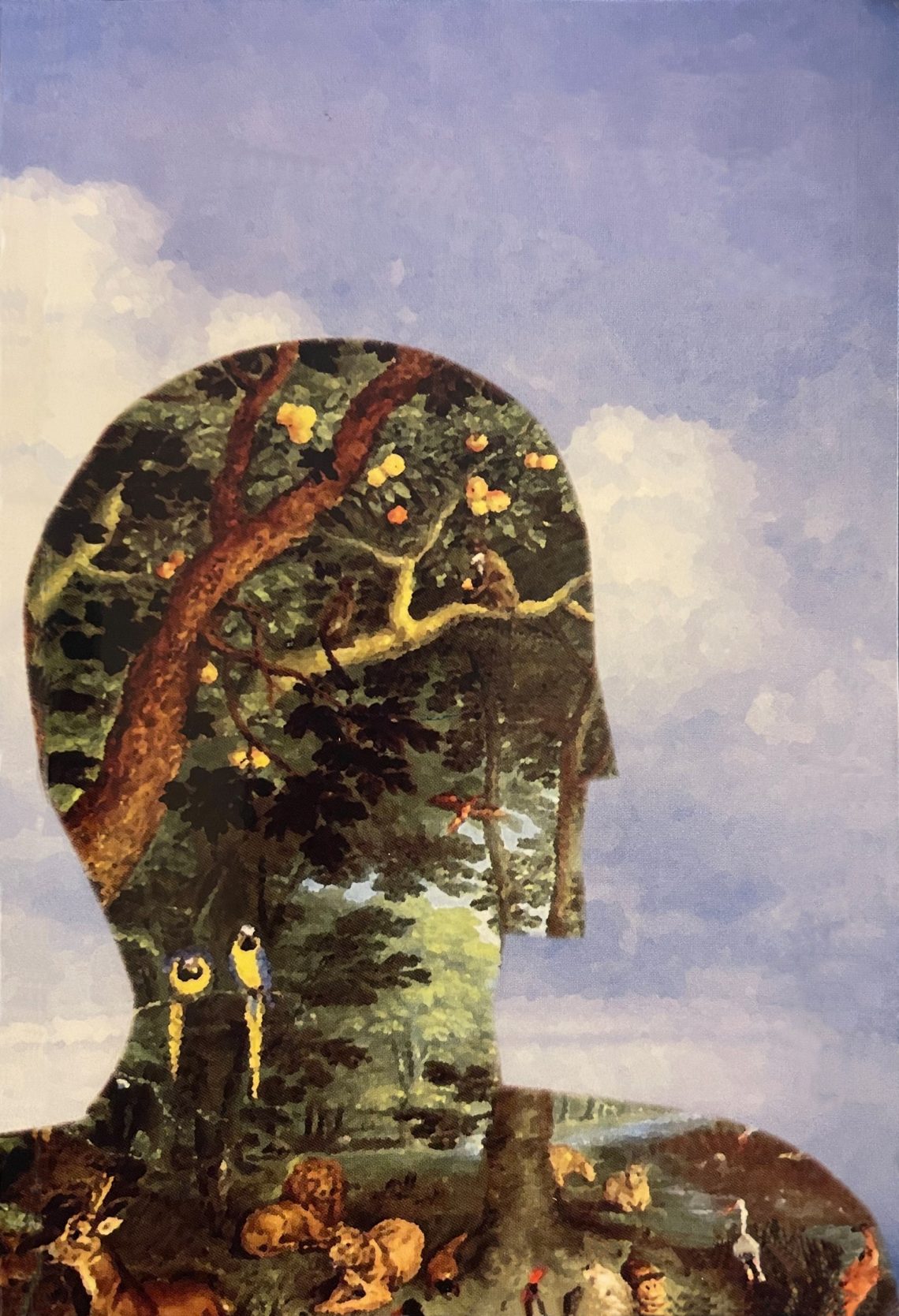
valerio albisetti
Imprimi potest
Rev. Fr. Peter Filas, provincial
1.dz. 610/P/2009
Throw out regimens – live boldly
from the book with the original title of Felici di essere nati by Valerio Albisetti
Contents
Introduction
How strange and mysterious life is.
It’s two thirty in the morning.
Absolute silence.
I lie on the couch, and I can’t sleep. I look at the lights on the opposite bank of lake Como, forming short parallel lines. It seems to me that I live in an enchanted place, as if in a Christmas manger scene. I’m overwhelmed by this magic and almost bewildered; I thank God and I’m writing to you, dear readers, while through the partly opened window, along with the darkness of the night, there’s a refreshing breeze from the lake.
I also feel that sleep escaped with this night.
Writing to you makes me feel useful, counting the hours, watching the birth of the day, listening to the constantly joyful chirping of birds waking before five in the morning.
My readers know that ten years ago, when my father died, I left Italy and went to lecture at South American universities. This decision incised radically, maybe even too quickly, the final existing ties with my parents; On the other hand, this choice gave me autonomy, independence, and freedom.
And loneliness.
I didn’t know that from the day I left Europe, I was to live in an unknown, difficult, new world.
I didn’t know, but from that day – so I thought – I was temporarily taking a break from my profession, but I would never return to it.
I didn’t know, but from that day I, who was a strong and healthy man, would begin to get sick slowly and imperceptibly.
I didn’t know but, from that day, I, who was used to the love and warmth of so many friends, was to experience feelings of loneliness and physical isolation.
That day, I lost my security and the reference points that had accompanied me so far.
When I returned, there were no longer any friends, I wasn’t able to renew contacts with newspapers, magazines and television, I found myself in a difficult financial situation, I sold my apartment in the city and lived on a farm in Tuscany.
I didn’t know, but for several years I was to live in complete isolation.
Later, step by step, I returned to populated places, renewed a few old friendships, sometimes I provided a consultation, but I was no longer that Valerio; I had changed.
Entirely.
Definitely.
One day in my cottage, as I organised papers, notes, and texts written during these years, I don’t know why, but I suddenly experienced a mysterious illumination – it was a very intense experience that I had never experienced before. I remember that I fell into a hypnotic state, without any sense of time, as if outside of space. Then I clearly saw the purpose that I was to pursue in the following years: internal peace.
I have always tried to keep the peace that I experienced at that time and ever since.
For almost a year, perhaps because my physical health was leaving me, or perhaps because I entered the difficult period of middle age, existential isolation very much burdened me, and the internal peace that accompanied me in those years seemed to leave me.
I was left with writing.
An opportunity to communicate with you, who have been reading me for years and shown me heartfelt interest.
That’s why I would like to talk to you about life at peace with yourself.
LIFE AT PEACE WITH YOURSELF
Living in harmony with your conscience, in harmony with the precepts of the Gospel, means connectivity with the depths of oneself, with one’s own heart, where God lives, where inner peace is found, a place of quiet, calm, extraordinary charity and comfort.
For example, a wife who cheats on her husband, or vice versa, learns to live in a lie, is full of hypocrisy, she has to hide, so that she’s not found out, she looks for subterfuge, is occupied with inventing excuses, she slowly and inevitably falls into dishonesty, and this, although she doesn’t realise it, constantly sucks the energy out of her, she moves further away from the truth, from inner peace.
From order in the heart.
Although she tries to convince herself and others that she’s alright, her conscience is no longer at peace.
And a calm conscience is perhaps the greatest treasure that a person can have.
You have to have the courage to live in accordance with your own values and learn to express them, to reveal them in the light of the day.
Consistently.
It was in these months that I had to end my acquaintance with one person, because she didn’t behave in a loyal, clear and honest way.
She hid her true nature even from herself.
She was still looking for excuses, an alibi; She had no courage to openly show her real aspirations.
Such a person will never be able to live in peace with themselves!
They don’t know how much energy and peace an honest, good and loyal life would give them.
Happiness is not in other people, but in ourselves.
In our interior.
You have to remain faithful to your values and express them clearly in everyday life.
There would be no need to draw on energy in order to falsify reality and hide your feelings and beliefs. On the contrary, you would have to testify to who you really are, to reveal your nature openly, genuinely and honestly; Be proud of your identity even at the expense of the dissatisfaction of those surrounding you and, above all, do not suppress your own feelings in order to satisfy another, and others.
There would be no need to reveal your own nature for another, or others, or even more to search for other’s approvals!
For example, in the current historical period there is improper abuse of sexuality, marriages fall apart after a few months or after a few years, with or without children, and all in the name of youthful physicality, appearance, calculations . . . Despite everything, there remains the conviction as people, who believe in fidelity, that the inseparability of marriage should become our distinguishing feature, our lifestyle.
We believe in the sacraments of the Church.
The sacraments are not meaningless rites imposed by the Church hierarchy, as some people think incorrectly, but they are truly saving moments, the source of internal peace and order in the heart.
Living in harmony with the sacraments, we learn to live well, we experience this inner joy, the happiness possible on this earth in anticipation of eternal happiness.
However, consider how you view those who believe this.
We live in a time when there are many lost people, illiterates from the point of view of true love, but conceited, because they believe that they are right, that they know about love more than others.
However, we prefer to obey the Lord’s Law, not temporary fashions, social and cultural tendencies.
For example, think about the fact that as soon as we are born, we get baptised, we become Christians, children of God!
In the sacraments, God blesses us, addresses us personally, gives us His peace, His happiness, His strength.
How many times my patients, people I meet at conferences and seminars, asked me during the consultation: “How are you doing?”
I just answer: “I live in harmony with the sacraments.”
If only you knew how much it helps me remember that I was baptised!
First of all, baptism gave me my name: Valerio, and nobody would take it away from me; However, it is not about the name itself, I could have any other, but that God called me through baptism . . . He made me His child.
If I didn’t remember that I am a child of God, I would have long been broken going through the various motions of life, the difficult and painful situations in which I found myself.
How many times I cried, how many times I saw my happiness crossed out, but later hope always returned to me.
Thank God.
You know, I have not been loved from childhood, but there was never a shortage of God’s Father’s love.
I put my whole self in Him.
How much the sacrament of confession helps, when I go wrong, when I make a mistake, and sin!
God gives me the opportunity to repent, change the way I refer to myself, to another, and to others.
The sacrament of confirmation was given to us just before entering adolescence, the most troubled period of existence, when a person’s identity is not yet well defined and clearly outlined. Confirmation gives me the certainty of my identity!
And marriage that gives us the strength to stay together throughout our lives . . . even – and above all – in difficult times when it would be convenient to leave, to break the promise of fidelity.
We should think more often about the grace of the sacrament of marriage in our common life, to see difficulties in their proper dimension, to overcome the forces of darkness that want to separate us from the spouse God has given us.
And in the Eucharist, when we receive communion – incredibly – we have the fantastic opportunity to eat the bread that gives us eternal life!
Jesus said to them, “Truly, truly, I say to you, it was not Moses who gave you the bread from heaven, but my Father gives you the true bread from heaven. For the bread of God is He who comes down from heaven and gives life to the world.” So they said to him, “Lord, give us this bread always.” Jesus answered them, “I am the bread of life. Whoever comes to me will not hunger; and whoever believes in me will never thirst. But I said to you, You have seen Me, and yet you do not believe. Everything that the Father gives Me will come to Me, and whoever comes to Me I will in no way cast out, because I came down from heaven, not to do My own will, but the will of Him who sent Me. This is the will of Him who sent Me, that I should lose nothing of all that He has given Me, but raise it up on the last day. For this is the will of my Father, that everyone who sees the Son and believes in Him may have eternal life. And I will raise him up on the last day.”
But the Jews murmured against Him because He said, “I am the bread that came down from heaven.” And they said, ‘Is not this Jesus, the son of Joseph, whose father and mother we know? How can he say now:
“I have come down from heaven.” Jesus answered them, “Do not grumble among yourselves. No one can come to me unless the Father who sent me draws him; and I will raise him up on the last day. It is written in the prophets: They all will be disciples of God. Everyone who has heard from the Father and received the teaching will come to me. This does not mean that anyone has seen the Father; only he who is from God has seen the Father. Truly, truly, I say to you, whoever is in me believes, has eternal life.
I am the bread of life. Your fathers ate manna in the desert and died. This is the bread that comes from heaven: He who eats it will not die. I am the living bread that came down from heaven. If anyone eats this bread, he will live forever. The bread that I will give is my flesh, given for the life of the world” (John 6:32–51, RSV).
The sacraments are therefore concrete experiences, experienced in everyday life and renewed so that we can remain at peace with ourselves and feel inner peace even in difficult situations; to never lose hope, even when moments of darkness come that may seem hopeless – because through the sacraments we remain connected to God, and He will never abandon us.
This is why we should act in accordance with our beliefs, according to the hope that is within us.
And always be proud to express who you are.
To truly live simply means not to be ashamed of ourselves.
Life is short, time is limited, we should not waste a single day without expressing our distinctiveness, our uniqueness and individuality.
What we believe in.
We will not return to this earth, and we should not lose the opportunity to be ourselves.
Besides, living in this way fills you with infinite energy and vitality.
From the moment I believed in myself again, when I returned to participating in the sacraments, to feeling like myself, I felt a new surge of energy and an old strength.
The will to live.
This seems like a miracle to me.
I always believed in what I thought, said and wrote, and then I abandoned it.
Perhaps I had to experience difficulty, a fall, so that I could get up and stand.
Stronger than before.
Because when you get up after falling, you are doubly happy; firstly – because you got up, secondly – because you had the courage to get up and you did it.
You have proof that you can get back up. And you never forget that.
It remains in your heart and no one, whatever they say or do, can change what you know.
I never believed people who spoke and wrote about things they had not experienced in themselves, and felt in their guts, in their blood.
Experience teaches many things.
Maybe that’s why there’s writing and writing. There is writing that moves you deeply, shocks you, is alive . . . because it comes from experience.
There are also writings that, although perfect, do not move, do not give life or hope.
DECIDE TO BE YOURSELF
We often encounter people who try to control us, manipulate us, change us, often in a hidden, insidious way, disguised in warm, nice words, as if they were doing it for our good.
Anyone who has been reading my books for some time knows that this is not true and won’t easily fall into these traps, especially in encounters with people and in emotional relationships.
Another person, if he is not really aware of himself, will be influenced by what is weak and fragile in himself – each of us has something like that – and he won’t tell you straight to your face what he really thinks.
How many illusions, and how many dreams, promises, desires have been sold out.
Which doesn’t help anything.
We live in a society that values this type of behaviour and attitude, we see it on TV screens, in books, magazines and newspapers. Mass media too often emphasise the external aspect, image, appearance and in this way, they maintain the illusions.
In this period in history, perhaps like never before, the ability to look internally, to enter into oneself, to be oneself in an authentic way, has been lost.
We probably don’t even know who we are.
Yet we do everything.
We get engaged, we get married, children are born, then we look for new experiences, we break up, we leave children . . . and we don’t live a full, complete life because it’s too tiring, too involved and too much responsibility.
However, all this means a lack of meaning in basic values, a superficial life.
Life and reality call us to be responsible for creating our own story. And no one can do this for us.
It has to be like that.
No one can live by proxy.
What kind of life would that be?
What mysterious reason would we have appeared on this planet for?
Everything I believe in, my vocation, my mission to fulfil, my earthly journey, my individuality and uniqueness would collapse.
Moreover, let’s be honest and authentic with each other. Why do we present ourselves not as who we are, but as who the other person would like us to be?
They say, it’s so as to deceive.
How little dignity there is in this.
How little honesty.
How little respect for our true being.
If someone, even without realising it, does not respect himself, he will also not be able to respect another person.
The relationships he enters into, even if he doesn’t want it, will be opportunistic, egoistic, narcissistic.
And if he lies to himself, even without knowing it, he will also lie to another.
When we fall into the snare of such people, when we establish relationships with them and for months, years, we live them, and we risk losing ourselves.
If we don’t remain healthily focused on ourselves, on our true values, on the mission we have to fulfil, we will inevitably fall victim to these predators, these thieves of the energy and vitality of others, these people incapable of: an independent life, on their own; of their own strength; with autonomy and freedom.
You need to be careful with people who never criticise you, who constantly compliment you, want to delude you, never engage in discussions, who don’t communicate, say little, do not express their feelings, justifying their rift with the family they come from or other excuses.
Above all, stay away from people who constantly try to please others.
They fill you with illusions, dreams, unreality.
They want to seduce you, steal your soul.
They are the real adversaries.
You will never be happy with them.
From those who will never let you grow.
Who try to take away your energy, strength, vitality.
Read on this topic: To be a friend or to have a friend?
INTERIOR PEACE
Unfortunately, we live in a society where there is little or no talk about inner peace.
It is a forgotten concept, a word that has disappeared, is gone.
Our society is dominated by profit, money, success, competition, constant movement, noise, having rather than being, rather than inner peace, spirituality, and silence.
Some people today direct their existence outside their soul, tensely looking for happiness, an ideal person, a favourable situation.
They don’t know, they don’t want to know, that a person has to look for happiness in the opposite direction.
In your own soul.
Inside each of us.
In your own heart.
They want money, and when they have it, they then worry about losing it – just like other things.
They are always looking for something or someone who can give them happiness and peace.
Unbelievable.
Our times are characterised by the highest level of technology, and at the same time they seem to be the period of the greatest ignorance and illiteracy in the sphere of spirit, feelings and emotions.
Something is not working in our humanity, and relationships are an example of this. Often people who live together do not love each other but use each other.
They cannot love.
They have lost the true and deep meaning of the word love.
They often seek relationships to fill a personal void, to have company, to play a social role, to feel loved, for lack of feelings, for sex, for comfort, for conformity, for fear of living alone, to hide their shortcomings – and not because that they want to share with others, that they respect and honour them.
On the other hand, perhaps the idealisation of emotional relationships is the main reason for the crisis of marriage. Probably, if we assumed that a relationship with someone does not have to be a source of happiness, although it can be a factor that gives life ultimate meaning, many marriages would not fall apart.
People break up and yet still want to get married.
People today want to experience everything.
Once they get something or someone, they want something, someone else.
They are insatiable.
Never happy, never satisfied.
What they have is never enough for them.
They won’t be satisfied with anything.
They have lost the sense of boundaries.
Humility.
In our culture, everything is allowed, its participants already have a lot, but they would like to have even more, in an endless, stultifying pursuit of something.
It is obvious that this type of mentality will never lead to inner peace and order in the heart.
Most people I meet are constantly looking for something or someone; It’s hard to find people who are happy with who they are.
How is it possible that humanity, after so many millennia of history, has forgotten that happiness is not about meeting ever new needs, but about stopping and looking inside.
Perhaps humanity is less free today than ever before, even though it enjoys prosperity like no other society in the past. Or maybe it’s just because of this reason.
The fact of having so much, of wanting even more, of being constantly unsatisfied, of believing that happiness will be found in something outside ourselves and not in what we already are . . . is the real cause of so much dissatisfaction.
I believe that all this is the reason for the great existential void often felt in our times. From a middle–aged man who believes he has found happiness in a young partner who says she loves him and then uses him and leaves him, to a frustrated woman who believes she has found happiness by leaving her husband, a life she thought was too boring, and in a more interesting life, in new and different relationships, and then realised that she was even more disappointed and lonely – all of them show that happiness is not about filling, having, but about getting rid of, losing, letting go .
Making an empty space inside yourself.
It is gaining distance from things. It means being free within yourself.
Seeing the crowds, he went up on the mountain, and when he sat down his disciples came to him. 2 And he opened his mouth and taught them, saying:
“Blessed are the poor in spirit, for theirs is the kingdom of heaven.
“Blessed are those who mourn, for they shall be comforted.
“Blessed are the meek, for they shall inherit the earth.
“Blessed are those who hunger and thirst for righteousness, for they shall be satisfied.
“Blessed are the merciful, for they shall obtain mercy.
“Blessed are the pure in heart, for they shall see God.
“Blessed are the peacemakers, for they shall be called sons of God.
“Blessed are those who are persecuted for righteousness’ sake, for theirs is the kingdom of heaven.
“Blessed are you when men revile you and persecute you and utter all kinds of evil against you falsely on my account. Rejoice and be glad, for your reward is great in heaven, for so men persecuted the prophets who were before you”. (Mt 5:1–13).
WHAT COUNTS
We know that human beings must go through a long period of gaining independence, probably the longest of any mammal, which lasts from the moment we are born, when we are completely helpless and don’t possess the things we need to survive, until we gradually adapt to reality, until we learn to walk, eat and drink on our own – until we learn to survive. Until we become autonomous, and independent.
Our entire existence is, in fact, a long process of gaining personal maturity, inner awareness that allows us to fully realise ourselves, our own personality. The same, in fact, as every other living thing on this earth, like flowers that open completely in the fullness of their bloom, like fruits that fulfil their mission of ripening, inscribed in their nature. And if they remained sour, could we say that they had fulfilled this mission?
The order of nature stipulates, among other things, that flowers and fruits reach their full beauty in the last period of ripening.
Just like human beings.
We should all strive for full development, for maturity, for our true nature. However, it seems that the beauty of maturity, the beauty of self–awareness, has been lost in our culture.
It also seems that the people of our time do not take the goal of maturity very much to heart.
Moreover, it appears that the winning model is the one in which we should not ask ourselves too many questions, not to want to know too much, and not to mature . . . exactly: it’s too much.
As if maturity and awareness were values from which you should escape, and not to conquer it!
If we look around, we will see that some people no longer seem to believe in their individuality and uniqueness. They prefer to aspire to visible roles, to status symbols, to functions, to become replaceable . . . following their neurosis, madness, unresolved complexes, following illusions, that they consider to be reality, instead of striving to achieve their own maturity.
Relationships between people, especially emotional ones, remain very fragile if we don’t achieve internal autonomy, personal maturity. To reach this stage, each of us must become father and mother of ourselves.
A mature man can free himself from the external figures of mother and father precisely because he has remodelled them within himself. Otherwise, he will be convinced that he is a mature man, or a mature woman, because it’s dependent on chronological age, but in reality, they will be a teenager dominated by insurmountable complexes and will constantly look outside themselves for parental figures that were absent in their life. or who weren’t associated with positive experiences.
The stage of maturity can therefore be achieved only when we internalise and in a mature way make our own and positive mother and father figures, so that we no longer look for self–realisation beyond ourselves. So as not to confuse maturity with the satisfaction of illusions and complexes, but to build truly mature relationships with ourselves and others.
A person becomes mature and fulfils his task when, for example, he develops in himself a maternal awareness of his sensitivity, the ability to open himself, to love (if he retained only male awareness, he would become hard and inhuman) together with paternal awareness in the sphere of rationality and judgment (if she retained only feminine consciousness, she would lose the ability to judge and would prevent herself and others from fully developing).
However, it all depends on past experiences and what kind of parents you had. For example, whether our mother was too caring and anxious or, on the contrary, too hard and strict, whether our father was too gentle, lenient or, on the contrary, harsh, distant and insensitive.
If we undertake the effort of analysing our psyche, cleansing, liberating and praying, we will find our existence will in some way be conditioned by the burden of the unworked parent figure.
We think we lead our own lives, but in reality, we can’t live; We think we love, but we really can’t love.
I see that the relationships in most couples I meet follow a pattern in which one person rules and the other submits to the rule; where one person causes suffering, the other suffers; where one person gives and the other does not; where one accepts; the second one does not accept, and so on. . . And, think about it, this usually happens without any awareness of the pattern according to which one lives.
We think we are in a love relationship because we are sexually attractive to each other, because we go on beautiful journeys together, we experience romantic moments: the moon, starry nights, sunsets. But that’s not everything.
Often, the relationship with a partner becomes the place where the deepest neurosis hides.
Where it is the easiest place to hide and obscure something.
A person who has not reached the stage of maturity and awareness will never be able to truly give and give of himself, even if he thinks he is doing it. Can you pour from an empty cup? Can water do us any good – quench our thirst at least for a moment – if it is polluted, if it is undrinkable?
The maturity of a person is essential for himself and for any true relationship of love and friendship.
CHANGE YOUR WAY OF THINKING
Responsibility and self-awareness, a real, deep, concrete project of change of one’s own “I” – we will either regain them and find their meaning, or we will fall into the trap of superficiality.
A superficiality that is increasingly widespread, increasingly imitating, and which seems to replicate itself endlessly.
What is important is the courage to face yourself, to stop in your “I”, to understand its dark, fragile, negative, mysterious sides that hide within us; the courage to go deep within yourself to give meaning to your existence on this earth. For me, these are necessary conditions without which it is impossible to achieve inner peace, true order of the heart, and authentic happiness.
The human being has always been inclined to escape from himself, from his responsibility. Instead of starting the process of self-criticism and to change his identity, he prefers to deceive himself and look for an alibi, justify himself, create projections that do not allow him to see himself but build a false image of himself.
On the other hand, deceiving ourselves, transferring our own faults to others – “it’s not me that’s bad, it’s them” – helps us survive.
It helps you believe that you are alive.
In reality it doesn’t help you to live.
How would a spoiled child feel, constantly living with these people, without a trace of faith in his own omnipotence, and that he is the centre of the world?
However, such an attitude, intended to preserve our neuroses, our closed-off-ness, leads to falsehood and not to the discovery of the true nature of ourselves, and even less of another.
In a relationship with another person, it forces us to remain superficial.
It imposes judgment on the other, condemnation of the other. It leads to closure, not to life.
It hinders true, open dialogue, the liberation of the heart.
The Latins used the term captious (captive) which means a prisoner, someone inhibited, prevented from being himself.
Therefore, those who are imprisoned are those who are not free from their past, from their neuroses, from complexes, incapable of autonomy, to live on their own, closed off to changing themselves.
They don’t take risks but prefer to stay comfortably in their neurosis.
Being trapped in this sense, being closed, is a property of being, but not action or behaviour. It does not necessarily mean doing evil or doing the wrong thing. I knew people who were nice and very polite, but who were hard-hearted, who never discovered their true identity.
You are trapped inside.
This type of neurosis, understood as closure, is a consequence of the arrest or obstruction of personality development in childhood or adolescence, when there is an excessively developed, omnipotent, egocentric, narcissistic “I”, which does not accept prohibitions, does not recognise reality, does not recognize the other, and even ignores its own deeper identity.
The self-image we then have does not correspond to the real one.
Precisely because we don’t want to confront what really is, we blame others for the limitations that are really our limitations.
If people with such characteristics are not stopped in time, they may not only lose the ability to communicate with others, but also fall into states of deep depression, madness, and perversion.
Only those who recognise their limitations grow.
Responsibility, conscience, growth and maturity are born the moment we agree to give up our dreams of omnipotence.
We become mature and stop being superficial when we face life as it is, with its problems, limitations and suffering.
With responsibility.
And we know how to listen.
Whoever is closed doesn’t listen.
He thinks he is listening, but he can’t really listen, because the ability to listen is the fruit of growth, a feature of a mature individual, and is not free.
You have to gain it.
Whoever is able to listen accepts the otherness of the other, his flaws, his limitations; he does not want to change the other person, much less replace him with someone else, because he considers his autonomy and dignity as not subject to manipulation.
The ability to listen means getting rid of your own illusions and needs, and to make room for the other. To be able to listen, you need to liberate your heart, psyche and spirit.
Listening comes before love.
Only those who can truly listen to others can love.
The rest is fiction, convincing the self.
Therefore, to be happy, to achieve inner peace, you don’t need great wealth or penetrating intelligence, but you need to choose the right direction in life and adopt the right way of thinking.
The right way of thinking does not eliminate the negative – we have seen that a lack of maturity that allows one to believe in such an illusion – but embraces it, knowing that happiness on this earth fundamentally consists of accepting one’s existence, one’s mission, regardless of the suffering, and the price we have to pay.
Often something – or someone – that seems good, nice, attractive, upon further examination, turns out to be something negative, someone with evil at the heart of it.
From time to time, you need to go down into your own heart and verify your feelings, who you are . . . and – if necessary – change your strategy.
Let us thank God for the gift of life.
Let us thank Him for allowing us to repent, convert, change our way of thinking, purify ourselves, and regain our personal dignity and the dignity of His children.
Let us accept life and death, joy and suffering, health and illness.
Authentic earthly happiness consists in the harmony of orderly love for oneself, for one’s neighbour, and for God.
The mistakes of the past
Writing this book, I realised that in my youth I unknowingly – which doesn’t change anything – committed mistakes affecting my point of view, and perspective.
The mistakes resulted from the youthful belief about omnipotence and my classic psychoanalytical education – read about it in my autobiography from Freud to God – which gradually changed during my professional and human maturation. This is a testimony to the books written over the past ten years.
I believed that to achieve happiness, and inner peace, it was enough to reduce neurosis to a minimum.
I was wrong.
Happiness – full, total, absolute – I now know – for a believing Christian is only in God.
Then God said, “Let us make man in our image, after our likeness; and let them have dominion over the fish of the sea, and over the birds of the air, and over the cattle, and over all the earth, and over every creeping thing that creeps upon the earth.”
So, God created man in his own image,
in the image of God he created him;
male and female he created them.
And God blessed them, and God said to them,
“Be fruitful and multiply,
and fill the earth
and subdue it;
and have dominion over the fish of the sea
and over the birds of the air
and over every living thing
that moves upon the earth”.
(Gen 1:26-28)
This means that we are beings of divine origin, and we should never forget about it, especially when moments of depression, frustration or the desire for self-destruction comes when we are tempted to humiliate our body to reject our personal dignity.
Let’s not forget that we had already lived in paradise, in the so-called earthly paradise, where we were fully happy, perfect, purity of the body, psyche, and spirit where suffering, illness, death did not exist.
When they ask us, what happiness is, we often can’t answer, because its full human dimension is unknown. However, we must not forget that we were happy – long, long before.
At the beginning.
According to Scripture, we will no longer be happy on this earth, at least until the universal judgement.
Perhaps in the depths of our hearts there was something left after this time spent in earthly paradise, despite our human imperfect and sick nature, because of sin.
My first mistake, fifteen, twenty years ago, in the middle of my psychoanalytical formation, was not believing that a man was created for happiness – which Freud, the creator of psychoanalysis, also didn’t believe. I lived in Vienna at the time and had an Austrian fiancée, who lived at a street parallel to the one at which Freud’s house stands. It was a time when I was professionally in contact with human misfortune. And I realised that happiness is not a permanent state, but that its flashes, passing moments of joy, cheerfulness, inner peace, and order in the heart may certainly appear. And I loved such moments like everyone else.
Today, I think that these transient moments of earthly happiness may be unrelated to the great, full, total happiness on the other side, the unearthly happiness of eternal salvation, in which our every desire will eventually be satisfied – with the happiness I always believed in.
However, let’s reach for the Book of Genesis:
So, the Lord God caused a deep sleep to fall upon the man, and while he slept took one of his ribs and closed up its place with flesh; and the rib which the Lord God had taken from the man he made into a woman and brought her to the man. Then the man said, “This at last is bone of my bones and flesh of my flesh; she shall be called Woman, because she was taken out of Man.” Therefore, a man leaves his father and his mother and cleaves to his wife, and they become one flesh. And the man and his wife were both naked and were not ashamed. (Gen 2 :21-25).
And also in chapter 3, the basic one for me, which always interested me because of the multitude of applications.
Now the serpent was more subtle than any other wild creature that the Lord God had made. He said to the woman, “Did God say, ‘You shall not eat of any tree of the garden’?” And the woman said to the serpent, “We may eat of the fruit of the trees of the garden; but God said, ‘You shall not eat of the fruit of the tree which is in the midst of the garden, neither shall you touch it, lest you die.’” But the serpent said to the woman, “You will not die. For God knows that when you eat of it your eyes will be opened, and you will be like God, knowing good and evil.”
So, when the woman saw that the tree was good for food, and that it was a delight to the eyes, and that the tree was to be desired to make one wise, she took of its fruit and ate; and she also gave some to her husband, and he ate. Then the eyes of both were opened, and they knew that they were naked; and they sewed fig leaves together and made themselves aprons.
And they heard the sound of the Lord God walking in the garden in the cool of the day, and the man and his wife hid themselves from the presence of the Lord God among the trees of the garden. But the Lord God called to the man, and said to him, “Where are you?” And he said, “I heard the sound of thee in the garden, and I was afraid, because I was naked; and I hid myself.” He said, “Who told you that you were naked? Have you eaten of the tree of which I commanded you not to eat?” The man said, “The woman whom thou gavest to be with me, she gave me fruit of the tree, and I ate.” Then the Lord God said to the woman, “What is this that you have done?” The woman said, “The serpent beguiled me, and I ate.”
The Lord God said to the serpent,
“Because you have done this, cursed are you above all cattle, and above all wild animals; upon your belly you shall go, and dust you shall eat all the days of your life. I will put enmity between you and the woman, and between your seed and her seed; he shall bruise your head, and you shall bruise his heel.”
To the woman he said, “I will greatly multiply your pain in childbearing; in pain you shall bring forth children,
yet your desire shall be for your husband, and he shall rule over you.”
And to Adam he said, “Because you have listened to the voice of your wife, and have eaten of the tree of which I commanded you, ‘You shall not eat of it,’ cursed is the ground because of you; in toil you shall eat of it all the days of your life; thorns and thistles it shall bring forth to you; and you shall eat the plants of the field. In the sweat of your face you shall eat bread till you return to the ground, for out of it you were taken; you are dust, and to dust you shall return”. (Gen 3:1-19)
On the evening of that day, the first day of the week, the doors being shut where the disciples were, for fear of the Jews, Jesus came and stood among them and said to them, “Peace be with you.” When he had said this, he showed them his hands and his side. Then the disciples were glad when they saw the Lord. Jesus said to them again, “Peace be with you. As the Father has sent me, even so I send you.” And when he had said this, he breathed on them, and said to them, “Receive the Holy Spirit. If you forgive the sins of any, they are forgiven; if you retain the sins of any, they are retained.”
Now Thomas, one of the twelve, called the Twin, was not with them when Jesus came. So the other disciples told him, “We have seen the Lord.” But he said to them, “Unless I see in his hands the print of the nails and place my finger in the mark of the nails, and place my hand in his side, I will not believe.”
Eight days later, his disciples were again in the house, and Thomas was with them. The doors were shut, but Jesus came and stood among them, and said, “Peace be with you.” Then he said to Thomas, “Put your finger here, and see my hands; and put out your hand and place it in my side; do not be faithless but believing.” Thomas answered him, “My Lord and my God!” Jesus said to him, “Have you believed because you have seen me? Blessed are those who have not seen and yet believe.” (20: 19-29).
Let me now specify my concept of past, which could have been a source of some misunderstandings in my other books, especially when I was talking about confrontation with myself and our personal history.
I have always said not to be conditioned negatively, not allowing a prisoner of the past. Of course, I still think so. I’ve already said in How to be happy . . . said that the past should always be found next to us, and not ahead of us, because it would paralyze us; when it is beside us, it helps to avoid repeating the same mistakes.
When writing this book, however, I noticed that I often talked about negative effects, and much less about dimensions, about places in the past, which I consider positive for our healthy psychedelic growth and for achieving internal peace, earthly happiness.
Of course, the most I talked about a difficult childhood, painful due to a lack of love, because such childhood is a source of difficulty, the most serious neuroses. Early childhood injuries, as you know, remain in our heart forever. For us, believers, everything becomes easier, however, everything makes sense, because our suffering has already been redeemed by the torment and death of Jesus Christ.
It should also be said, but not falling into pessimism that negative experiences significantly condition the positive ones, while the opposite relationship is rare.
In all cases, however, we must remember that the past, even the most negative, loathes freedom of choice and will, the possibilities of modification, and changes to our lives.
What’s more, this is right-entitlement.
It is always good to give sense to negative experiences that happen to us; to replace them into the positive, into sources of new pointers on the path of our growth.
On the other hand, my view, which is psycho-spiritual, also takes into account the need for confrontation with my own past so as to examine it deeply. Only in this way can we reduce it to the minimum of its possible unconscious influence on us – especially in difficult times, when the pain is great, when these models often reveal ourselves automatically – of these psychological patterns that we learned and which we have internalised as children.
We adults are the children of those children we were.
We must understand everything that is good and what is bad and be reconciled with our past; this does not mean that we are to forget about the harm suffered, the neuroses acquired, the injuries suffered, but we must give them a different meaning, put them in a wider and better ordered scenario. We don’t judge our parents. God will consider them. On the other hand, they could also unconsciously transfer their mistakes to their children. So, you have to overcome the unconscious, because this dimension is the source of the unhappiness of all generations for centuries.
You should decide to become really aware and break this vicious cycle of neurosis.
You have to find courage to free yourself from the neurosis of the family we come from if we don’t want to give them to our children without knowing it.
Looking at our past, we should be careful not to be dominated by its negative aspect, but also, and above all, its positive sides. Our God is a good God, He is not a bad God.
He is a merciful God, just, not a hard, and punishing God.
Our thinking should also be characterized by balance and justice when we face our past personal history.
Our God does not take into account whether we have succeeded in life or not, but he looks at our heart – whether it is good, tender, gentle or hard, insensitive, and bad.
It is important, how we do something, how we experience relationships … In fact, evil, what is negative, is not beyond us, but in us – just like good.
We are still looking for the perfect partner and we do not look at ourselves.
When we meet our own person, what do we have to offer him?
It is similar with feelings. I don’t have good or bad feelings; it is the way in which I experience what is important.
The problem is always in our interior.
And yet there is so much superstition. Let’s think for a moment about aggressiveness, about anger.
I know this feeling well, I paid a huge price for it.
Our society does not pay too much attention to subtleties, but when it comes to aggressiveness, it suddenly becomes hard, ruthless. Why?
Aggressiveness is the only area in which society enters, perhaps because it is the only thing that you are still afraid of.
Western society is a society that – more than all others – speaks against violence but is the most violent. It probably removed a healthy feeling of aggressiveness from itself and its members, which, if it is properly expressed, never leads to violence.
Aggressiveness is the force that helps you fight with injustice, represents the life of the spirit, thanks to which you have the urge to exist, to seek deep contact with the other. This word comes from the ancient term Aggredi, which means: go forward, go in someone’s direction.
This is why members of this society are no longer able to go towards other people in a deep, true, authentic, non-superficial, and original way.
A large part of Western inhabitants no longer know what it means to put at the centre the existence of a person, God and life. For them, it is a constant, continual, everyday state of dependence on something, from someone.
The desire for happiness
I’ve often experienced in my life an irresistible desire for happiness, I felt an immense desire to be happy, which I never managed to realise, satisfy and fulfil.
I can say that for all of my existence I have been driven by an alternating desire for a happy life and the lack of its full realisation.
It has always been the case, in moments of joy, in intense emotional relations, in moments of calm and psycho-spiritual harmony with myself or with another person. I have always felt that something was missing.
When in a relationship we experience a happy, reciprocated, intense love, . . . We also experience a sense of finiteness.
We gain awareness of our limitations.
Who hasn’t experienced the immense strength of desire, which, as soon as it was satisfied, became only a memory?
Living through these experiences, being a hypersensitive person, from my youth I sought the satisfaction of this desire for happiness outside myself, beyond another, beyond others, outside of the world.
In God.
Hence, I know that I have always been a religious man.
I have always felt that the human being cannot give himself complete happiness or cannot get it from another person. When we encounter a happy, reciprocated love, we experience a state of happiness, an ecstasy, but it always lasts for a short time, and the intensity of the experience is not always the greatest; however, this kind of happiness certainly allows you to feel what eternal happiness will be. Deep down, I believe that little joys, a moment of happiness, which we come across on this earth, are aimed at pointing toward the eternal joy when we see God and we will be with Him.
The internal peace I am talking about doesn’t exclude suffering, nor does it look for absolute happiness.
It’s an acceptance of life as it is, made of white and black, with chiaroscuro, with health and illness, with love and hatred, with fullness and emptiness, with beautiful and ugly times, and so on.
Once I combined my vision with the vision of each of us on a journey.
A difficult, heroic journey.
Read The Journey of Life which is linked to this.
It is a journey that – like all heroic journeys – includes traps, betrayal, joy, encountering wonders and unpleasantness, friends and enemies.
With this image, which became my real, specific way of life, and which I often recommended to my readers, I managed to express it synthetically, translating it into a practical model, the essence of my idea of happiness and internal peace.
My idea, of how to really experience life.
Assuming responsibility.
In this kind of vision, life contains everything.
It becomes a place where, for example, errors are lived as trials, lessons of life to be able to mature much more, so as to improve the soul more.
When what is fragile and weak, our defects, is analysed, and not rejected so that we lose strength through it.
Inner peace, happiness is not for me to do what I want, but the desire for what you do.
It is journeying.
The realisation of your mission and vocation.
It’s not a matter of a favourable fate, intelligence, being unlucky, or negativity, but a change in the way of thinking, and finally adopting the right attitude towards life. No matter what others think.
On the other hand, we saw that something – or someone – which seems to us to be good on the surface, turn out not to be like that deep down; similarly, something that presents as negative, in reality isn’t.
It is a matter of discernment.
GAIN SELF-AWARENESS
To find internal peace, to set off on the road, in the complex journey of life, in order to be happy, you need to become aware.
How many people I meet every day who are unconscious!
In mutual relations, this unawareness, often concerning both sides, is a real obstacle to authentic love.
We’ve seen generations that have played at love. They didn’t love.
To be aware is not an action according to defence mechanisms, but to stand in front of yourself, yourself alone, finally accepting responsibility for your own emotions.
Therefore, I often have the feeling that those who are not aware of their emotions want to live in a relationship!
For example, when a man accepts responsibility for himself, he can no longer feel the victim of another.
However, the recognition that you are not a victim means the final loss of the illusion that you live like a teenager in love filled with empty sentimentality. This illusion clings to many couples so as to feel that they are in love, alive.
Another element of awareness is consent to the sense of loneliness, which sometimes visits us, because loneliness is by definition a human condition. Only in this way will we be able to face the fear of separation and rejection.
Together with the fear before illness, and before death.
And thanks to awareness we will not live depending on another, on others, often without even realising it.
We will no longer give the other one power over our emotions, our feelings.
Certainly, to obtain self-awareness – which I repeat in various books – you need to have the courage to face these aspects of our personality, which we would prefer not to see, not to recognise as our own.
We must learn to see ourselves such as we are.
Not recognising, unseeing, unhearing, transferring our guilt onto others, separating, rejecting, running away, and not accepting problems is the easiest defence mechanism to launch, because we operate as we learned in childhood, when we were immature, unaware, irresponsible.
By doing so, we unknowingly try to satisfy our parents, even if we are forty years old, and we can’t accept, and above all we can’t understand what those parts of ourselves want to tell us, which our parents stigmatised, rejected, which they didn’t accept in us; and through which they stopped loving us or loved us less.
If we don’t decide to gain self-awareness, we will not be able to break the cycle of neurosis once and for all, which we’ve lived in since birth, we will not be able to abandon the way we have internalised those things from our first childhood experiences of love, rejection, abandonment, and fear.
If these interiorised childhood neurotic situations are not pulled out into the light and properly analysed, they will turn into serious inhibitions, complexes, anxieties, obstacles that limit our existence, and above all, our ability to love, the possibility of happiness, finding peace and order in the heart.
These parts hidden, buried, rejected, will one day rebel.
And they will become our demons.
The real masters of our emotions, and our feelings.
We will believe that we are ourselves, that we express our true nature, experiencing some feelings and emotions, especially when we are in a relationship with someone; in fact, we will experience what our unprocessed past dictates to us.
I am convinced that what we feel and experience as threatening and terrifying is in fact something that just wants to get to know us.
Something that we never wanted to consider our own.
Which is part of ourselves.
That is why it is important to realise what we really feel or better: who we really are in the depths of our existence, not on the surface, in our polite, gentle, formal behaviour.
Let’s pay attention to the form, the external gentleness, because it often serves to hide, camouflage, changing, masking what is the ugliest in us.
The form is not the being.
I have always said that both facts and words are important; Or rather, after words, for example the words of love, there should always be facts that confirm them. But if you have to choose between words and facts, choose facts.
Facts and deeds are the real test of words.
With words you can deceive, facts – no.
External change, compliance with formal rules, even good, even good inspired by love, will not lead us to happiness, to inner peace, because these behaviours, regardless of good intentions, despite appearances, hide stubbornness, rigidity, and obsession.
Go beyond the losses
By obtaining self-awareness, we also begin to clearly understand that you need to abandon the losses, pain and rejection.
When I come back to suffering, to losses in recent years, I see that my lack of happiness was largely as a result of the fact that I didn’t want to let go of things and people who hurt me or whom I loved; in the depth of my heart I was attached to them.
I forgot what I wrote in my first book How to be Happy: “The past is a past, the past only serves not to make the same mistake a second time, and that’s all.”
You have to live the present, because the future is also not guaranteed, so much so that we don’t even know what could happen to us in the next few minutes.
Because I didn’t want to let go what no longer existed, I actually sentenced myself, I trapped myself in a dimension built on illusion, out of unreality.
It was a mortal dimension, except that it caused constant psycho-spiritual and physical tension. All pathologies that have affected me during these years can be the result of this.
I didn’t work out my regrets enough and remained a prisoner of painful memories.
If we want to fly again, we must free ourselves from all the bonds, even the subtlest, which holds us in our past.
When I started giving up the past, burying what has been dead for a long time, naturally, without effort I felt a tide of new strength, a powerful life energy that rejuvenated me by twenty years!
Of course, renewal and revival are not easy. However, they are necessary.
This is what our God wants, who is the God of life.
It would be blasphemy to allow yourself to die because we miss a specific person; this means that we consider God less important than that person. Just writing this makes me smile, that I see the obvious stupidity of some of our suffering. If we suffered so much in these cases, it’s because we were immersed in a sense of omnipotence.
Apart from God.
We had long abandoned our journey, our path of growing.
It is a path that – I repeat – includes failures, unsuccessful encounters, traps, betrayals . . . Unfortunately, we can meet people who want to divert us from the continuation of our journey. That’s why we have to leave them in the past; we must continue to feel a calling in our hearts, the mission to which we are called, to follow the call and realise it.
Of course, they will not stop us at all those people unworthy of trust!
And our possible mistakes should serve us as lessons for life.
On the other hand, the hardship of mourning is not to bring forgetfulness, but has the aim of creating a new attitude towards reality.
In addition, the mourning process is natural, it occurs spontaneously, should not be forced, treated as compulsory; it’s temporary because it will end; it renews because it always leads to a new way of life.
Therefore, I am asking that you do not succumb to the temptation to avoid, or ignore, and also because the past can’t return; and even if it did return, it wouldn’t be the same as the one you experienced.
Whether we like it or not, this is the rule of life, and we’ll not change it.
Many want to quickly end their grief, looking for a substitute.
Many, for example, replace their loss with a new partner – because of a wounded pride, to fill the void left behind – thinking that in this way they will cope with the grief. They don’t know that the mourning will return, demanding payment at a higher price.
Of course, the other side of the coin is negative; masochistically remaining in mourning doesn’t allow the free flow of new life into us.
First there is shock, a stunning loss that you thought would never happen.
We can’t imagine a similar loss and we have the feeling that we’re dreaming a bad dream, that we’re experiencing an unrealistic situation, so that we deny that something like this happens or has happened? Then, after a few days, a person who suffered a loss, experiences many different emotions: fear, a sense of abandonment, loneliness, anxiety, fear, anger, guilt. These emotions come and flow dozens of times a day. They become obsessive, maniacally return. On the other hand, they are an expression of the pain experienced and lead to outbursts of crying, to screaming, and when we realise that the experience is decisive, and the beloved person will not come back.
Later, if we are mentally healthy, a gradual silencing of emotions takes its place, until we acknowledge the new reality and we will be able to derive as much benefit as possible from it, above all, greater maturity, and awareness.
Finally, it is important to regain the emotions, the feelings invested in this person during that period of life.
Do not leave it diminished, but more experienced and with all the life energy that was associated with this person in this specific period of life.
What’s more, with greater energy and vitality.
In this stage it is important to have a really friendly person you can entrust with your pain, with the suffering. It helps to properly assess the loss suffered.
Heal the wounds
If we do not free ourselves from the wounds experienced, we are threatened with loss of strength, energy, vitality and even the breakdown of identity.
If the injuries are not overcome, cured, they interfere with the process of personal growth.
How many times, as soon as the pain has passed with a broken emotional bond, we thought that we would no longer be able to be used or be loved. We can and become prisoners of the pain we have experienced, – not to trust anything and anyone, lose our self -esteem, if we fail to recreate harmony in ourselves, well direct the anger of the remaining in our heart.
When the story of the relationship in which we put a lot of energy ends unexpectedly, an important period in life, we usually instinctively feel rage, anger, and the desire for revenge.
The problem is not usually unloading these emotions, because in fact, fortunately, we don’t do it, but the problem is to allow a peaceful life in our interior.
We should not deny that we suffer, that we have been wounded, because if we push the pain to the unconscious, later we can get sick, experience unexpected crusades, aggressiveness or complete displacement of everything that interferes with positively overcoming injury.
There is a passive form of violence that manifests itself in various ways: depression, longing, apathy, cynicism, boredom, irritability, and the desire for death.
You have to cure this self-destruction, which makes us victims of ourselves, our own aggressiveness and violence.
If we thought how much energy we have, how much evil we do in such moments; Perhaps we would be more cautious and we would not fall in. This perverse, demonic pattern. We know that if we live as victims, we can become torturers of ourselves through a strange identification mechanism.
To exceed this scheme, you need to be able to analyse the experienced situation, the wound suffered. We often have the impression that a person has been wounded as a whole, but we know; that one or several parts were affected, but not a person as such in Toto.
Read on this topic: Be a friend or have a friend?
Therefore, you should avoid satisfaction with the victim’s state and understand which part was hurt and why. For example, I suffer primarily because the loss has affected my pride, because it put me in loneliness, from which I can’t get out, because I feel that I was mowed because I understand that I was sexually used, that only a game was played with me anyway next.
This analysis will clearly reveal our weakest part that has been hurt, probably a blockade, a complex that we have not completely solved since puberty.
The accurate recognition of the type and depth of the wound will facilitate the process of mourning.
All this aims to restore a person affected by some extent of emotional peace so that he can gain distance from their experiences, without denying them, however. This distance will allow her to properly position an injury in the context of its entire existence and discover its hidden message.
There is always something new in every suffering caused by a loss, an allergic injury that we can learn, something that we have not known before.
Losses and emotional injuries at all serve to clearly show the true structure of our personality.
Therefore, I have to say that I do not agree with some colleagues psychologists who talk about forgiveness.
I think that if our feelings have been deeply hurt, we cannot forgive someone who has seriously touched us.
This can only be done by giving God your deep suffering.
At least I do it – just as our Father says, my favourite prayer, which accompanies me all the hours of the day: “Be your will, as in heaven, on earth. […] Let our guilt let us, as we let go of our culprits. “
I break away from the second, break completely from memories of him, and recover all, exactly all the forces that come back to me with even more power, because I have undoubtedly learned something new, even if in the future be careful and not bind with people of this kind.
What is absolutely not allowed to do when you have been hurt, affected is to lose the sense of life, come to the belief that we have no goal to live. Besides, do you not think that doing so, would we give to those who hurt us, too much power?
Do you really want to give it to him?
I don’t think so.
Listen: you’ll get out of it stronger.
Believe me, such experiences may and must turn to our favour.
Who for years, through my books, has accompanied me, knows that what I am writing about is my experience and people I know deeply. So you will apply it in practice and you will see the effects. Those who experienced this found new reasons in their experiences to live, some changed their existence for the better, finding a real calling that they have long been looking for.
In my life, as I said in other books, as a result of the losses and wounds I discovered the resources unknown to me so far, which strengthened me and allowed me to help others better.
When we are wounded and get out of it victorious, stronger than before, we can tell others about our healing process.
Mysterious paths, with God’s help, always being with him in contact through prayer, we use greater health recovery.
Read on this topic: How to go through suffering and get out of it victorious.
Therefore, do not let yourself be overwhelmed, depression, and the feeling that you are a victim, injuries, despair … Do not let the wounds suffered cause loss of energy, life force.
You must not allow it!
I suggest that you, looking for a new reason to live after emotional trauma or injury, answer the following questions in your heart.
What restrictions and weaknesses did I discover in myself?
What did I learn from the injury suffered?
Did I become more human in relation to myself and others?
What did you want to tell me because of this painful experience?
Did I grow in wisdom, prudence and reason?
Give new reasons to live. And if you didn’t do it, do it now.
After working through the injury, the period of loneliness, silence, meditation and prayer is indicated. It is important to survive this loneliness, although it may seem a waste of time, an empty and useless stage; But it is in this symbolic place that you can get better awareness of your future.
Often during this period we have a feeling of turning into a vacuum, wasting time, not endlessly, there is also no ordinary reference points … but a new identity matures. This is a period when a new, previously unknown dimension of life can be born.
Like every work of art, discovering your mission, the embodiment of a great dream of life, I need a period of puberty and reflection. As all attempts to force inspiration are threatened with degeneration and banalization of a work of art, you should not hurry with leaving the desert before we freed ourselves, for example, from the superficial identity that we had for mature and deep.
You have to give yourself a time of rest and move away from everyday worries.
It is good to choose a quiet environment, preferably one that allows contact with nature, a quiet and peaceful place, where reflection, internal dialogue and prayer are easier.
Therefore, in these cases, prayer can be helpful in regaining heart and peace.