The Testimony of a Polish Carmelite Sister
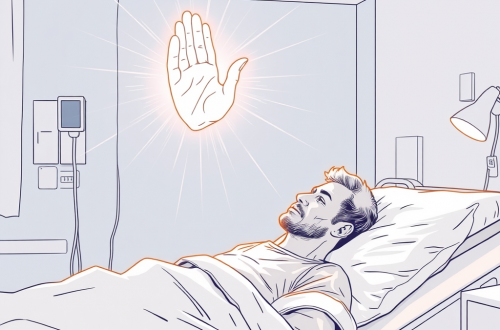
Franek began to scream. He said he could see the devil, and that demons were dragging him towards the gates of hell, tormenting him with instruments of torture. He felt his soul burning under the weight of his crimes. Between sobs he confessed them, crying out desperately for a priest. He clung to the nurses as if they could shield him from the assault of evil spirits.
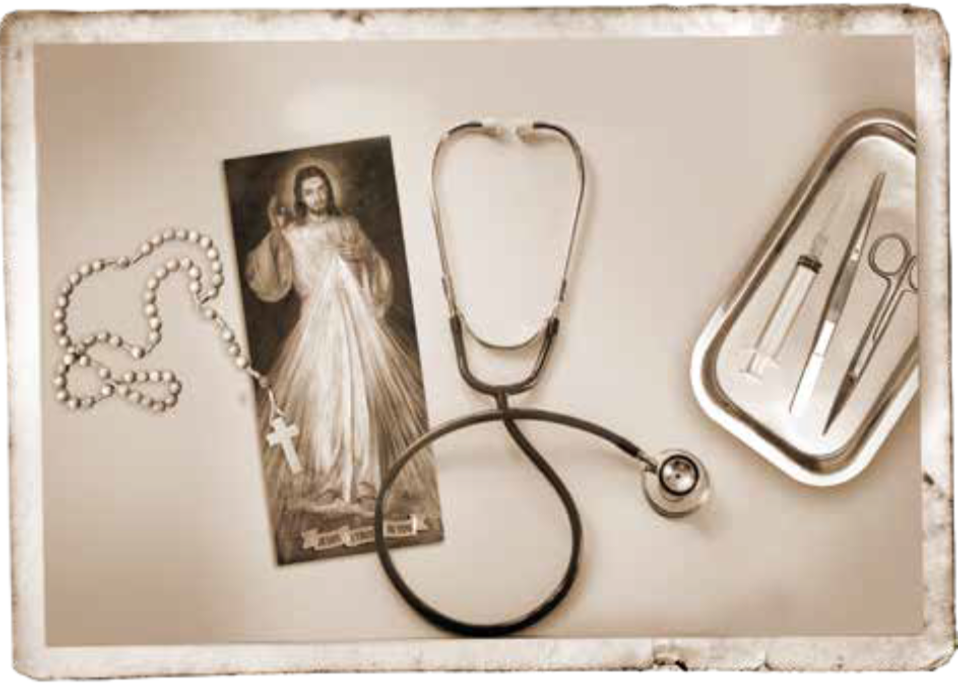
I was working in a hospital in Lviv, Ukraine, during the Second World War when I met Franek N. He was a hardened criminal, and his crimes came to light only as he drew near to death. Before the war he had driven a hospital van for the terminally ill. But when the fighting began, he abandoned his post and fell in with a band of thieves. His flight broke many hearts.
That he was converted at the end can only be attributed to the intercession of the Blessed Virgin Mary. For six long years, Sister Zamysłowska of the Sisters of Charity prayed the Rosary every day for him. She was the superior of the hospital where Franek had once served, and his desertion wounded her deeply – yet she never ceased to hope, never ceased to pray.
Grace is patient. Our Lady’s mantle is wide. And a soul long lost can be found at the very hour it seems most impossible.
The Conversion of Franek
In 1945, Franek was admitted to hospital in a critical condition, suffering from tuberculosis and tuberculous pleurisy, an infection of the lungs. He remained there for three long months. Even amid that valley of pain, he sought the Lord in the Sacraments: he made his Confession and received Holy Communion three times. In the third month, his condition suddenly worsened. On October 31, 1945, at 3:00 in the afternoon – our usual hour for changing the bedding and repositioning the bedridden – Franek suffered a severe pulmonary haemorrhage. Blood covered the bed and the floor – and us, the two nurses caring for him – from head to foot. He survived, but began screaming that he saw demons streaming from the gates of hell, trying to drag him down with evil-looking hooks. All at once his soul seemed to burn under the weight of his sins. With tears pouring down, he cried, ‘A priest! I need a priest!’ He cowered behind the nurses, clinging to them as though they could shield him from the demonic assaults. His legs gave way; he convulsed with sheer terror. Certain that death was near, he found no peace – neither in words of trust in Divine Mercy nor in the Act of Contrition.
The chaplain lived a kilometre away, at the Parish of St Anthony, and there was no other priest available. I begged Franek to let me go and find one. ‘I can’t,’ he gasped. ‘They’ll come and get me!’ I pressed a rosary into his hand. ‘Hold this. It will protect you from the demons. Let me go.’
I left the room, desperate – and then, grace. At that very moment a Carmelite Father happened to be walking down the corridor, carrying supper to a sick brother of the Order. I asked him to come to Franek. He went in at once to give absolution to the dying man. I helped him with the stole and the holy oil. God’s mercy had arrived, precisely when it was needed.
When the priest entered the room, the demons – and the very gates of hell – vanished. Franek’s body softened; his legs straightened. He began to confess, pouring out a long litany of crimes, sins, and acts of sacrilege – the same sorrowful list the other patients had already heard.
The priest listened, gently asking him to lower his voice. But Franek stood firm: “I will not be quiet! Before God’s judgement, the whole world must know the crimes I committed!” And he went on, emptying his heart of every sin that had tormented him.
At last he finished. He received absolution. Peace descended. He opened his arms as though to welcome a dear friend and cried, “Thank you, Mary! You saved me!” Then he folded his arms across his chest and passed away.
A Six-Hour Confession
Together with Sister Cecylia, I first prepared the body of our deceased brother and then disinfected the bed and floor to guard against further infection. Having washed and changed, we resumed our duties. Sister Cecylia went to Room 10, and I made my way to Room 5 – where Franek had been – alongside eight other seriously ill men.
To my astonishment, none of them lay upon their beds. Instead, each was huddled beneath, hidden by pillows and blankets. One patient, whose knee was in traction and whose thigh was gravely wounded, had somehow slipped free of the steel wires. His face was unrecognisable – eyes wild, hair stark white with terror. Clutching a pillow above his head, he screamed, “A priest! A priest, please!”
Their cries for spiritual help echoed like the desperate gasps of drowning men yearning for a lifeline. I sent a nurse to post a notice on the front gate, pleading for clerical aid at once. Then, joined by the other nurses, I gently coaxed the frightened patients back onto their beds, all the while hearing their unrelenting call for a priest.
At 5.15 pm, our chaplain, Father Woroniecki, arrived. I stood guard in the corridor, refusing entry for supper or even the doctor’s rounds, determined that these men have the priest’s full attention. Hours passed in anxious anticipation. Finally, at 11.15 pm, Father Woroniecki emerged, pale and drenched in sweat. He paused, asked what had transpired, and then, overwhelmed by exhaustion and emotion, he fainted.
Two Russian nurses and I sprang forward to help. We laid him gently on a nearby hospital bed and cared for him until colour returned to his cheeks. When he was well enough, two porters escorted him back to the presbytery, both weary and resolved.
In that long, silent night, I witnessed the extraordinary power of faith. These men, trapped by fear, reached for God’s grace through the sacraments. The priest, offering himself as the Lord’s humble instrument, brought them hope. And we – mere servants in God’s vineyard – learned anew that in the darkest hours, the light of compassion and steadfast devotion shines most brightly.
Throughout the ward, tears flowed freely; not one of the men spared a thought for food. They turned to me, asking for help in completing their penance and joining together in heartfelt thanksgiving that they had this precious moment to confess their sins before the demons could drag them down to hell.
All through the night, I knelt at their sides, praying over each soul and gently preparing them for Holy Communion. When morning light crept through the windows and they saw our priest enter, carrying Our Lord in the Blessed Sacrament, they wept like children at dawn. I am certain their tears pleased Our Saviour, whose infinite mercy has won this great victory for them.
Still shaken by grace, they declined breakfast, choosing instead to offer thanks for the blessings of the night before. Having done all I could for these dear brothers, I then turned my attention to readying the entire ward for the doctors’ visit at eight o’clock.
The Doctors’ Visit
When the doctors entered Room 5, Dr Karawanow paused at the door, his face clouded with concern. One by one, the other physicians glanced around in silence. At last, he turned to me with a stern lift of his brow. “Sister Anna, I have asked repeatedly that you notify me before making any changes here.”
I met his gaze calmly. “I’m puzzled, Doctor. These are the same patients as yesterday.”
He snapped, “I don’t recognise a single one!”
Dr Liebhart, the assistant, leant in and whispered, “Please, Sister, don’t challenge the Professor. We all see different faces.” Then he added, “How on earth did you admit eight new patients without our knowledge?”
With trembling hands I produced each chart, every diagnosis, the steel rods removed from traction – proof the patients were indeed the same. Slowly, their lines and names settled the doctors’ doubts.
“But their hair has turned white overnight,” Dr Karawanow murmured, awe and concern mingling in his voice.
I took a steady breath and told them what had happened the previous day: the terror that seized Franek as death drew near, his frantic cries for a priest, and then the miraculous appearance of Father Tomasz. The moment Franek made his confession, his fear vanished – he died at peace. I spoke of the other patients too, how facing true horror had stripped away their doubts and opened their hearts to God.
Silently, the doctors resumed their rounds. When they emerged into the corridor, they beckoned me back to share every detail once more. And finally, with a soft conviction, Dr Karawanow declared, “This is undeniable proof that God exists – and that our souls endure beyond this life.”
After the doctors’ visit, two Polish colleagues and one Ukrainian approached me for prayer books and help in arranging cover for their early shifts. They confessed they had not received the Sacraments since their school days and wanted to go to confession and receive Holy Communion the next morning. When they arrived at work, their faces were transformed – thoughtful, serene, unmistakably changed. They accepted rosaries and Miraculous Medals with radiant joy, as though awakened to a profound new hope.
Later that afternoon, I spoke with the patients in Room 5 about what they had witnessed. Each admitted to fearing they deserved hell. One man confessed he had avoided confession for forty years. The eldest, who’d lost his legs in a grenade explosion, wept tears of relief that day, certain he had escaped eternal punishment by a miracle. After receiving Holy Communion, he knelt and prayed for a swift death, desiring to cease offending God and to keep Him always close. That evening, the Lord granted his humble petition: he passed away peacefully, painlessly, his soul free to rest in eternal life.
When news of his death reached the others, they burst into cries, pleading that they, too, might die that very day. Yet as tears flowed, a gentle reminder of their duty to do penance and amend their lives stilled their voices. I asked them to describe Satan. Covering their faces, they trembled at the memory. One engineer whispered that no earthly artist could capture his true form: his intellect surpasses all human science, his presence more terrifying than any torture. Every depiction in art seemed to them a trivial mockery of reality.
Finally, I recalled Franek’s own last confession. A newly ordained Carmelite monk, sent to deliver his brother’s lunch, arrived late – around three in the afternoon – precisely when Franek called for a priest. It was clear that Our Blessed Lady guided his steps, ensuring Franek received absolution and God’s mercy in his final hours.
Sr. Anna Grzybowska Noted by Sr. M. Dorota Trybuła CR, 14 February 1996