In the most difficult conditions, in the experience of the greatest humiliation, a person is able to maintain dignity and not give in to the evil and hatred that affects him. The history of Poland shows many figures who – despite the overwhelming attack of evil – were steadfastly guided by love and forgiveness.
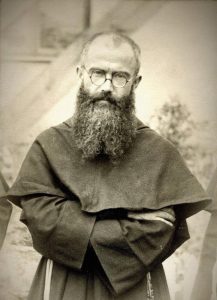
Saint Father Maximilian Kolbe wrote this on July 30, 1940, in a letter to Br. Juniper Klucznik: “We remember that God rules the world and nothing can happen, whether great or small, if He does not allow it. He only allows what is for the greater good of souls, the eternal, lasting, true good. So, you need peace, a lot of peace and trust so as not to worry unnecessarily! Today, Europe has strayed far from God, so it had to experience trials. Of course, God does not take away free will and whoever wants to, uses these experiences for good, and whoever does not want to, uses them for evil. As he himself wants.” Father Maximilian’s words about trust in the goodness of God who governs the world, and about the will of man who is called to choose good in all circumstances, came true a year later. On July 29, 1941, in the Auschwitz concentration camp Fr. Kolbe went to death by starvation instead of his fellow prisoner. His executioners took his life, but they could not take his soul.
Where does this strength come from?
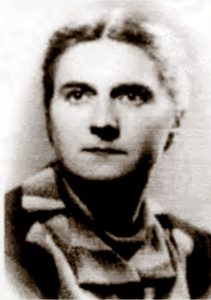
The brutality of war is an extreme test of humanity. Many written memories are testimony to how people during the war and occupation craved spiritual food and not only needed to strengthen their physical strength. Grażyna Lipińska described how in the NKVD investigative prison in Minsk, Belarus women prisoners “celebrated” Holy Mass. First, one of the prisoners carefully cleaned the cell to make it worthy of becoming a chapel, and then a prayer followed. This woman told the story: “Helen begins the prayers with a melodious, quiet but clear voice. No one can arouse in us a sublime religious mood like her. With her words, she transports our thoughts and souls to our home churches. She describes our way to the church, its interior, altars, and the atmosphere of closeness to God. We absorb the silence and peace of the church. Mass has started. Helen considers it, part by part, weaving between the priest’s words, between the words of Latin, her own prayers, and the prayers of the prison. Her most ardent prayers are those she brings before the altar on behalf of prisoners still under investigation. There is absolute silence in the cell. Absorbed in prayer, we sit motionless. Neither of us clears our throats or coughs. Our souls kneel in humility, we reveal our hearts to God, we receive spiritual Holy Communion.” The prisoners prayed, even though they faced the terrible punishment of solitary confinement. Praying together gave them the strength to persevere in the inhumane conditions of prison and investigation. It was a weapon for them against the hatred and violence of the oppressors. It was the fulfilment of the words of Saint Paul: “Who shall separate us from the love of Christ? Shall tribulation, or distress, or persecution, or famine, or nakedness, or danger, or sword? […] neither death nor life, nor angels nor rulers, nor things present nor things to come, nor powers, nor height nor depth, nor anything else in all creation, will be able to separate us from the love of God in Christ Jesus our Lord” (Romans 8:35,38-39).
Heroes of the spirit
Extraordinary examples of sticking to one’s values and maintaining dignity in the experience of terrible brutality and humiliation and in the face of approaching death are Lt. Col. Luke Ciepliński, codename: “Plough” and Captain Witold Pilecki.
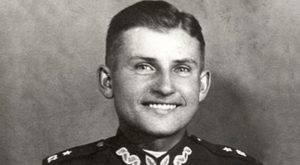
Lieutenant Colonel Luke Ciepliński, commander of the 4th Command of the Freedom and Independence Association, was subjected to an extremely brutal interrogation for nearly three years in the prison at Rakowiecka Street in Warsaw. He was murdered on March 1, 1951, with a shot to the back of the head. His remains have not been found to this day. The messages he wrote to his wife and son are a shocking testimony to his faith and steadfastness. In one of the letters, he confessed: “Dear Wisia! I am still alive, although these are probably my last days. I’m sitting with a Gestapo officer. They get letters and I don’t. And I would really like to receive at least a few words written by you […]. I place this pain at the feet of God and Poland […]. I thank God that I can die for His holy faith, for my homeland and for giving me such a wife and great family happiness.” The words written to his son as a farewell are equally moving: “They will only take my life. And that’s not the most important thing. I am glad that I will be murdered as a Catholic for the holy faith, as a Pole for an independent and happy Poland. As a man for truth and justice. Today, more than ever, I believe that the idea of Christ will prevail, and Poland will regain its independence, and the disgraced human dignity will be restored. This is my faith and my great happiness. If you find my grave, you can write these words on it. Goodbye, my beloved. I kiss you and hug you to my heart. I give my blessing to the Queen of Poland. Father.”
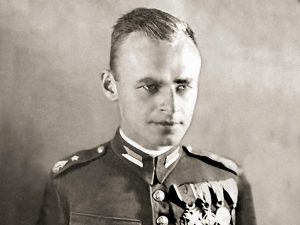
Three years earlier – in 1948 – in the same prison, in the same way – with a shot to the back of the head – Witold Pilecki was murdered. His body has also not been found to this day. During the war, Pilecki volunteered for the Auschwitz concentration camp. He was motivated not by the desire for revenge or hatred of the enemy, but by love for God and the homeland, the fight for human life and justice. He was so focused on his mission that, finding himself in the hell of the camp, where death and brutality of the torturers reigned, he felt deep joy in actively working for good and fighting the surrounding evil. Pilecki himself was surprised by this feeling of joy, because in such circumstances it seemed madness. This joy was an expression of the triumph of a pure and free spirit that did not allow itself to be infected by the abomination of violence and hatred. The nobility of Pilecki’s soul was also expressed in specific gestures towards his fellow prisoners. Once, under the pretext of delousing, prisoners were kept without clothes during the whole of a frosty night, and they were only returned in the morning. Pilecki gave his coat to a sick cellmate, even though he himself was on the verge of survival. Moreover, as part of his underground work, the captain immediately looked for priests who secretly, risking their lives, celebrated the sacraments. A few years later, after the war, Pilecki was arrested by the communists and subjected to a cruel investigation, during which – as he himself confessed to his wife – Auschwitz was a cinch. He remained steadfast until his death; he prayed for the conversion of his enemies and did not harbour hatred. His will for his wife was to buy the book On the Imitation of Christ by Thomas a Kempis and read a fragment of it to the children every day. Pilecki wrote the words of his last message to his daughter and son: “Love your native land. Love your holy faith and the tradition of your own nation. Grow into people of honour, always faithful to the highest values you recognise, which you must serve with your entire life.” His words after the verdict were pronounced are also famous: “I tried to live in such a way that at the hour of death I could be happy rather than afraid.”
“Whoever hates his brother is a murderer” (1 John 3:15)
Another heroic figure whose deep relationship with Christ gave the strength to experience the most difficult experiences in connection with the Lord and understand them in the perspective of eternal life is Cardinal Stefan Wyszyński. Before he became a bishop, during the Warsaw Uprising he was a chaplain of the Home Army and served in Łaski near Warsaw. At the end of the uprising, the future Primate of Poland saw a cloud of burnt pieces of paper carried from the ruins of burning Warsaw. On one of them was the inscription: “Thou shalt love.” Father Stefan took this sheet to the sisters’ chapel in Łaski and said: “The dying capital could not have sent us anything more precious. This is the most sacred appeal of fighting Warsaw to us and the entire world. An appeal and desire. . . You will love.”
A few years later, Cardinal Wyszyński held his office in exceedingly challenging times of communism, when the Church was persecuted. The Primate of the Millennium himself was arrested and spent three years in solitary confinement, often enduring inhuman treatment from UB officers. Despite this, he struggled in his heart to love his enemies. He expressed it in words of resolution: “Nothing will force me to hate them.” Cardinal Wyszyński deeply believed that God could bring good out of every experience. After the death of Bolesław Bierut, who issued the order for his arrest, the Primate recorded in his notes: “I want to pray for God’s mercy for the man who hurt me. Tomorrow I will celebrate Holy Mass for the deceased. I forgive my sinner now, trusting that a just God will find brighter deeds in this life that will gain God’s mercy.” The Primate did not forget about praying for Bierut until the end of his life, fulfilling the apostolic commandment: “If anyone says, ‘I love God’, and hates his brother, he is a liar; for he who does not love his brother whom he has seen cannot love God whom he has not seen” (1 J 4:20).
The issue of forgiveness was also touched upon by Saint John Paul II in the book Memory and Identity: “Evil suffered is not easily forgotten. It can only be forgiven. And what does it mean to forgive? It means appealing to the good that is greater than any evil. Ultimately, such good has its source only in God.” These words were not a theory in the Pope’s life – he forgave Ali Ağca, who shot at him on May 13, 1981.
Marianna Popiełuszko, the mother of the blessed priest Jerzy Popiełuszko, murdered by the communists, also showed a heroic attitude of forgiveness. She was a simple woman, but at the same time a giant of spirit. She said about her son’s murderers: “I don’t judge anyone; I don’t demand anyone’s death. God himself will judge one day. As much as it takes, the murderers will have to atone. May the Lord Jesus forgive them. I would be most happy if they converted. I have already forgiven them.” The son of such a mother was Fr. Jerzy Popiełuszko, chaplain to Solidarność, whose most famous words speak about overcoming evil with good. But the blessed priest during Holy Mass for the homeland also said: “We must speak the truth when others are silent. Express love and respect when others spread hate. Be silent when others speak. Pray when others curse. Help when others don’t want to do it. Forgive when others cannot. Enjoy life when others disregard it.” Father Jerzy taught that the future can be built only on love, truth, and forgiveness: “The Polish nation does not carry hatred within itself and is therefore able to forgive a lot, but only at the price of returning to the truth. No, it is impossible to build a homeland on lies, violence and hatred.” The last publicly spoken words of Father Jerzy Popiełuszko were: “Let us pray that we may be free from fear, intimidation, but above all from the desire for revenge and violence.” It is a message that resonates particularly strongly in the context of the martyrdom of this priest.
The weapon of the defenceless
Father Jerzy Popiełuszko belongs to the group of saints and blesseds whom the Church officially sets as role models for believers. However, not only such famous figures followed Christ’s call: “Love your enemies and pray for those who persecute you” (Mt 5:43). A moving example of this is the text of the prayer of a youngster from Ravensbruck, found with him after his death in a concentration camp: “O Lord, remember not only the men and women who do Your will, but also those who do evil. Remember not only the suffering they cause us, but also everything that was born in us from these sufferings: friendship, loyalty, humility, courage, nobility, warmth of heart – and grant that when they stand before Your court, the fruits that were born in us become forgiveness for them.” The youngster left a great testimony of the spiritual life of the victims of the Nazi extermination machine. People who were defenceless against violence, thanks to God’s grace, spiritually conquered the forces of evil.
This also happened in the life of Maria Okońska, who was Cardinal Wyszyński’s collaborator. The woman experienced many difficult and painful situations, first during the war and then during communism. She was a person with a deep relationship with Christ and the Mother of God, so it was obvious to her that every experience and meeting with every person was given to her by God so that she could do good and fulfil God’s will. This attitude of hers bore extraordinary fruit when, during the communist era, she was imprisoned and investigated. In her memoirs she wrote the following words: “When the door of the Koszykowa prison closed behind me, I felt as if I was in Satan’s kingdom. […] And as it seemed to me – amazing, dead, drawn faces. I immediately made a resolution that I would love them all, that I would not allow a shadow of hatred or resentment towards these poor people to enter my heart, that I would apostate, trying to tell them as much as possible about God.” And so, it happened. During the investigation, Maria was looking for an opportunity to talk to her investigating judges about God and the Church. There were times when she was in charge of the conversation, asking about their personal lives and faith. When the investigators realised that Maria had taken control of the conversation, they were upset, but she was not discouraged by this. She was also treated exceptionally well because, like other prisoners, she was not subjected to torture. The guards in the prison were not as kind as the investigators. They constantly threatened the prisoners with solitary confinement, the cruellest guard took advantage of the fact that there were no witnesses. He came to her and started a conversation with her. He asked Maria why she was crying and generally behaved differently than usual. Mary said to him: “How good you are. Do you know that you are a really good person?” These words shocked the man. He asked if he could do something for Maria. She asked for her rosary and cross, which were taken from her at the beginning of the investigation. The man did this even though it was not allowed, and he offended his superiors. Since then, the guard changed radically. When Maria was alone in her cell, he came to talk to her, even though the guards were not allowed to do so. He was kind to the prisoners, fulfilled various requests of Maria, did not threaten solitary confinement and did not forbid women from singing pious songs in the cell. Maria’s attitude and one good word caused “Satan’s kingdom” to become the reality of Saint Paul’s teaching: “Let no corrupting talk come out of your mouths, but only such as is good for building up, as fits the occasion, that it may give grace to those who hear. [. . .] Let all bitterness and wrath and anger and clamour and slander be put away from you, along with all malice. Be kind to one another, tender-hearted, forgiving one another, as God in Christ forgave you.” (Eph 4:29, 31-32).
Maria’s apostolic attitude also influenced the women who stayed with her in the cell. This woman established a daily schedule: between 5:30 a.m. and 8 a.m., the prisoners prayed and “celebrated” Holy Mass, kneeling on their bunks. Around 3 p.m. Maria gave “lectures” on theology. Most of the prisoners had little idea about religion. Okońska spoke to them with great enthusiasm and love about God, Christ, the Mother of God, the Church, Holy Mass, and Holy Communion. The women converted, they felt sorry for the sins they had committed so far, decided to radically improve their lives and, if released, regularly use the holy sacraments.
Many of them admitted that they were probably in prison to hear the Good News and turn their lives towards God.
The best reform
Maria Okońska’s life was extremely fruitful because she did not waste any opportunity to do good. The woman didn’t complain about tough times, about the spreading evil, about injustice, but lived the Gospel. In this way, she changed the world around her for the better. Every believer is called to this. Cardinal August Hlond, Primate of Poland, said in December 1942 in Lourdes words that describe the importance of such behaviour in the broad context of social life: “The cataclysm is a consequence of the dechristianization of life, it is the result of apostasy from Christ and His law, it is the result of restored paganism. This apostasy has been prepared and spread for a long time in literature, culture, school, family, social and political movements, and most fiercely in state life. Christian thought was being pushed out from everywhere. Conscience was secularised. God’s law was ostentatiously trampled upon. In this way, the Christian sense was taken away from large parts of Europe, and a moral void was created in their souls, which no ethical norms could fill. [. . .] The only effective solution to this is the re-Christianization of Europe. The armed destruction of the steel beds of paganism will put an end to slavery, but it will not free peoples from internal powerlessness. The best political and social reforms will remain the framework into which a healthy life, a spirit of rebirth, should be inserted. And this spirit can only be found in the Gospel.
Sources: Captain Witold Pilecki, Witold’s Report, Ząbki 2017; Elżbieta Jakimek-Zapart, Dreams will rise… Smuggled notes of Łukasz Ciepliński from death row, Warsaw 2020; Anna Dąbska, Grzegorz Płoszajski, Poland is one, Niepokalanów 2009; Maria Okońska, Through Mary, everything for God. Memories 1920-1948, Warsaw 2008.
Prayer for forgiveness
Lord Jesus, I am asking You for the grace to forgive all those who have wronged me and made me suffer (mention the names of these people).
Please give me the grace of unconditional forgiveness (name the person) whom it is most difficult for me to forgive, Lord Jesus, by the power of your forgiving love with which you embrace us from the height of your cross, by an act of will, from the depths of your heart, I forgive (say the name this person) all the harm he (she) has done to me. Bless him (her) and lead him (her)to heaven.
Lord Jesus, I also ask for forgiveness of all those people I have hurt in any way. Thank you, Lord, for freeing me now from this great evil of lack of forgiveness. May Your Holy Spirit fill me with the light of love and peace, heal my feelings and all the wounds of my heart. Amen.