He was an ordinary American nineteen-year-old raised in a religious, middle-class family. He was interested in many things apart from God: sports (including baseball) and, above all, aviation. He dreamed of flying jets, so while still going to school, he was already receiving pilot training . . .
Dale’s parents, who owned their own business, put their children to work early and in gainful employment. Work, and especially flying, caused Dale’s increasing neglect of his studies; he was eventually expelled from school. . . His parents hoped that their son’s passion for airplanes would fade away, but he felt more and more fascinated by everything related to aviation.
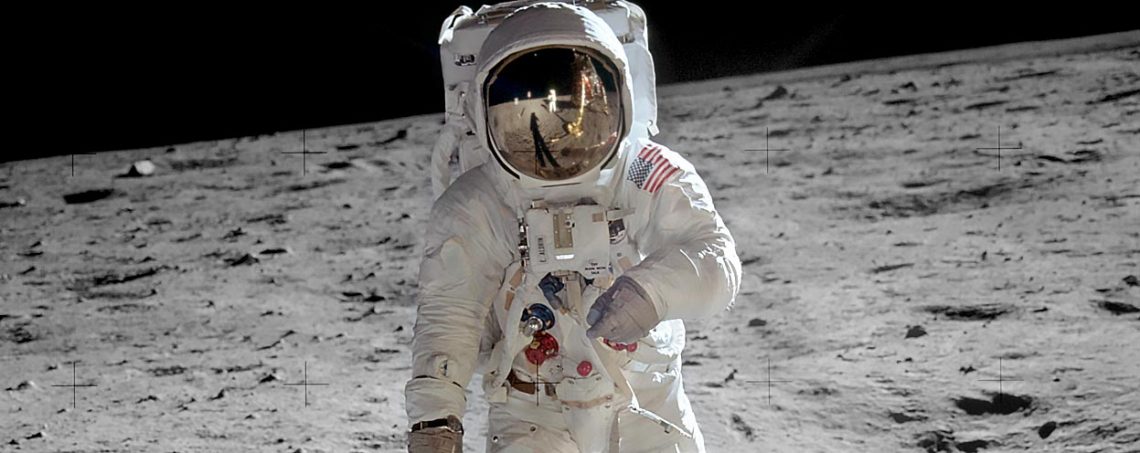
On July 18, 1969, the entire world’s attention was focused on the Apollo 11 spacecraft, whose lander was being prepared by astronauts to touch the surface of the Moon. In a few hours, man would step on the silver globe.
An unlucky flight
On the same day, aspiring pilot Dale Black, his teacher and an authority in aviation – Chuck Barns, and experienced pilot Gene Bain boarded a Piper PA-31 Navajo plane to fly over the northern part of the state.
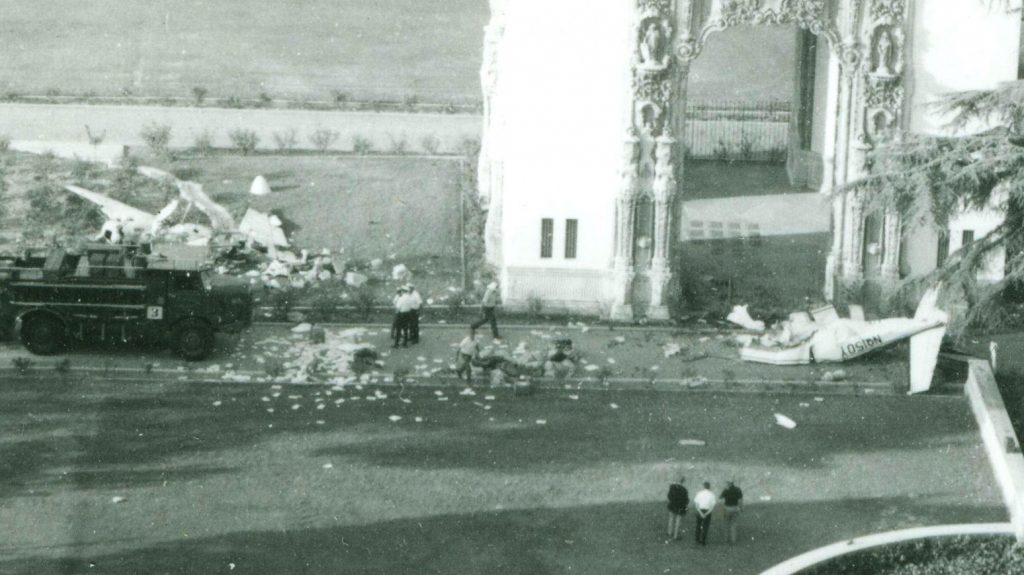
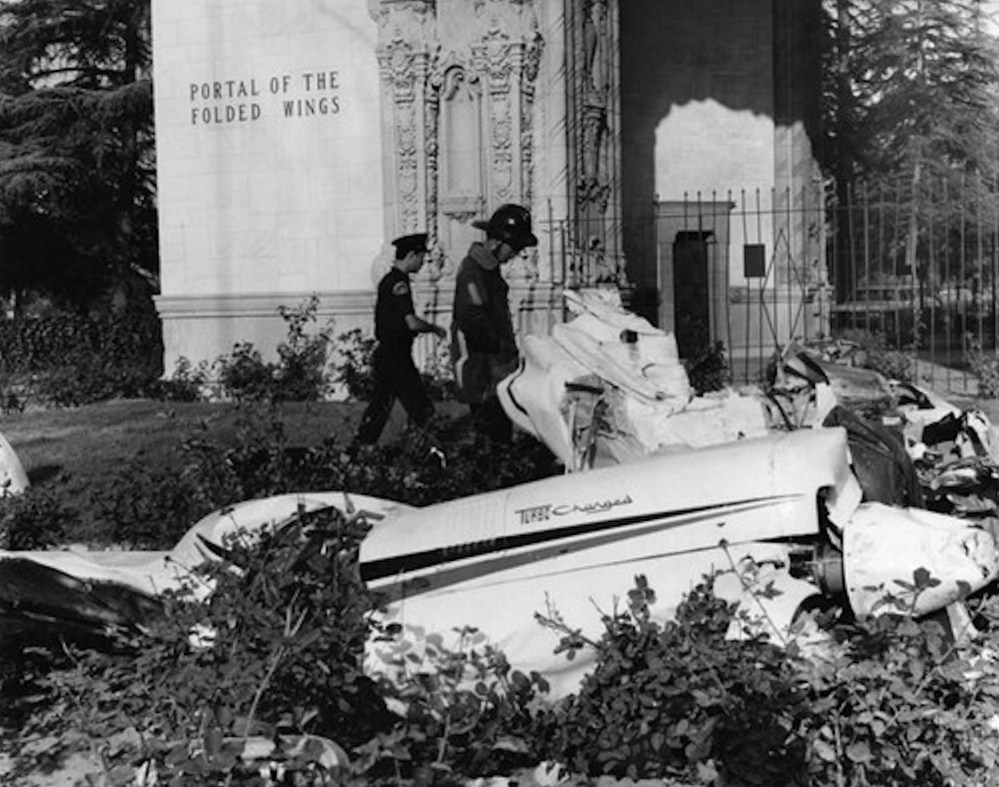
Already during take-off, something alarmed the two more experienced pilots, although all the plane’s indicators were correct. The plane rose into the air. But the engines, which had been working together harmoniously for a while, suddenly began to howl. By then, all three pilots felt that something bad was happening. They tried to land in the cemetery, but it was too late to perform this manoeuvre. The plane hit a monument honouring fallen pilots, located in the cemetery, called the Portal of Folded Wings. Both senior pilots were killed. Dale survived, but was badly mangled: a large head wound, loss of an eye, broken legs and arms, three spine fractures, a crushed left ankle and severe damage to the glenoid fossa of the left shoulder. Doctors feared paralysis, internal damage and brain injuries, but they did everything they could to save the boy’s life.
Everything had changed
The battered man remained in a coma for three days. After waking up, he didn’t remember anything of what happened. This amnesia was a very unpleasant experience for him. Dale wanted to know, wanted to understand what had happened and what was happening to him. Relatives, friends and colleagues visited him in the hospital, and sometimes he had no idea who they were or why they had come. He only wanted solitude and silence to be able to collect fragments of memories, of which there were more and more every day, but they were unbelievable. . .
On top of all this, Dale began to realise that there had been a great change in him, that he was a different person. He began to ask God the fundamental question: “Why do I live and not others?” His thoughts began to turn into a prayer: “Did you save me so that I could serve you? I’m a guy in a wheelchair. How will I go through life with this limp body and this weak mind? . . . I have never known loneliness before, God. Is this a time in my life where you want it to be just you and me? If so, just say so. Is this what you want? Please do something, say something. Whatever. Just don’t leave me alone.”
Every person is important
Dale’s attitude towards people also changed: known or unknown, they became close, important and loved by him.
Before his next surgery, he shared a room with a disruptive guy who constantly shouted at the staff. Finally, Dale got up, limped over to his bed and asked, “Mr. Green, do you know Jesus Christ? It is thanks to Him that I live. He gave me a joy I had never known before. Now I know what I live for.” The answer was: “I am seventy-seven years old, and I have been running away from God all my life. It’s too late for me, Dale . . .”
“It is never too late to allow God to take your life and transform it into something beautiful. Mr. Green, would you like to pray to God now and ask Him to forgive you? “I wish”. . . They talked all night long.
When Dale returned to his room after surgery, he found his new friend’s bed empty. Green had died. . . “I promised myself then,” Dale said, “that I would never be shy in sharing the Good News of Jesus Christ again.”
An extraordinary experience
The amnesia began to wear off, and various scattered fragments of events gradually came back. Dale had the impression that God was directing this process, that He was restoring his memory.
The moment of disaster, the smell of jet fuel, the shocks of a rushing ambulance, and then. . . I was leaving myself on the operating table and following what seemed to be some narrow path that was a bright beam of light in the darkness.
“What’ll happen now? . . . I can’t describe what happened. I’ll use the best words I can find, but these best words pale in comparison to what I have experienced.”
Dale was getting closer to some light, but he had the feeling that the light was inside him too. He was accompanied by two men in white robes, leading him with incomprehensible joy. Together they approached the wonderful city, all in light and music. The light was composed of the most beautiful colours, and “the music was the most majestic, enchanting and wonderful that I had ever heard. I knew immediately that this place was completely and utterly sacred. I was deeply moved by its beauty. Its appearance was stunning and breathtaking. . . And a strong sense of belonging filled my heart; I never wanted to leave this place again. Somehow, I knew I had been made for this place, and this place was made for me. I have never felt so “good” anywhere. For the first time in my life, I was fully “complete.”
The city he saw was bathed in the most wonderful light. Dale wanted to look at it forever, because it was warm and alluring, drawing you to it. “Somewhere I knew that light, life and love were interconnected and interdependent. I had the impression that in heaven the very heart of God was open to everyone, so that one could bask in His glory, be warmed by His presence, (…) experience revival, renewal and refreshment.
Dale saw a huge gathering of people and angels in the centre of the city. “There were millions of them, countless millions,” he recalls. The space they occupied was like a rippling ocean of people praising God. The worship of God was expressed by music that “was everywhere.” This music was an uninterrupted communion of voices and instruments. “I felt part of this music. One with it. I experienced complete joy, delight and adoration. . . Everything glorified God.”
When Dale didn’t understand something, the answer came straight to his heart; he now saw that the knowledge obtained on earth was imperfect. But in heaven the truth shines. Already in heaven he understood “that the word of God was and is the basis of everything. God is the heart of heaven, His love, His will, His order. Somehow, I recognized that Jesus, the Word, was, as it were, the structure that held it all together. . . Multitudes of angels and men responded to God’s will and acted in perfect ways to fulfil it.”
The way Dale describes the view of the city, becoming more and more detailed as you approach it, brings to mind what St. John writes about the New Jerusalem in the Book of Revelation.
Dale, on his way to the heavenly city, met people dressed in white robes who seemed to come out to meet him, full of love, joy and acceptance. “Their smiles were brighter. Their faces are more vivid. Each person was a vibrant, eternal being, radiating the life of God,” he recalls.
There was no sin
Something Dale realized at the end, as he walked through heaven, was the sinlessness there. “I was so used to sin that I didn’t even recognise its far-reaching effects in every area of life,” he said. In heaven, “the absence of sin was something that was felt; there was no shame, no sadness, no hiding. Everything was public, clear, clean.” There was nothing to fear because “there was no conflict, no competition, no sarcasm, no betrayal, no deceit, no lies, no murder, no infidelity, no disloyalty, nothing opposed to light, life and love. To experience something as holy, as overwhelming as God’s boundless love was the most fascinating thing in heaven.”
Dale was approaching the gate of the most beautiful city that cannot even be imagined; he felt that he was going for some amazing, unimaginable gift; the people he meets are happy for him. Thus, he stood before the gate of wonderful beauty. The majestic figure of an angel stood next to it. “I felt like I belonged here. I didn’t want to leave it. Never. I felt like this was the place I had been looking for all my life and now I had found it. My search is over,” he recalls.
And then Dale came back to earth. . .
The touch of heaven he experienced left such a deep impression on him that Dale was left wondering how to continue living with this mystery: whether to proclaim it or hide it in his heart.
Treatment and rehabilitation were still ongoing, arduous and painful, and there was uncertainty as to whether Dale’s damaged left ankle could be saved. Professor Graham, who cared for the young patient with all his devotion, suggested another operation to fuse the bones, but this would eliminate the possibility of returning to aviation, and Dale did not want to hear about it.
In this dilemma, he went to his grandfather, a deeply religious man. At the end of a long conversation in which Dale firmly resolved to pray and seek light in the Holy Scriptures, the grandfather sensed that something else was troubling his grandson. Then Dale confided in him about his experience of heaven and his uncertainty about what to do next. They talked for a long time and finally Dale decided: he didn’t want this to become fodder for sensationalists, so he would keep it in his heart until God gave him a sign when to start talking about this grace. In the meantime, let his life testify to the greatness of this grace.
Now the fight to save Dale’s damaged ankle began. Dr. Graham was horrified by the patient’s decision to refuse surgery; presented him with a worst-case scenario of the consequences of this refusal. Dale, however, prayed for healing with ever stronger faith, and his friends and loved ones, whoever believed in God’s omnipotence, prayed with him. Each subsequent X-ray of the affected leg was a great test of faith for everyone. Unfortunately, there was no improvement. . . One time the doctor said: “There is no blood circulating in your ankle anymore. . . The bone is completely dead”. . .
He received what was most important
After this verdict, Dale realised his mistake: he sought healing, not the Healer, and did not give up his sinful habits. “If I’ve seen heaven, why am I still so self-centred?” – he asked himself. And he decided to give everything to Jesus: his whole life, in a wheelchair or not, giving up sports, flying, walking and personal plans – if it is His will. “I was filled with joy and peace,” he said. He vowed to serve God for the rest of his life in every situation he finds himself in.
Shortly thereafter, at another follow-up visit, Dr. Graham, after looking at an X-ray of Dale’s leg, said, “Your ankle is on the mend. I don’t understand it”. . . There was a complete healing of the crushed ankle.
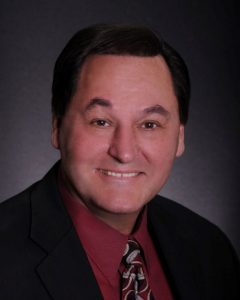
Dale returned to aviation. He worked in many positions, teaching piloting, ensuring flight safety, conducting missionary or humanitarian aid flights, and above all, testifying with his life and words about the love and omnipotence of God.
It was not until forty years later that Dale Black decided to write about his experience of heaven. He also added information to his memories that few people know about; what happened during the disaster and then the vision of heaven he experienced. Here it in his words: “While I was in a coma and exploring the wonders of the heavens, astronaut Buzz Aldrin led Neil Armstrong and the NASA team in the first – official or perhaps not so official – human activity on the surface of the Moon. Buzz received Holy Communion. Rumours of what he did were hushed up for many years, but now it’s common knowledge. While still in the lander that had just arrived on the lunar surface, Buzz Aldrin decided that the best way to show respect and honour was to thank God for their safe arrival by receiving Him in Holy Communion, which was to be the first human act on the lunar surface. He decided to honour God for this human victory, and he did so despite much opposition. From then on, I somehow felt a connection or kinship with Buzz Aldrin.”
Source: Captain Dale Black, Flight to Heaven, Bethany House Publishers; Original edition (1 May 2010).
Pictured: Edwin (Buzz) Aldrin on the Moon, July 20, 1969 (photo by Neil Armstrong).
02/02/2024