Every year, approximately 170,000 people are killed for their faith in Christ. Christians, so one follower of Jesus is killed every three minutes! Brutal persecution – in various forms – affects approximately 200 million Christians around the world. In as many as 116 countries, the rights of believers to profess their religion are violated. As many as 350 million Christians are subject to various forms of discrimination. This number, unfortunately, is constantly growing. . .
 By John Gaspars
One Christian dies every three minutes – dies a martyr’s death just because they did not want to renounce the Lord Jesus. It’s not only the various research centres, but even media unfavourable to the Church or openly anticlerical media, that confirm Christians are the most frequently and most persecuted religious group in the world.
80% of all activities directed against religion are aimed at Christians. This persecution is not only about brutality committed by the so-called Islamic State in Syria and Iraq. From India to Mexico, from Nigeria to Belarus, Christians are victims of repression by the authorities, rebel group, militias, criminal organisations and drug lords.
In many places, the reason for their persecution is solely because they confess Jesus Christ and, in the name of His Gospel, defend human rights, care for the poorest and oppose lawlessness and exploitation.
Many people don’t realise that Christians are still victims of repression today. Those who can pray without fear don’t realise that so many of their fellow believers live in countries where the authorities are hostile to the Christian faith.
They did not deny Christ!
Archbishop Louis Sako shares testimonies of the steadfast faith of Iraqi Christians: “They are killing us, but our faith is strong. So many died, so many were abducted, and their fate is often unknown. However, no one converted to Islam. I think it’s a miracle.
I know a 13-year-old student who was kidnapped, and an attempt was made to force him to convert to Islam. However, he refused, saying that ‘whoever denies Jesus, Jesus will deny him’ and that he was ready to die as a Christian. However, he escaped death because American soldiers freed him” (Rev. Prof. Waldemar Cisło, Immigrants at the gates. The refugee crisis and martyrdom of 21st century Christians).
Illustrating the heroism of Christians, the archbishop cited another piece of evidence: “I also know a paediatrician in Kirkuk. He has two children, a son and a daughter, who are studying medicine. He himself was kidnapped and inhumanely tortured for two months. And because of this he was close to death, but he did not deny Jesus. This journey through the cross and suffering strengthens their faith and increases their piety”.
Martyrdom has become a documented charism of the Church in Iraq. A few years ago, there was a bloody attack on a Christian temple in Baghdad. At least 50 Christians died there, including two priests. One of them said to the terrorists: “You can kill me, but spare other people”.
This priest wanted to offer his priestly life, just like Saint Maximilian Maria Kolbe. Thousands of Christians have been killed across Iraq in recent years. A number of them, including five priests and a bishop, were kidnapped and murdered.
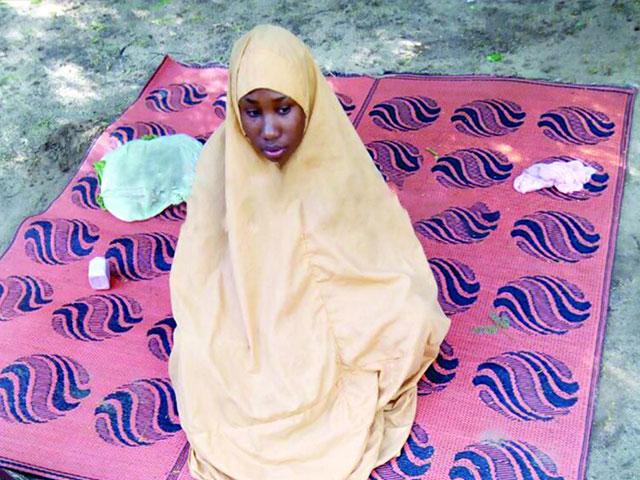
On February 19, 2018, 14-year-old Christian schoolgirl Leah Sharibu, along with over a hundred other girls, was kidnapped from the town of Dapchi in Yobe State, Nigeria. The kidnappers turned out to be terrorists from the Islamic organization Boko Haram. Leah has been in captivity for over a year. All the kidnapped girls were released long ago. Except Leah. The reason for keeping the student in captivity is her steadfast Christian faith.
In March 2018, after four weeks in prison, Leah and the other girls were to be released. She was finally returning to her family who missed her. The girl was just boarding the bus when the terrorists asked her – as the only Christian in the group – to accept Islam. The 14-year-old refused.
Leah did not deny her faith, despite the insistence of the rest of her friends. She also refused to accept Islam when the other girls suggested that it would only be for appearance’s sake.
The 14-year-old’s parents learned about these events from conversations with the released students. Leah asked them to tell her parents to pray for her. The terrorists repeatedly promised her freedom if she renounced Christ and accepted Islam. Since she has not yet done so, she still remains in the hands of Boko Haram.
For Leah’s parents – Nathan and Rebecca Sharibu – the news they received from the former hostages was devastating.
Her mother says: “Boko Haram did not release my daughter because she refused to abandon her faith or accept Islam. “I am very sad, but at the same time happy because my daughter has not denied Christ.”
Both of Leah’s parents were impressed by their daughter’s deep faith, which clung to Christ despite terrorist threats.
“I don’t know what I would do if I were her companion in misery. My daughter’s testimony brought me closer to Christ,” says the girl’s mother.
“I am a proud father and I call on my daughter to remain faithful to God. Hold on, Leah, to Christ!” – her father appeals.
Leah herself, through her friends, delivered a special message to her parents: “Mum, don’t worry. . . Your words from our morning reflections on the Word of God remind me that God is especially close to people in need. . . I am sure that one day I will meet you again. If not here, then safe in the arms of Jesus Christ” (quoted in: www.leah-foundation.org).
Ultimately, the terrorists declared that, despite their previous threats, they would not kill Leah, but would keep her as an “eternal slave”. . . The same fate will befall another Christian, Alice Ngaddah, a UNICEF employee, also abducted by Boko Haram.
Thousands of Christians have died for their faith at the hands of the same group – a militant, militarised Muslim extremist organization that wants to establish a “caliphate” throughout Nigeria.
“Christians there are also under attack on an incredible scale by the Muslim Hausa-Fulani people, who have destroyed hundreds of churches and killed thousands of Christians. Twelve northern states in Nigeria have already established sharia, or Islamic law and religious judiciary.
Christians in these regions are discriminated against. In Christian villages there is no access to clean water and health services, and Christian children are not allowed to attend secondary schools” (www.citizengo.org).
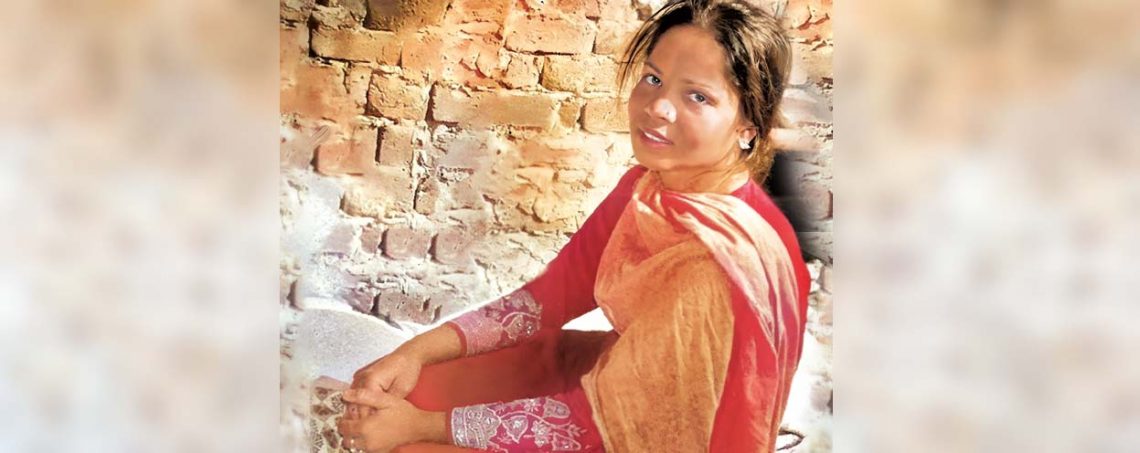
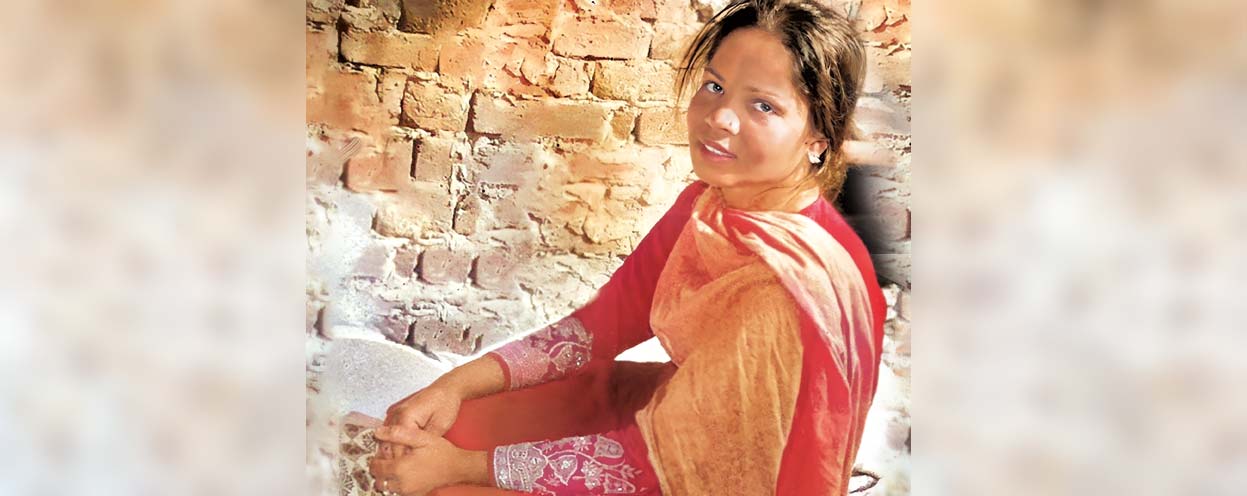
The story of Asia Bibi – a Pakistani Catholic, sentenced to death for blasphemy against Islam – has become a symbol of the contemporary persecuted Church.
On June 14, 2009, Asia was working in the field with her Muslim friends. Because it was hot that day, the woman drank water from a well in the field.
Some of her Muslim friends then thought that the water from the well had become “unclean” because a Christian woman had drunk from it. Asia’s friends also added that in order for her to drink, she had to convert to Islam.
In response, Asia said, among other things: the following words: “Jesus Christ died for my sins and for the sins of the world. And what did Muhammad do for people?”
Immediately after saying these words, Asia was beaten and fled the scene.
Asia was arrested on charges of blasphemy under the law of the Pakistan Penal Code. Despite requests from Christians to drop the charges against the woman, officials upheld their decision, citing pressure from local Islamic leaders.
Asia went to court and was the first woman in Pakistan to be sentenced to death by hanging “for blasphemy against Muhammad.”
The conditions in which she was waiting to be executed were dramatic. From the beginning, the woman was in an isolation room without windows, a sink or a toilet. . . The room also had no ventilation. The prisoner suffered from stuffiness and mosquitoes. The cell was cramped, shoulder-length wide.
In these conditions, Asia wrote a diary and a farewell letter to her family, in which she made a profession of faith. Thanks to pressure from international opinion and as a result of the family filing an extraordinary appeal against a judicial decision to the Supreme Court, Asia Bibi was released on November 7, 2018, after nine years of detention. However, she had to live in hiding from then on due to the threats sent against her. Finally, after many efforts, Asia and her family left Pakistan and settled in Canada.
A Syrian Christian, Amina, shares an extremely moving testimony: “On September 7, 2013, terrorists from Al-Nusra entered our house. I stayed there with my brother, cousin and nephew. I was just in a different room than them. I hid in one of the closets. I couldn’t see them from there, but I could hear everything.
The terrorists said to them: “Either you become Muslims, or we will kill you.” And at that same moment I had a vision. Above my brother, cousin and nephew, I saw Our Lady holding a bouquet of red roses in her hand.
Then I heard: ‘We are Christians, and we will remain so.’ Moments later, the terrorists cut their throats.” Amina then realised that Our Lady was there with them when they died. . . (Yaël Jeanblanc, La vie plus forte que la mort, p. 34).
Christian duty
While thousands of Christians are killed every year on various continents for their faith in Jesus Christ, we – European Christians – should realise how lucky we are that we live in peace and can profess our religion without any threat or restrictions.
We should be able to appreciate what a great grace it is to be able to participate in the Eucharist every day, what a great convenience the proximity of our churches is and the availability of priests. In this context, we should not forget about prayer, or the spiritual and material support of our brothers and sisters persecuted for their faith. It is our Christian duty to love our neighbour and show solidarity with those who suffer.
A special form of spiritual support is uniting with them and their sufferings in Adoration. Then their sufferings are united with the suffering of Jesus himself on the cross. Thanks to this, they participate in the redemption of the world.
“In suffering there is concealed a particular power that draws a person interiorly close to Christ, a special grace” (St. John Paul II, Salvifici doloris, 26).
She wrote about spiritually connecting with suffering people, persecuted even far from us, among others: Saint Edith Stein: “The world is on fire. Look at the Crucified One! Connected with Him, you become omnipresent, like Himself. Not just here or there, you can serve those in need like a doctor or a nurse or a priest. By the power of the Cross you can be present on all fronts of the world, in all places of pain, wherever your compassionate love takes you.”
Saint Edith Stein wrote: “There is a vocation to suffer with Christ and, through it, to cooperate in His saving work. United with the Lord, we become members of His Mystical Body. Within His members Christ prolongs His own life and He himself suffers in them. Suffering in union with the Lord becomes His suffering, is included in the great work of salvation and is therefore fruitful” (Writings, vol. 2, p. 163).
The Lord Jesus calls each of us to intercede for sinners and cooperate with Him in the work of redeeming humanity by willingly and eagerly accepting suffering.
“Every person must suffer and die, but if they are a living member of the Mystical Body of Christ, their suffering and death acquire redemptive power through the divinity of Him who is their Head. This is the essential reason why every saint desired suffering so much” (The Mystery of Christmas, in: From my own depth, vol. 2, pp. 68-69).
“Just as the Lamb must be killed in order to be raised to the throne of glory, so through suffering and the cross is the path to glory for all those who are called and chosen to the wedding feast of the Lamb. Whoever wants to be married to the Lamb must allow himself to be nailed to the cross with Him. All of us marked by the blood of the Lamb, that is, all of us baptised, are called to this, but not all of us understand His call. Following Christ means imitating Him more and more faithfully; this call sounds piercing in the soul and demands an unequivocal response” (pp. 156-157).
It is not without significance that, donning the Carmelite habit, Saint Edith Stein took the religious name of Teresa Benedicta of the Cross.
Working on her last work, titled Knowledge of the Cross, was interrupted by deportation to the Auschwitz-Birkenau concentration camp, where Saint Edith by her own behaviour – by voluntarily offering herself for her Jewish nation – “completed in her sufferings what is lacking in Christ’s afflictions for the sake of his body, that is, the church” (cf. Col 1:24).
27/02/2024