“Democracy without values
turns into totalitarianism.”
Saint John Paul II wasn’t being dramatic; he was being accurate. A democracy is not simply the arithmetic of 50 per cent plus one. It only makes sense if it recognises a moral order that precedes the vote – an order grounded in the truth about the human person as revealed by God. Once that framework is jettisoned, law becomes little more than the will of the stronger side, dressed up as progress.
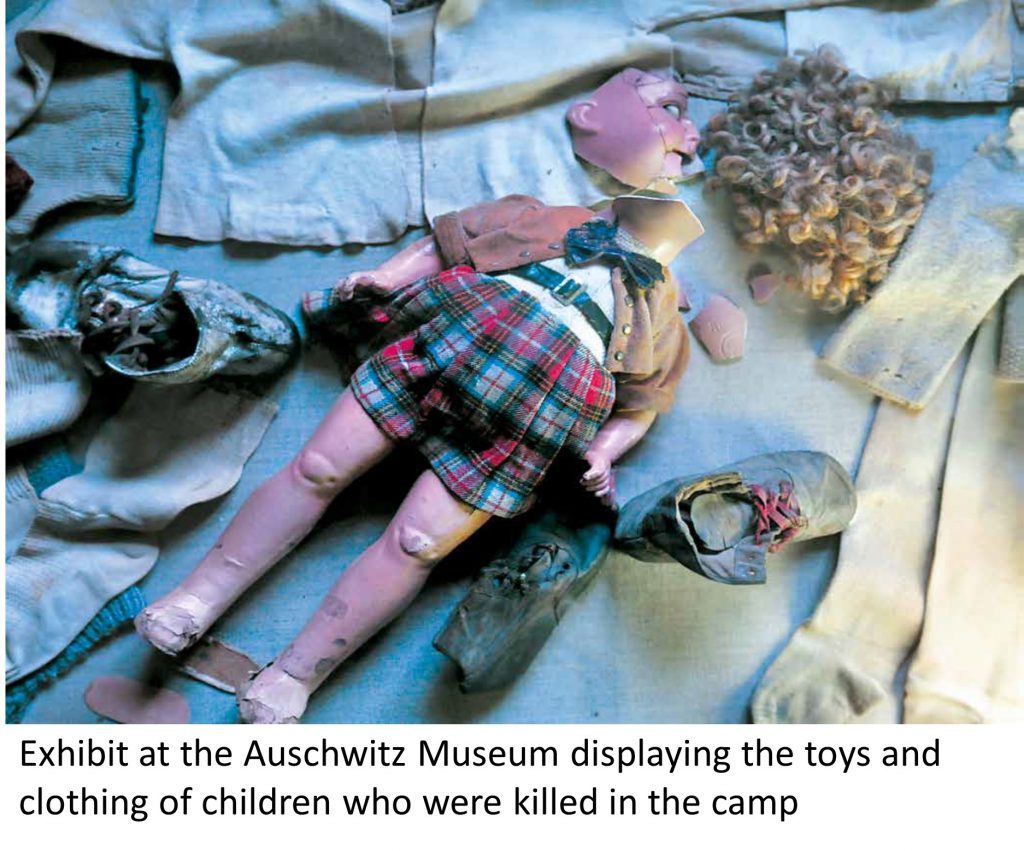
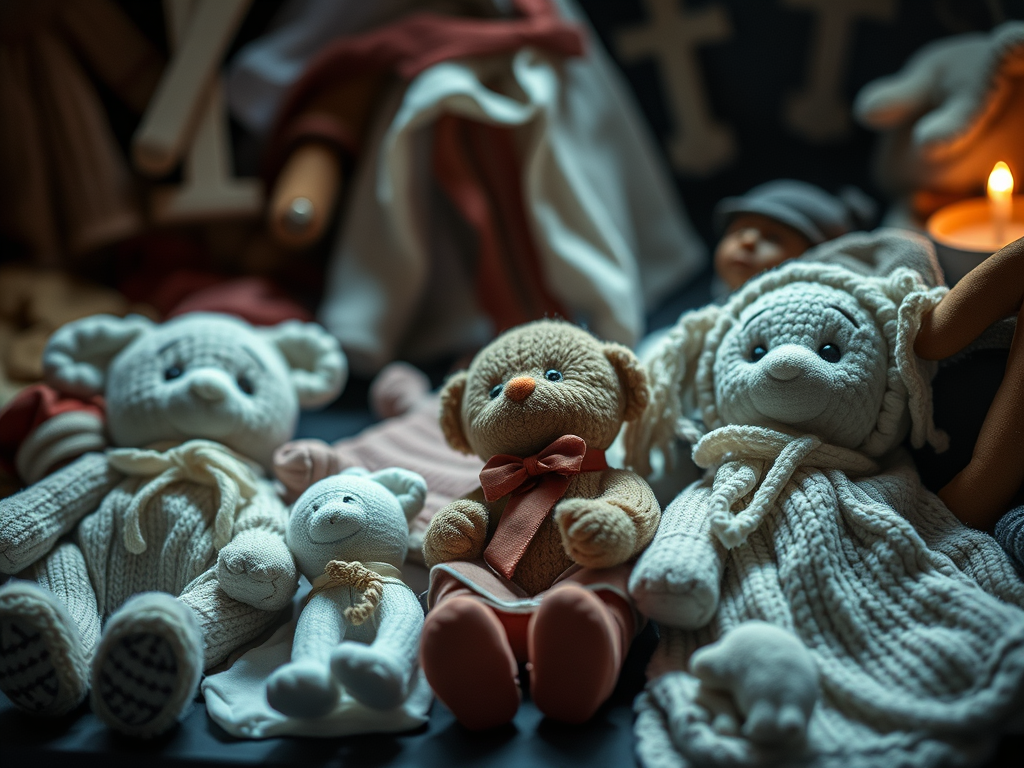
Exhibit at the Auschwitz Museum displaying the toys and clothing of children who were killed in the camp
The Church has always insisted that the foundations of any just society are found in the Decalogue and fulfilled in Christ. Reject those, and you end up rejecting the very idea of objective right and wrong. History bears grim witness: ideologies that deny the Ten Commandments and the Gospel’s vision of the human person have repeatedly given birth to regimes where the state decides who counts – and who doesn’t.
Here is the heart of it: every human being, from conception to natural death, possesses an inviolable dignity and an inalienable right to life and to freedom of conscience. These are not benefits Parliament can bestow, revise, or withdraw; they are properties woven into us by our Creator. “By His incarnation the Son of God has united Himself in some fashion with every man” (Gaudium et Spes, 22). In each human person “there shines forth a reflection of God Himself” (Evangelium Vitae, 34). “For that reason, the result of human procreation, from the first moment of its existence, must be guaranteed that unconditional respect which is morally due to the human being in his or her totality and unity as body and spirit: The human being is to be respected and treated as a person from the moment of conception; and therefore from that same moment his rights as a person must be recognized, among which in the first place is the inviolable right of every innocent human being to life” (Evangelium Vitae, 60).
Let’s be blunt: dignity does not track IQ, social status, stage of development, or utility. It rests on the astonishing fact that Christ has joined Himself to our humanity. That’s true for the strong and the weak, the healthy and the sick, the unborn and the elderly, the believer and the sceptic. It is in everyone’s interest – across religion, race, language and nation – to build a social order on this truth: every person has equal dignity and enjoys the inalienable rights to life and to freedom of conscience.
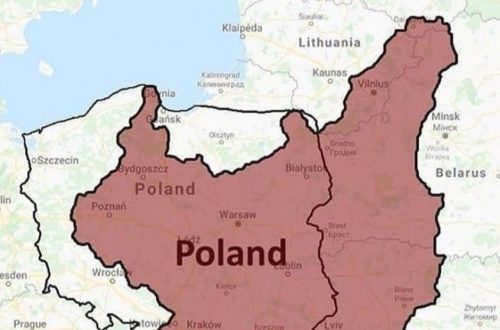
We’ve seen what happens when a society forgets this. Under National Socialism, the disabled and mentally ill were targeted in the name of “cleansing” the nation; Jews, Gypsies, homosexuals, Poles and others were reclassified as subhuman and marked for elimination. The horror didn’t spring from nowhere. It was the rotten fruit of rejecting the Decalogue and nurturing a hatred for Christianity, especially the Catholic Church. When God is pushed out, the state rushes in.
Today’s threats look cleaner, but the logic is painfully familiar. A culture hostile to Christianity cheerfully “solves” problems by making the most vulnerable disposable: abortion for the unborn, euthanasia for the elderly and terminally ill, the destruction of embryonic human beings created in vitro, and creeping forms of eugenics that screen out the “undesirable”. Let’s not kid ourselves with the language of compassion when the reality is lethal. No legislature has the authority to authorise a breach of “You shall not kill”. A majority cannot make murder moral. It is precisely the measure of our civilisation that we welcome with love those whom others are tempted to label as burdens – children with disabilities, adults with mental illness, the frail and the forgotten. It is barbaric to declare them better off dead or simply inconvenient.
Saint John Paul II put it with prophetic clarity: “Laws which legitimize the direct killing of innocent human beings through abortion or euthanasia are in complete opposition to the inviolable right to life proper to every individual; they thus deny the equality of everyone before the law. It might be objected that such is not the case in euthanasia, when it is requested with full awareness by the person involved. But any State which made such a request legitimate and authorized it to be carried out would be legalizing a case of suicide-murder, contrary to the fundamental principles of absolute respect for life and of the protection of every innocent life. In this way the State contributes to lessening respect for life and opens the door to ways of acting which are destructive of trust in relations between people. Laws which authorize and promote abortion and euthanasia are therefore radically opposed not only to the good of the individual but also to the common good; as such they are completely lacking in authentic juridical validity. Disregard for the right to life, precisely because it leads to the killing of the person whom society exists to serve, is what most directly conflicts with the possibility of achieving the common good. Consequently, a civil law authorizing abortion or euthanasia ceases by that very fact to be a true, morally binding civil law” (Evangelium Vitae, 72). And again: “Abortion and euthanasia are thus crimes which no human law can claim to legitimize. There is no obligation in conscience to obey such laws; instead there is a grave and clear obligation to oppose them by conscientious objection” (Evangelium Vitae, 73). In short: when positive law contradicts the natural moral law, conscience must not be bullied into silence.
Democracy, then, is not sanctified by the ballot box. God’s Word is strikingly direct: “You shall not fall in with the many to do evil” (Exodus 23:2). The sheer number of votes can never confer goodness on an evil act. When Germans, in 1933, handed power to Hitler, they became co-responsible for the horrors that followed. The lesson is uncomfortable but necessary: citizens are morally accountable for what they enable at the polls.
That has consequences for us, here and now. A Catholic cannot, in good conscience, give political support to programmes that attack the innocent. A voter who, with full knowledge and deliberate consent, chooses a candidate precisely to advance abortion, euthanasia, or the destruction of embryonic human life commits grave sin and shares responsibility for the ensuing evils. Where every viable option is compromised, one may work to limit the harm while resolutely advocating the culture of life – but the direct support of intrinsic evils is never an option. The defence of life and freedom of conscience isn’t a “single issue”; it’s the precondition of every other right and the spine of the common good.
Once a state permits the killing of the weak, its claim to neutrality dissolves. The law becomes a mask for raw preference. Saint John Paul II warned of exactly this slide: when rights are unmoored from the dignity of the person, they become whatever the strong say they are. Democracy then contradicts itself and becomes a form of totalitarianism: “The State is no longer the “common home” where all can live together on the basis of principles of fundamental equality, but is transformed into a tyrant State, which arrogates to itself the right to dispose of the life of the weakest and most defenceless members, from the unborn child to the elderly, in the name of a public interest which is really nothing but the interest of one part” (Evangelium Vitae, 20). Call it what you like – when the state presumes the right to decree who may live, we are already miles down that dark road.
What, then, are we to do? Our Lady at Fatima warned against practical atheism – living as if God did not exist – because its end is spiritual ruin. The only credible answer is evangelisation in word and deed: to announce and embody the joy of the Risen Christ present in His Church; to offer the world again the truth about the human person; and to rebuild a culture where law serves life rather than erases it.
And we need to recover the simple weapons the Lord Himself chose. As Saint John Paul II urged: “Jesus himself has shown us by his own example that prayer and fasting are the first and most effective weapons against the forces of evil (cf. Mt 4:1-11). As he taught his disciples, some demons cannot be driven out except in this way (cf. Mk 9:29). Let us therefore discover anew the humility and the courage to pray and fast so that power from on high will break down the walls of lies and deceit: the walls which conceal from the sight of so many of our brothers and sisters the evil of practices and laws which are hostile to life. May this same power turn their hearts to resolutions and goals inspired by the civilization of life and love” (Evangelium Vitae, 100).
The point isn’t to withdraw from democratic life but to purify it. Democracy needs conversion as much as individuals do. It needs voters who won’t be mesmerised by slogans; legislators who know that conscience is not a private hobby but the inner witness to objective moral truth; judges who understand that justice is more than procedure; and citizens who will defend the smallest among us as if our own dignity depended on it – because it does.
If we refuse the fiction that numbers make right, if we put the person before the programme, and if we let the law be law by conforming it to the truth about man and God, democracy can breathe again. If not, the drift towards a tidy, smiling totalitarianism will continue, and we will have only ourselves to blame. The time to choose the civilisation of life and love is now.