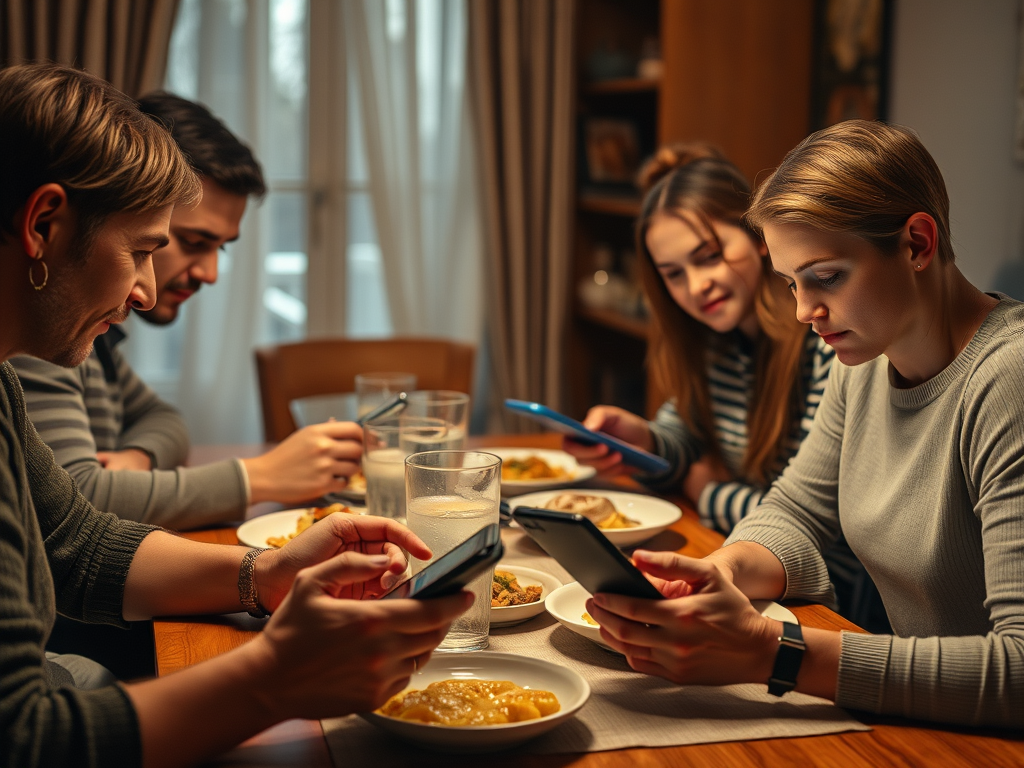
A new year brings a rare opportunity to ask hard questions about home life and to set kinder, clearer boundaries. One area crying out for attention is our relationship with screens. Many parents, wanting to delight their children, wrapped smartphones, smartwatches, tablets or gaming laptops and placed them under the tree. The gifts were generous; the intentions were good. Yet, on the other side of the screen sit designers of apps, games and platforms whose products are engineered to capture attention. If we are not careful, they become thieves of time, focus and, ultimately, relationship.

Children are receiving personal devices ever earlier, some by the age of eight, and their apprenticeship starts long before that. A toddler is handed a phone so they will sit still and finish dinner. A baby watches Mum smile at her screen and Dad scroll after bedtime. An older sibling is “enchanted” by a small black rectangle. Children learn by imitation; from their earliest months they absorb our habits and priorities.
Researchers in Britain and beyond have raised the alarm about this early immersion. Large studies, including work in South Korea led by Jin-Hwa Moon and Jong-Ho Cha, have linked heavy smartphone use in adolescents with increased risks of depression and anxiety, disturbed sleep, eating issues, stress-related symptoms, vision and musculoskeletal problems, and patterns of addiction. No single study is the last word, but the trend is consistent: when screen time is unbounded, the costs mount.
None of this means technology is a villain. Used wisely, it can educate, organise and connect. The Catholic tradition has always welcomed the fruits of human ingenuity while warning that tools must remain servants, not masters. The Church reminds us that parents are the first educators of their children; our homes are meant to be “domestic churches” where real presence, conversation and prayer form the heart of family life. Clear agreements — as the Romans put it, clear rules make good friends — protect that heart.
So, if devices arrived at Christmas, let January be the month we shape how they are used. A few practical, family-friendly rules can make a surprising difference:
- Keep phones in a single, shared place at home rather than carrying them room to room.
- Share at least one device-free meal each day for about 30 minutes. Put phones on silent and fill the time with conversation, jokes and stories.
- Remove all devices from bedrooms and use traditional alarm clocks. Aim for at least one hour, preferably two, without screens before sleep.
- Turn off app notifications. Check messages, social feeds and news at set times of your choosing, not when your phone demands it.
- Switch to a black-and-white screen in the evening. We reach for colour-rich content far less often; greyscale helps the brain wind down.
- Declare weekly “Sabbath” windows from screens — Sunday afternoons, for instance — and reclaim time for prayer, reading, board games or a walk.
New habits take time. Behavioural science suggests six to eight weeks of consistent practice to bed them in, and bad habits are the most stubborn. Announce your commitments to the whole household and ask for a “guardian angel” — a spouse, older child or friend — to encourage you and nudge you when needed. Some families even use small accountability pledges to charities to keep themselves honest. Whatever the method, gentle firmness matters.
The principle of digital minimalism — as Cal Newport argues — is worth embracing in 2025: less can genuinely be more. Designers of social platforms and games optimise for engagement; families must optimise for love. Temperance and prudence, those quiet virtues, belong in our living rooms as much as in our hearts.
Screens can serve us well. But presence, attention and the grace of everyday conversation are what truly form children and sustain marriages. Let’s choose relationships over relentless scrolling, sanctify our homes with small, steady rules, and recover the joy that comes when technology becomes a good servant and no longer a poor master.
Tony Wood
01/01/2026