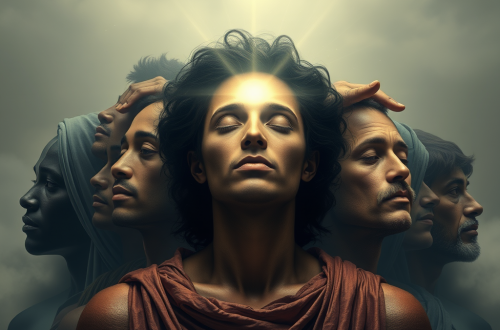
The greatest misfortune that can befall a person is the loss of faith in Christ’s Resurrection, because a conscious and voluntary rejection of this truth, along with living as though God does not exist, results in the loss of eternal life.
The Lord Jesus warns: “The one who believes and is baptized will be saved; but the one who does not believe will be condemned.” (Mark 16:16) In every generation there are many people who, like Thomas the Apostle, doubt, distrust, and set conditions: “Unless I see the mark of the nails in his hands, and put my finger in the mark of the nails and my hand in his side, I will not believe.” (John 20:25)
Historical Fact
To the mistrustful, the seekers, doubters, and unbelievers, the Risen Christ gives clear signs calling for faith in the Resurrection and in His Real Presence in the Eucharist and other sacraments.
What many people do not realize is that Christ’s Resurrection is a historical fact, fully documented, researched and analysed in detail. Professor Jacques Perret, head of the Department of Roman History at the Sorbonne University (Paris), and an internationally renowned historian, applied the scientific criteria for examining historical texts to evaluate descriptions of Christ’s Resurrection in the New Testament. He published the results of his investigations in the book Ressuscité: Approche Historique, “The Resurrection: a Historical Approach” (Paris 1984). According to the author of this publication, scientific research clearly indicates that evangelists report the historical truth about Christ’s Resurrection. From a historical point of view, there is no reason to question this fact.
Any honest scientist, who uses the criteria of the latest historical method to study the biblical texts about Jesus’s Resurrection, concludes that they convey objective truth. Prof. Perret emphasizes that questioning the credibility of the texts of the Holy Scriptures about Jesus’ Resurrection is not the result of scientific research, but it results from ideological assumptions and prejudices, or from simple ignorance. Perret writes: “If any historian of antiquity had used in his scientific research the methods used by some biblical scholars who claim that the gospel texts are unreliable, such a historian would become the subject of jokes among all his colleagues.”

The Risen Jesus appeared to specific people, at specific times and places. It is absurd to say that the Gospel texts are unreliable just because they were written by believers. Prof. Perret emphasizes that it would become impossible to write any history if we had to reject all authors who were in any way involved in the events they report. Perret states that encounters with the Risen One in the New Testament are described as events that the witnesses experienced with their senses, and that led them to believe in Christ’s Resurrection. Hence are in no way merely the fruit of their faith.
Meeting the Risen One
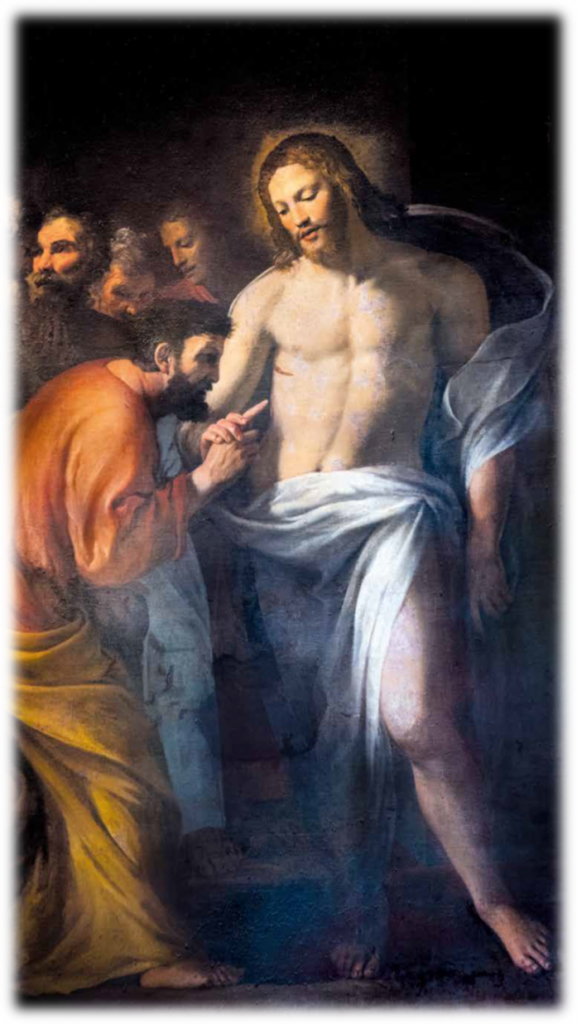
On the third day after Jesus’ death, the apostles, overwhelmed by sorrow and fear, heard from the women that Christ had risen, “But these words seemed to them an idle tale, and they did not believe them.” (Luke 24:11) It was only after Jesus appeared to them that they were sure that He was truly risen and alive. The oldest biblical account tells us that the Risen One “appeared to Cephas, then to the twelve. Then He appeared to more than five hundred brothers and sisters at one time.” (1 Corinthians 15:5-6) They saw Him, talked with Him, touched Him, and shared a meal with Him. (Luke 24: 37-43) They recognized His voice, hair, features, hands, and side – along with the marks of His wounds. (John 20:27) They were sure that Jesus was resurrected and was living in the same body that had been placed in the tomb but was no longer physically limited. At first, the apostle Thomas did not believe that Jesus was resurrected. Only a personal encounter with Christ completely demolished the wall of his unbelief. Jesus said to him, “Put your finger here and see my hands. Reach out your hand and put it in my side. Do not doubt but believe.” (John 20:27) The Risen Christ was also seen by Paul of Tarsus, who was a persecutor of Christians, but who, thanks to this encounter, immediately converted and became an apostle to the Gentiles. (cf. Acts 9: 1-19)
Meetings with the Risen One completely transformed His apostles and disciples. His presence removed their fear and gave them so much inner strength and courage that, with the exception of St. John, they all died a martyr’s death, proclaiming the joyful truth that Jesus Christ had died and risen again, thus giving the final proof that He is God.
Thus, the truth of Christ’s Resurrection gave birth to Christianity with its indestructible vitality, enthusiasm, and joy in life – and this in a situation where, from a purely human point of view, Jesus dying on the cross, seemed to suffer the final defeat.
The arguments of those who struggle with faith in the Resurrection are always the same. These are not new theories, formulated as a result of reliable scientific research, but, since the beginning of Christianity, have been baseless nonsense, born in the minds of people hating Christians and which are still repeated today in a pseudoscientific form.
People who sincerely seek the truth, without prejudice, without any ideological assumptions, discover that Jesus’s Resurrection is an objectively factual event that took place in a specific time and place. This was the case, for example, with Jim Warner Wallace, an investigative detective and militant atheist. After scrupulously investigating Christ’s life, passion, death, and resurrection, Wallace came to believe that Jesus had indeed risen and that He is God. He announced this discovery in his book Cold-Case Christianity: A Homicide Detective Investigates the Claims of the Gospels.
The Credibility of the Gospel Accounts
According to Bible researchers, including Jean Carmignac, John A.T. Robinson, Claude Tremontant, and Paolo Sacchi, all the indications are that the synoptic Gospels (Matthew, Luke, and Mark) were written in Aramaic or Hebrew, when Christianity was still within the limits of Israel. The final editing of the synoptic gospels took place more than a dozen years after the shocking events of Christ’s passion, death, and resurrection. The Gospel accounts are extremely reliable; they give both historical facts and the message of salvation. When Christianity began to spread throughout the Mediterranean, these Gospels were by necessity translated into Greek. So we have Gospel texts from around 50 AD. Father Prof. José O’Callaghan discovered that a piece of papyrus from the Qumran Grotto, which was sealed before 68 AD, contains a few words from the Gospel of St. Mark. This is additional archaeological confirmation that the message of Jesus’ Resurrection was publicly preached with great enthusiasm, joy, and courage in Jerusalem and throughout Israel immediately after Jesus’ death and resurrection. During this period, power was still exercised by those who had been directly involved in bringing about the crucifixion of Jesus, i.e., Pontius Pilate, the Roman procurator of Judea, the Sanhedrin, and the high priest Joseph Caiaphas and his father-in-law Annas.
Jesus was condemned to death by crucifixion for blasphemy because he claimed to be God. (cf. Matthew 26: 65-66) For the Sanhedrin any proclamation that Jesus was risen constituted the same blasphemy. It was for this reason that Stephen, the first Christian martyr, was stoned to death, and the apostle James and other apostles were later martyred. If, however, the Resurrection were not an objective fact, the Sanhedrin and the Roman authorities could very simply ridicule the preachers of the truth about Jesus’ Resurrection by producing His body, but because Jesus’ tomb was empty, they could not do so.
Faith in Jesus’s Resurrection and divinity was born only because the Risen One appeared and he Himself made it known that He was alive. There is no fantasy reported in the Gospels, but only the reporting of factual events that occurred. The authors of the New Testament describe the events of Jesus’ Resurrection in an extremely objective and truthful manner. These descriptions complement each other.
The community of the Catholic Church began to exist with the proclamation of the message of Christ’s Resurrection: “This is Jesus God raised up, and we are all witnesses of it.” (Acts 2:32) The proclamation of this joyful message is the Church’s most important mission. Christ’s Resurrection confirms the fact that He is true God, made true man, and that He died and rose for us and for our salvation.
The Risen Christ is permanently present in the Church to free us from the bondage of Satan, to forgive us all our sins in the sacrament of penance, and to give us eternal life in the Eucharist, an antidote to death.
The Risen Jesus’ permanent presence in the community of the Church is the greatest treasure we have. The Risen Lord will free us from the bondage of sin and Satan and heal all our wounds, only when we trust prayerfully in His presence, and receive His mercy in the sacraments of penance and the Eucharist. We will then participate in His victory over death, Hell, and Satan, and experience the joy of Resurrection.
02/04/2023