It’s enough to want from the book of the same title by Valerio Albisetti
Preface
I had just finished the new edition of Da Freud a Dio (“From Freud to God”) when the publisher put Volonta diguarire (“The Desire for Recovery”) on my editorial table, a book that had long been out of print. He suggested that I review it and update it.
Will it be possible? This story describes the experiences of a young man who discovered that he had cancer. It was my first published text, distributed in many countries around the world. I caress the black cover. . . How many memories, how much longing. . . I see myself again, young, full of life, with a lovely smile and large, green-brown eyes. So much time has passed. . . twenty years. Maybe too much . . .
Everything already seems distant, faded, blurred.
Over the years, I have thought many times that I made a mistake by undergoing surgery. Recently, I have become almost certain that the results of the computed tomography scan – the test I underwent twenty years ago – were not clear and unambiguous and that they led to an error by the surgeon. I’m even sure: “I’ve never had a brain tumour!”. An unnecessary surgical intervention. Trepanation, cutting and excision of parts of the skull . . . a terrible, terrible torture. Physical and mental. The greatest violence that has been inflicted on me in my entire life. Penetrating your brain with scissors, scalpel and metal instruments. . . That most sacred region of the body. For a human being the most vital thing.
Why did I undergo surgery? Why? Why?! I would give anything to be able to reverse it. . . Today, similar operations are performed without opening the skull!
When I re-read individual pages of the book, I had the impression that I was living in some surreal world, as though in a banal, flat, stupid, superficial movie. Perhaps because they were written by a naïve, inexperienced young man from the provinces. Shy. Unprepared to experience tragedy. From its pages there’s a mood of vague detachment and audacity, because the protagonist does not realise that he is a burnt offering! A body to be carved. . .
I’ll almost . . . almost completely rewrite it from scratch. Or I won’t accept the publisher’s proposal and bury it forever. I get up, look at it from a distance, move it closer, take it in my hand, stroke the black cover again and. . . cry.
Quiet.
However, when I think about those moments, about that Valerio, I find the strength to go on. . . Maybe I should have had more courage; I think I should accept the publisher’s proposal. In fact, I think it will always be a testimony of my past, a memorial.
I’m trying to look through the book again, the pages are a bit yellowed . . ., I’m reading some fragments. I’m struck by the foreword by Francesco Parenti, president of the Italian Adlerian Society and for some time president of their international union (more on this in Da Freud a Dio), who was one of my mentors at the time. Today, unfortunately, he is no longer among us.
I quote it word for word below:
“I read Volonta di guarire in one night, and after each subsequent reading I absorbed its different aspects, each of which left a deep and very clear trace impression on me. Therefore, my Preface is also a reflection of my inner thoughts. The topic is (or may seem so at the beginning) terrible, one of those that arouses panicky anxiety or immediate rejection but ostensibly brings relief.
The great advantage of Albisetti’s book is that it allows us to face the presented problem without diminishing its importance or to describe it using trite and pompous phrases. Its great power of influence is related to making plans and transmitting experiences, two strong human tendencies, so vital that they are able to overcome any obstacle. The protagonist-author tries to cope with the situation, which does not guarantee a happy ending, since he does not deny it, thus not allowing it to influence the subconscious, and at the same time remains enmeshed in all spheres of life. This is, among other things, because he does not share his emotions with other people who populate the pages of the book, sometimes being stronger than them in facing the problem.
Finally, a brief but by no means insignificant comment on Albisetti’s writing style.
His language is to the point, devoid of digressions, and sometimes it may seem too down-to-earth. But this is where his expressive power lies. Prose must reflect life as an action, be saturated with emotions and thoughts, and must do it in an understandable way so that the reader participates in the action. If this ability to convey reality breaks into more well-informed readers, a text undoubtedly has aesthetic values that cannot be denied to Volonta diguarire, a book whose every page is able to translate words into images.
Francesco Parenti.”
I slowly put the book down and . . . close my eyes.
I see Parenti, with his grey beard, talking to me, encouraging me, smiling gently and . . . I make a decision: I will read the old text and republish it. I was particularly moved by these words: “I don’t know if the author realised that his story, told in a literary form, may be of value not only to cancer patients, but also – and perhaps even above all – to those who at some point in their lives they find themselves in a seemingly hopeless situation.”
Rising from my chair, I lightly hit the table and the small book with a black cover falls to the ground. A fiery red slip emerges from between its pages with the inscription: ‘Sirmione-Catullo Literary Prize. Special Award 1986’.
I completely forgot about it.
It’s starting to rain. I remember the castle of Sirmione, where, while receiving the award, I saw my poor father’s emotion amid the audience.
Now I cry again.
Almost twenty years have passed since that day. I think the little book with the black cover doesn’t feel the same way. Maybe that’s also why it wants to live on.
PART ONE – The desire to fly
“I’m taking a pilot course. We practice on seaplanes that depart from Lake Como. Will you sign up too?”
“OK,” I answer instinctively, smiling.
When I get home, an uninterrupted sequence of images run through my mind. An airplane. To have an airplane, to know how to fly it. Lugano. Just like that. On my first trip, I will choose Lugano, a city that is dear to me. I will take off and settle on the smooth surfaces of the two lakes.
Suddenly, fear overwhelms me.
I feel like I’m not fit to fly. I’m a landlubber. Water and air terrify me; I feel they’re mysterious, unexplored and distant. As soon as I imagine myself there in the clouds . . . No.
I’m not signing up for the course. I need to feel the ground, hard ground beneath my feet. Who knows why I accepted the invitation right away? I didn’t think about it. But it’s weird! I am very prudent by nature. I still can’t understand why I responded so impulsively.
I’m not interested in flying. After the theoretical part, I’ll decide what happens next. It seems I’m afraid of dying. And yet, every day all round the world, so many people fly quite peacefully. I feel cowardly. With things I don’t know, things I can’t control, such as air and water, I experience a physical sensation of death. And all because I signed up for a pilot course!
The intensity of my emotions was then probably much greater than normal. Now I feel better. The unpleasant feeling has passed. It was enough to think about destiny, about its inevitability . . .
Again, I think about a plane that exploded in the air a few days ago. I imagine the unsuspecting passengers, the smiling faces, the warm, lively bodies that suddenly . . . I force myself to see the pleasant comfort of the car journey . . . hands gripping the steering wheel, a steady speed. The sun is shining today, from behind the clouds. It’s already October.
PART TWO – The first thing which took me by surprise
The first thing which took me by surprise was the hangar. I had imagined a completely different building: aesthetic but functional; maybe because I had associated it with an airport. Whereas I saw a huge barn on the lake in which the hydroplanes stood. The theory course took place in a hall that looked like a classroom. The were seven of us student-pilots. The instructor was an air force pilot, about fifty, he had great skills and was always available.
I passed the course with honours.
To start flying, I had to go for a medical at a military hospital to see that I was physically capable of flying. So, I did. Armed with a document issued by the flying club, I signed up for tests.
I felt some anxiety.
The night before, I had entertained the possibility of being rejected by doctors because of my eyesight. I completely forgot that I wore glasses. . . My ignorance found itself being a way to justify myself. I could always say that I would have been a pilot, but unfortunately my health prevented me from doing so. I was supposed to be at the hospital at eight, but I got there ten minutes late.
The officer on duty advised me to come back the next day. I was quite happy with that; I didn’t fully realise that now I really didn’t have the desire to fly.
As luck would have it, the military man guarding the entrance, thinking he was doing me a favour, confirmed that I had arrived on time, and the slight delay was due to the problem was due to the lift being always busy at that time.
And so, I began the series of planned tests. First there was a visit to the ophthalmologist, which went well; then a blood test, a neurological consultation and other tests that I don’t remember. After all this, sitting in a long corridor with ten or fifteen other student pilots, I was waiting for the last test – an audiometric test.
I even remember the time they called me: twenty past twelve.
When I got up, I thought that I was born to be a pilot. I’ve never had any hearing problems. I saw myself flying in the blue sky, ditching on the smooth surfaces of lakes, performing acrobatics in the air . . .
“We are sorry, but the audiometric curve of the right ear shows abnormalities that unfortunately make you unsuitable to fly.” I looked at the person saying these words. He was a young doctor, about twenty-seven years old. I stared at him, dumbfounded. I thought it was a joke.
I found myself outside alone on the footpath in the midst of the city clamour with piece of paper in my hand.
“Unfit. Serious hearing loss in the right ear”.
PART THREE – It was Autumn
I had an athletic build, even though I hadn’t played any sports for eight years. Eight years. Unbelievable. Only now did I realize how completely absorbed I was in my own patients. In my few free moments, I read and studied professional literature to stay up to date.
For a long time, I had experienced a certain aversion to anything that required exercise. Instead of climbing the stairs, I used the lift, I only got around the city by car, I didn’t go for walks, I didn’t go on so-called activity weekends. . .
Sometimes I walked through the forests surrounding the city with my dear friend Tommaso, a wonderful cardiologist.
“When can I fly with you?”
“Never,” I reply seriously.
He watches me closely. So, I tell him about what happened yesterday. We express doubts about the professional competences of military doctors, and then Tommaso suggests that I visit his friend, an otolaryngologist.
Three days later I’m in the hospital. I undergo audiometric tests in an atmosphere of peace and joy. Tommaso’s presence fills me with comfort and courage. We’re bantering. After completing the examination, the otolaryngologist detects damage to the retrocochlear part of the ear. However, he is not one hundred percent sure of this. In any case, he prefers to perform further tests. We decide that they will take place the next day, but in the meantime the diagnosis is confirmed by the military doctor: the audiogram of the right ear does not look good.
When I return home in the afternoon, I begin to realise that I will have this slight hearing loss in my right ear forever. It’s not a problem, I think, and besides, I don’t trust Italian doctors. I don’t think I’ll go back to the otolaryngologist tomorrow.
However, the next day I arrived at the hospital on time. The return visit – confirmation of the diagnosis. The otolaryngologist says that the damage may be caused by a virus or damage by a drug. . .
I’m smiling. I have never taken drugs in my life. . .
Still, I hear my inner voice say, “Let’s investigate, let’s investigate.” Me, who always avoided doctors. . .
“I advise you to have an MRI of the petrous part of your temporal bones, then we will find out what exactly is wrong with you.” I had the investigation two days later. Not out of fear or to know for sure what was wrong with me, but because in a mysterious way I began to change, I no longer rebelled; I felt an extraordinary peace come over me.
The radiologist told me to lie down on a metal table. I was strapped to it so I could stay still in the same position for almost an hour. I had my eyes closed and at regular intervals I heard a technician entering the room and checking progress.
The radiologist and otolaryngologist showed me the results. Abnormal dilatation was seen in the petrous part of the right ear. I looked at them, they turned pale, I understood. I shook their hands with a smile. I said some words of encouragement that I don’t remember; I think I even hugged them to show them that they shouldn’t worry. I wasn’t worried.
I really wasn’t concerned.
As I was moving away from them, it seemed to me, that behind my back I heard a faint and piercing sound like a hiss, the word: “cancer”.
PART FOUR – God or destiny
The state of calm lasted for the next days. A peace full of great clarity, in which emotionality had a very limited place. When I looked back, everything seemed predetermined and predestined for me. The fact that I signed up for the pilot course pushed by some inexplicable force and all the other coincidences: Tommaso, his otolaryngologist friend, his diagnosis, the change in attitude towards doctors, being late, the unsolicited help of the military guard at the lift. . .
Destiny.
I couldn’t explain what happened to me in any other way. God and destiny . . . the last attempts to interpret life?
It’s possible.
I decided to isolate myself from the rest of the world so that I could concentrate better and gather all my strength. I locked myself in my apartment, drinking only water; almost all the time I was lying about, wondering, thinking. . . I remember that lying about, sitting, standing and walking seemed unreal to me, because. . . I had a cancer in my head! That’s what the doctors said. It was hard to believe because I had no symptoms. Think about it, there was absolutely nothing wrong with me. I felt great! Apart from slight hearing loss in my right ear.
Then, I don’t know what happened to me. It certainly dawned on me that I had cancer. First of all – I don’t remember why – I decided to undergo the complicated surgical procedure of craniotomy. . . However, the most incomprehensible and terrible thing I remember from that time was that I was preparing to die!
I could have rebelled, suppressed negative thoughts, pretended nothing was happening, and waited.
Why didn’t I wait?
I remember that one of the doctors advised me against surgery because I had a fairly benign type of cancer, the tumour was small and grew by one or two millimetres a year. So, I could have control over it. Why didn’t I listen to him?
Anyway, looking at it today, I concluded that it was advice that had come from more than common sense. Nobody in their right mind happily goes under the knife to have their skull opened! Why would I go straight to the operating room? Thinking that I wouldn’t make it out alive? Why?
Today, the cry within me does not subside:
“Why didn’t I want to wait?”
I bitterly regret that I didn’t wait, that I didn’t stay I as was.
Dear readers, I hope that my new book, a testimony of lived experiences, will be of great help to you: to know how to remain still, to know how to wait; especially in the tragic moments of your life, when everything seems impossible, cruel, terrible . . ., to know how to wait!
Don’t lose hope!
Today I know that I lost hope then.
You have read Parenti’s Foreword, where he presents me as a brave courageous man facing unfavourable circumstances. And I say to you: do not follow my example! I lost my head. I wasn’t brave, I was a weakling. Because it actually takes more courage to preserve the tumour and monitor it than to remove it in the way I decided. . .
Not for even a moment did I think that I wasn’t feel good, that nothing serious was happening, that there was nothing wrong with me!
My hearing was good. I was strong, robust, healthy, no weakness, and a perfectly functioning brain. . . I was thirty-three years old – why didn’t I wait a few years to see if the hearing loss would worsen?
I felt good!
It was actually just a neuroma, a small fibrous ball on the auditory nerve; who knows how many people have to deal with much worse diseases. Why did I go to the hospital, have the surgery performed and, above all, why did I believe that I was facing death when in fact I was not?
What a terrible illusion!
What terrible god closed my eyes and ears? What dark mental trap was I in, so deep that I wanted to die? Why such self-destruction? Valerio, all you had was a flimsy piece of paper that said you had slight hearing loss in your right ear! Valerio, why didn’t you go on with your life as if nothing had happened?
You wanted to die when you were thirty-three! Why?
Today I feel great shame for this Valerio, and boundless pity. And a lot of anger. I wasn’t a good psychologist to myself. And an even worse Christian. I didn’t look deeper. I believed in a demon that took control of me. My thinking was wrong. I preferred to believe I had a cancer.
I thought I was strong, I could live, and yet. . . I confused courage with cowardice, strength with weakness, the will to live with fear of life, the fear of death with the will to die. It’s terrifying how much a human being can torture himself.
You can hate yourself so much. How much pain can he inflict on himself. Even leading to death! But it is possible. . . It happened to me and I’m telling you about it now.
I was crazy. I was crazy.
The result: I spent my days living as if I really had a severe brain tumour!
But let’s get back to the detailed account of those days. I was preparing to face death calmly. I accepted fate. I couldn’t react any other way, I rationalised what was happening to me.
And I was in a dark room.
I lowered the blinds to prevent daylight from entering the room through the windows. . . I was convinced that I had cancer, although it had not been diagnosed with complete certainty. I thought that the normal reaction in a similar situation was hope, and doubt in the initial diagnosis, but I was already living as if sentenced to death. I haven’t had a CT scan yet. . .
I was preparing for a battle with death, certain that the outcome would be negative, I was ready – if necessary – to undergo surgery, never thinking for a moment that I could not do it and remain strong and healthy, just like before.
I was sure that I was showing courage by approaching it this way. I thought about death. “We are born alone, we live alone, and we die alone,” I told myself. This is reality. This is the essence of life.
I focused on my patients. I spent the next few days receiving them as usual, and in the evening, I locked myself in the apartment, in a dark room. I felt that the eventuality of my death should be an intimate, personal matter that I had to experience internally and with all my being. I must face it with courage, with pride! As if I were saying: “Come on, death, show yourself, tremble! I’m not afraid of you!”.
PART FIVE – I didn’t want to die
The first evenings after the examination and the ones that followed were surprising for me. I felt terribly lonely and empty. Numb. Frightened. Confused. Rationally, I knew I had to die, but it didn’t seem fair.
I didn’t want to die! I wasn’t ready for this. I was young.
When I think about it now, I wonder why my psychological blocking mechanism wasn’t triggered. Why didn’t anyone stop me? I probably convinced myself that I shouldn’t expect anything from others. . .
Today, looking back on the past years, I think another of my problems at that time was: loneliness.
I didn’t maintain close contact with my family members. A long time ago I separated from my father, a sensitive but weak man, and perhaps because of that I always felt very lonely.
Most likely, subconsciously, I didn’t want to live anymore. And yet I remember that my mind rebelled and screamed: “I want to live!”
However, I did nothing to prevent the action of this satanic part of my “I” that wanted to destroy and mutilate me. Oh, how much I could say today about a certain kind of victim syndrome! I felt like a victim and tore my throat out, calling for the executioner!
And he arrived.
Ah, only now do I understand.
In my book entitled Genitori e figli (Parents and Children) I wrote: “A child, being completely dependent on people close to him, is subject to a strong mechanism of identification with his parents, with those who take care of him. This means that to the extent that people close to him satisfy his needs, he will develop and acquire respect and self-esteem; however, if no one wants to listen to him or he is treated badly, even experiencing violence (physical or psychologically), the child, identifying with his executioner, will believe that he was understandably hated and punished. He will believe that someone justifiably hurt him. He was rightly insulted by them. He will believe that he should say: ‘Mummy, I’m a bad ‘un!’
He will believe that it’s even right to kill him.
He will be willing to become, unknowingly, a burnt offering.
When all these thoughts were swirling in my head, I calmed down my emotions and peace took over my entire existence. I believed that if anything escaped the control of reason, I would be overwhelmed with despair. I decided to experience these moments with all my being, whatever they were. If I were sentenced to death by shooting, I wouldn’t have my eyes blindfolded. I would look death in the face.
Whenever I perceived an image or thought that was too emotionally charged, I separated it, analysed it, rationalised it, taking away its strength and energy, until it disappeared in the sea of the clear peace that accompanied me. . . or maybe clear madness?
Destiny, God. . . These two issues attacked me from above, below and from the sides. They absorbed me, surrounded me from everywhere. I connected them and . . . I felt that the encirclement was broken; gradually, peace came over me.
How dark this room is. I have to get used to the dark if I’m going to die.
Die.
My body lying in a coffin. Pale blue face. Emotions are running high. So, I think that the deceased isn’t aware of anything – and this thought is enough to diminish the importance of this strange state in which I am stuck.
My mental activity became very animated during this period; there was a constant storm in my mind.
“I don’t want to die!”
I’m thirty-three years old.
I have helped many people. How many? I don’t know. Certainly many, thousands. People old enough to be my parents. Professional success gives me a sense of strength. For me it’s rewarding, and this takes away the anxiety and fear that are starting to come back.
“Why do I have to die?”
I know this is an unanswered question. It never would have occurred to me that I would die so young. I thought my destiny was different. My plans, my desires. . ., there’s no point in thinking about it now.
What will I do? Nothing. I will continue to calm my emotions. I tell myself not to see the anxiety and fear that still plague me, they are always close to me. I remain cheerful and calm. I feel my eyelids closing: I’m falling asleep. Tomorrow.
The future doesn’t matter to me anymore. Will I see my patients again?
Sleep is taking over more and more. Yes. I will see “my people” for a short time.
At night my mind seems to accept, almost naturally, this tragic end to life. This naturalness was also moving for me. Today, however, it seems obvious to me that I was heading towards self-destruction. How come I wasn’t worried? How was it possible that I didn’t despair? Above all, how is it possible I didn’t ask for help? Why did I lock myself up, sleep alone in the darkness of my room, even though I had lots of friends?
I kept rationalising something that wasn’t actually there.
These days, these nights were harrowing. Throughout the day, I obsessively analysed my emotions in order to control them, deprive them of their strength, deprive them of their meaning, deprive them of significance. And in this action, the madness of which I now fully see, I felt strong and proud of myself because I managed not to become depressed or angry. . .
I didn’t cry.
Here was another sign of the mad delirium of omnipotence that had taken hold of me. How was it possible that I didn’t cry, I didn’t scream out my pain, and the absurdity of this fate? During the day, I switched off, pushed aside my problem and listened to the patients – naturally, constantly – so as not to listen to my heart. . . which was crying and screaming, asking for help.
At night I took stock of my young life.
I didn’t start a family. Why don’t I have a wife or children? A child. Yes. I have to know the date of my death so that I can conceive a child earlier. Well, how is it that I don’t feel the need to have a woman with me now? Make love? NO. The thought doesn’t even cross my mind. I should think about it. Sex as a response to death. This is the way books present it.
Reality is different. It looks different.
People are completely ignorant. They confuse making love with having sex. Language is very important. I think back to my studies in semiology. I remember the first day of classes in the auditorium as an undergraduate. . . how young I was! I spoke very correctly; my older colleagues respected me. . . The anxiety is increasing. I feel tired. I have to control it by facing it.
Women. I have never been with anyone for any length of time, nor have I been in a lasting relationship.
Nothing more. I feel guilty. I feel lonely. I devoted myself completely to healing others. . . It was my calling; at least that’s what I thought.
What about your university friends?
Who knows where they are now. The courtyard, hall, the colonnade, Claire. . .
I feel sleep coming. I know it’s a slow, steady step that fills my mind. . . I have to die, and I have no desire to do so. There is so much more I would like to do. If this is what it’s supposed to be, I decide I won’t rebel. Besides, what does it matter: die now or in thirty years? What matters is what I did. Or maybe not at all. . . Drowsiness is increasing. Breathing becomes slower and more regular. Life is a game. If people knew about it, maybe they wouldn’t be born.
I’m sleeping, I won’t die tonight.
Probably. Maybe.
PART SIX – It is. There’s no doubt
It’s CT scan day.
A large white room, colourful light bulbs, metal furniture, stylised equipment. There is a delicate smell of disinfectant in the air. There is a desk in the centre of the room. A young woman sitting next to it is writing something. Blonde, messy hair, red clothes. I’m standing in front of her. I look at her hands. Long, slender fingers, carefully manicured nails. Details, perhaps. But I need to be able to pay attention to the little things in these moments. They always connect my mind with reality. I look around.
She asks me to provide data: first name, surname, address. . . I look into her eyes as I speak. They’re laughing eyes. She tells me to wait.
I sit down, close my eyes, recall the last few days and see myself comforting my father who is worried about my health. . .
I hear my name. A man in a white coat is waiting for me at the door. I enter a room. The nurse tells me to roll up my shirt sleeve above my left elbow. He asks me to lie down on a metal table that ends in a kind of tunnel – inside it they will bombard my head with rays that will reveal the possible presence of cancerous tissue. I lie still. I see the inside of the small tunnel. They inject fluid into my left arm.
“Please close your eyes and don’t move!” – the nurse calls to me. I feel warm in my head, maybe it’s the fluid they’re injecting me with.
“Please don’t move!” – the woman shouts again.
“I doesn’t seem to me that I moved,” I think.
I feel the need to move my eyes, “Don’t move!”
Her voice is nervous now.
Silence. Absolute silence. I can’t move; I can’t even blink an eyelid. The head is warm. I am overcome with panic. I want to scream, howl, tear out the needle, and the plaster. . . I tense my jaw muscles slightly.
“Do not move! Please don’t move!” – I hear her voice again.
When will this end? I have to stay calm. I’m probably not letting them do their job to the best of their ability. I consider myself a very weak person. Is it possible that a regular CT scan is a problem for me? I feel rubbish.
What is the purpose of all this wondering? Is this cancer there or not?
Aggression is slowly building up in me.
I have to stay calm.
I look along the side of myself, a trick to calm myself down. What do I see? The body of a lying, clothed man; a bare left arm, a needle, and in front of it a box with white opaque walls, in which – I assume – there are doctors performing the tomography; high ceiling, lit with pale white light.
A blonde nurse stands outside.
What if it wasn’t cancer?
I feel the heat building up in my head.
I do autogenic training: I visualise the big toe on my right foot and relax it, visualise it. . .
“You can get up. We’re done.”
The nurse takes the needle out for me.
I’m back in the waiting room.
“Are you paying right away?”
The doctor appears and gives me the report.
“Is it?” – I ask him.
“I’m sorry. “It is,” he replies.
I automatically smile at him.
“They do what they have to do,” I think.
I address words to the nurse that are intended to be witty: “What a comedy; I’m paying you to find out I have cancer!” Of course, no one laughs.
On the way back home, while driving, I think about the type of neoplasm. Mild, the doctor said. So why don’t I jump for joy? Instead, I feel sad. I probably won’t die.
Aren’t you pleased, Valerio?
I feel silence within me. Emptiness. Indifference. Resignation.
The mind has now entered a phase of new, dramatic delirium: I want to be sure of the future. It’s impossible, I know. No one will ever say for sure whether I will die or not. Even if the neoplasm was malignant, they wouldn’t tell me that.
If I knew I was going to die in a month or two, I could plan my life around that time. Well, now I feel what’s bothering me: I don’t know exactly what will happen to me.
I’m not afraid of death. . . but that I don’t know when it will come.
(And here’s that sentence, similar to others, unfortunately. . . Only now, at this very moment, when I copy word for word the phrases from the old edition of the book, which is a faithful, meticulous, authentic account of the hours spent in these terrible days, I feel clearly the madness, the delirium of omnipotence that took over the mind of that young Valerio. God have mercy!
I could leave out the next sentence, but maybe it’s worth it for the reader to understand the depths into which the human mind can fall, and the mind of a normal, intelligent, successful person; Let this be a warning – as I later wrote in numerous books – to never lose sight of your own soul, the essence of man. Woe to those who lose it, as I did! Woe to those who want to be gods!)
If I knew I was definitely going to die in a few months, I would settle my account with one person. With that someone who is envious, jealous of my success or – as I think – evil and cruel by nature even as a child, who targeted me, wants to destroy me, constantly harms me, slanders me and persecutes me. . .
That’s it – I would finally have the courage to get my own back. Take revenge for all the wrongs suffered because of this greedy individual. And if they tell me that the cancer is benign! They’ve tricked me.
If I don’t die, I won’t be able to pay back my persecutor, my tormentor. . .
Now, however, I will use my reasoning powers to plan the removal of this foreign body that is inside me. I will study the scientific literature to find out what is the best way to get rid of it.
I hear the phone ringing.
“How are you, Val?”
It’s Tom. He wants to know how I feel.
“All right. Don’t worry. I prepared myself for the thought that I was going to die.”
Silence.
I realised I’d made a mistake when I said that sentence. A mistake in judging people from around the world. I immediately correct myself.
“I wanted to say I’m at peace because I don’t think I’m going to die.”
“It’s true, you don’t die from neuroma. We will find a good surgeon, and everything will be as it was before, you’ll see,” replies Tommaso, sounding concerned.
I don’t answer. “Yet – I think – I have cancer! I’ll deal with it somehow, I’ll deal with it myself, like I always do”.
I remember that on that night Tom called me again and asked me to spend the night at his place. He was seriously concerned that I was home alone.
When I politely declined, he advised me to call my parents. . .
Of course, I didn’t listen to him.
PART SEVEN – Various consultations
The next day after waking up, I was determined, resolute, I felt strong. Now that I think about it, I think this happens to many people who have to fight to survive. I no longer thought about cancer through the prism of emotions.
I stood up to fight it, using all my strength to defeat it. One day it would turn out who was the winner, but now we had to fight.
I continued to work normally.
I wanted to be alone, but not for the same reason as the previous nights. I wasn’t ruminating anymore. I slept to rest, to be on form during the day, and follow my plan without hesitation. It was a warrior’s rest.
Today I still can’t understand this transformation. I felt a powerful force within me. All my intellectual and cognitive abilities were at work. I feel ashamed writing this, but I liked myself. I was perfect. I know it’s crazy to talk about it, but I’ve had this feeling at different times. I don’t know what to tell you.
From then on, I put into effect everything I set for myself.
First of all, I memorised all the information I could about neuroma.
“It is a benign tumour that presses on but does not penetrate the nervous structures, composed of spindle-shaped cells. Its treatment is exclusively surgical. In the case of small tumours located inside the ear canal, surgical extraction can be performed through the middle cranial fossa. In small tumours that have already spread beyond the internal auditory canal, the tumour tissue is removed by trans-labyrinthine otoneurosurgery” (House).
I learned that there are two ways to attack my cancer: trans-labyrinthine or suboccipital. Good. I will consult with specialists from both schools.
I started with a visit to the otosurgeon.
He admitted me to the hospital where he operates. He immediately made a good impression on me. I was looking for a talented person who was excellent in his profession, not ordinary professors who were only ready to noisily advertise themselves on TV or in newspapers. I waited about ten minutes. I remember it perfectly because I decided that I would not miss anything that could be useful to me in order to get to know the personality and character of the man who would operate on me.
The waiting room is a spacious, modest room. The door opens and a smiling man comes out; tall, well-built, with salt-and-pepper hair and a pleasant face. We introduce ourselves. His handshake is firm and sincere.
He’s the right man, maybe.
He invites me to his office. The visit takes place in an atmosphere of cordiality. He asks me about my medical history, then looks at the MRI results on a screen behind him.
There is silence. Then he looks at the CT scan films.
“There is no doubt. This is a neuroma. In Italy it is considered small. In the United States it would be huge. Be glad you have been diagnosed now.”
“Why?”
“Well. These types of neoplasms grow slowly. However, if they have a large surface area, they are more difficult to remove.”
“So, mine can be removed?” “Of course. What are your symptoms?” “But I have no symptoms.”
“So how did you find out?”
“By chance. It all started with a visit to a military hospital. . .”
I told him roughly the whole story.
When I finished, he smiled.
“Are there any difficulties in performing the procedure?” – I asked, remembering what I had read.
“It depends on the location of the tumour. I don’t deny that yours is in a delicate place. The procedure could cause damage to the facial nerve.
“So, my face would be paralysed?” “There is that risk.”
“Can’t you give me a statistical percentage?” – I asked, even though I knew the answer would not help me in any way.
“Seventy percent with no damage. That is, three out of ten people may experience facial paralysis. But you will lose your hearing completely.”
PART EIGHT – No illusions
I was still practicing my profession as a psychotherapist, I had an athletic build, I smiled, I ate with appetite, I slept. In one word – I was a picture of health!
But I wasn’t fooling myself.
Or maybe I’m crazy?
I didn’t run, I didn’t hide, I didn’t push away the inevitable, I didn’t look for alibis or excuses, I didn’t put myself in the position of a victim. I liked my bold, masculine reaction. I well-remembered the small, dark, ellipse-shaped spot, 2/3 of a centimetre in diameter, that looked at me from the CT scan photo. I always carried it with me.
I became attached to it. This was evidence of my cancer. The only, exclusive confirmation. Nothing more. Today I persistently ask myself: “Was there really cancer there?” Once I had made all my appointments, I stayed on the phone and methodically selected the different names of the specialists that had been recommended to me.
I was hesitant which surgery to choose: otosurgery or neurosurgery. Both had pros and cons. I had already consulted an otosurgeon, and now it was time to seek the opinion of a neurosurgeon.
I haven’t seen Tom for several days. I called him. His wife answered and told me that her husband was on vacation in Africa and that he had left his phone number in case anything happened. She asked how I was feeling. Tommaso had looked for me before leaving, but to no avail. Too bad, I thought; I remembered that before he went into cardiology, Tom studied neurosurgery. He could help me with my search.
The phone is ringing. I just finished dinner. I pick up the phone.
“Hi, how are you?” – asks a female voice. Unknown to me.
I’m say nothing.
“Are you still there, Valerio?”
“Yes”.
This is Mary. I met her yesterday at a friend’s dinner. I am surprised.
“Are you alone?” – the girl inquires. “Yes”.
“Can I come to you?”
“I can be at your place in half an hour by car. Does it suit you?”
“Okay. See you”.
As I hang up the phone, I remember what Mary looks like. Average height, nicely built, brunette. Full, sensual lips . . . I’m tidying up the room. I throw everything that is scattered around in the wardrobe. I quickly change my clothes. I put on my favourite jacket. I run to the bathroom to fix my hair. It’s long and almost reaches my back. I look at myself in the mirror: for a moment I am overcome with fear. My face, eyes, lips . . . what will they be like after the surgery? My sincere smile, my intense, deep gaze. . .
The sound of the bell interrupts this stream of thoughts. I go to open it. It’s her. She’d changed her hairstyle. Now she has curls. I ask her to sit down. I go to make her some tea. I’m in the kitchen, waiting for the kettle to boil and . . . I see her appear in the doorway. He looks at me piercingly, without saying a word. I switch the gas ring off. We slowly get closer. Time seems to have stopped.
“What are you thinking about, Valerio?”
I look at her. I say nothing. She is intelligent and sensitive. . . and she had guessed. I thought about cancer and that I might not be able to make love anymore. He looks me straight in the eyes.
“I found out at the office today that the mother of one of my colleagues had the same type of cancer as you. She was operated on and is feeling fine now.”
I don’t reply. I get up and put on a record. Ravel’s Bolero.
“Valerio, I have the address of the doctor who operated on her. They say he’s good. He’s a neurosurgeon.”
I don’t feel like answering.
“Valerio, I’ll call you tomorrow and make an appointment for you.”
“You are very good to me, Mary.”
The next day I get a call from her. She managed to make an appointment for me thanks to her friend, a nurse. I remember the consultation is to take place the next day, at 7 p.m.
PART NINE – Yes, I’m listening to you.
6:30 p.m. I’m at Mary’s. He wants to accompany me during my visit to the neurosurgeon.
She looks at me and there is a reprimand in her eyes. It’s cold and I’d forgotten to bring my jacket from home. I look at her, panicked. Suddenly she has an idea. . . Her sheepskin jacket. It’s new. I put it on. It suits. Mary smiles at me with satisfaction, I must look much better in it than she does.
We arrive at the surgeon’s office on time. Mary wants to wait for me in the car. The temperature is low. It’s already December. I may be gone for a few hours; I know how it goes. . . I’m trying to convince her to come with me. Nothing doing. She is adamant.
I go in alone.
A waiting room of the polyclinic is spacious room.
Three people sit on one side, two on the other.
In the first group there are two women – one young, the other older – and a man, the husband of the younger one, I think. The man’s eyes make a big impression on me. They are very sad. At times there are tears in them.
I sit on the opposite side, next to the couple, I think so, because I see wedding rings on the couple’s fingers. They are young and have gaunt, pale faces. Neither of them speaks. They look straight ahead.
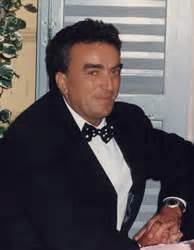
I notice that the woman is looking at me inquisitively, probably wondering what the reason for my presence here is. In fact, I realised that I was dressed elegantly, as if I was going to a party. Black bow tie, white silk shirt – over the shirt, a black suit and Mary’s sheepskin coat.
A man comes out of the office door. He doesn’t wear a lab coat; he’s not a surgeon. He approaches the three on the opposite side, exchanges a few words with them, and then they all leave. The younger woman says goodbye to the young married woman sitting next to me.
“Poor lady!” – the woman exclaims.
I look at her and realise she’s talking to me.
“Just think about it, her tumour has come back again.”
I’m nervous. For the first time I have contact with people who have the same disease as me. I feel like I’m losing my courage. I realise that I feel stronger when I’m alone. Fortunately, the office door opens again, and a tall, portly man appears, wearing clogs and a green surgical coat.
The woman stands up abruptly, takes the doctor’s hands and kisses them several times. Her husband also stands up and thanks him in a hoarse voice, breaking with emotion, for the successful operation of their child.
The surgeon backs out and asks me to come into the office.
“So, I’m listening to you sir.”
“So . . . I think I have . . .”
“Please let me do my work,” he interrupts harshly. – “I see you have films with you; please give them to me.”
He looks at the films in silence.
“You’re lucky.”
“Yes?”
“You understood correctly. Your tumour is small. Patients usually come to me with massive tumours, twice as big as yours.” Now he speaks calmly, politely.
“What do you think about the labyrinthine method?” – I ask.
“It’s an outdated method. I think it’s too destructive.”
“But the suboccipital method you use exposes the thought centres of the brain!”
“It’s true, but I can see them, and I look out for them. I don’t think my colleague would have the same visual control as I would if he went in through the ear.”
I leave him my personal details, address and telephone number in event of being admitted to the ward. As for me, he seems too harsh and inflexible. . . Anyway, he replied that he would call me in a month because he already had a lot of operations planned. The conversation ended at 9 p.m., when the main entrance was already closed. I remember smiling as we walked out the side door together.
PART TEN – December 14. Men’s surgical
A few days have passed.
I consulted with specialists representing two different approaches. My impression is that both of them were considered very competent. The problem was which way to choose. I looked through many books. Both surgical techniques meant the same thing. . .
I don’t know why, but one day, after waking up, I decided to choose the suboccipital, or neurosurgical, method. Unfortunately, didn’t like the manner of the surgeon I saw: he was too domineering, haughty and uncompromising. . .
So, I made an appointment with a famous Swiss neurosurgeon. It was a very cordial meeting, during which I heard that there are also good surgeons in Italy. And besides, the waiting list for his surgery was so long that he could only admit me for the procedure in a few months.
So, I asked him to recommend someone to me. He gave me a name: it was the same Italian surgeon I had consulted with. The one intolerant of questions.
Meanwhile, Tom returned from Africa. I talked to him about it, and we decided to seek advice from another neurosurgeon.
Later . . . I think so, the memories are getting blurry and faded…
It was already the beginning of December. I didn’t feel like waiting any longer.
However, I remember clearly that it was Mary who arranged everything again. . . and I received information that I would be admitted to hospital in a week. In mid-December.
The men’s surgery ward. A wide corridor with several doors opening into it. Rooms. Orderlies mopping the floors. It was overcast outside.
Artificial light inside. The ceiling is grey.
I’m standing against the wall with a large bag in my hand. I don’t put it down for fear of dirtying the just-cleaned floor. Suddenly I see a nurse approaching.
“Yes, sir?”
“I’m to be admitted to the ward . . .”.
The woman looks at me with a surprised expression. Apparently, I don’t look sick.
“Do you have the admission form with you?” “Yes”.
I hand it to her. She looks at it, folds it in half and puts it in the pocket of her blue apron.
“Please wait here.”
She disappears behind the office door. I feel down. I’m alone. More than twenty minutes pass before the nurse reappears. She gestures for me to follow her. Without a word, she accompanies me to the entrance of one of the rooms and then disappears again.
I look around the room. Three beds. The one at the back, next to the window, has just been vacated.
The man standing there is getting dressed and his wife is helping him.
I feel my stomach tighten. All patients have shaved heads! Pale, emaciated faces. Angular, severe features. When the man has finished dressing, he staggers towards the exit, his wife supported by the arm. The woman’s face bears traces of tears and sleepless nights. As they pass me, I notice with horror that a long, still fresh scar crosses the man’s skull transversely. There are large red blood stains from the stitches that have just been removed. Shuffling, the man says goodbye to everyone and disappears.
I was left alone, standing in the doorway.
Two patients lying in their beds watch me silently. I feel bad. I would like to run as far away from this cursed place as possible! I gather my courage and slowly walk towards the empty bed next to the window. I feel like it’s mine. I take the books I brought with me out of my bag. There are three of them. Two are dissertations on psychoanalysis, and the third – given to me by Tommaso – is about a patient with cardiac disorders.
The sister appeared. “Are you a new patient?”
I am struck by her self-confidence and gentle demeanour.
I answer shyly yes.
She informs me that the empty bag must be placed in a special wardrobe at the end of the corridor. She leaves me with an encouraging smile.
I definitely don’t have a happy face. I feel boundless sadness, I feel empty, without strength, without identity, terrified.
I really miss the determination I had before.
I slowly undress. I’m putting on new pyjamas. I put the clothes in a bag and take it to the designated place. When I return, my companions seem to be dozing.
I feel like crying. I slip under the covers and . . . I feel crap. I no longer have the strength to react. I’m a mess.
My courage has abandoned me, I am exhausted. I can’t think anymore. Everything seems so absurd to me. Cancer, two months of preparation. . . As though I was living a nightmare. I feel deprived of my own identity. Horizontal, pyjamas, iron bed, anonymity, pungent smell of disinfectant. . . My jaw is clenched. At the foot of the bed, on the table, there is a tray with an uneaten meal.
My throat feels tight, as if there was a knot in it that wouldn’t move up or down.
PART ELEVEN – Solidarity
In the evening, I wake up suddenly. I must have had a nightmare.
I meet my neighbour’s gaze in the next bed, and we introduce ourselves.
“What’s the matter with you?” – I ask him.
“Haemangioma.”
“I have a neuroma.”
What introductions! Companions of misfortune. He tells me his story. Bud is a slim, strongly built, tanned man. It is clear that he is accustomed to a healthy lifestyle and spends a lot of time outdoors. One day, while working, he suddenly felt his entire body become paralyzed. At first, his colleagues thought he was joking. Then, seeing that he was still numb and stiff, they took him to the hospital.
Diagnosis: haemangioma.
He had never experienced any symptoms before. He always took care of his health, never smoked, never drank alcohol. . . During the conversation, I discover that most people admitted to the hospital wait about a month for surgery. . .
I think I’m going to faint.
We decide to take a walk along the corridor. It’s the only way to feel like you’re still alive. We don’t talk, but we feel very close to each other. I don’t think I have ever experienced such a strong connection with a human being in such a short time. Destiny placed us in the same place. . . this must be like the situation for those sentenced to death.
Silence.
Our footsteps echo against the white walls – hushed, muffled. Sadness. Anxiety. Desperation. Destiny.
Participation in a pilot course, a visit to a military hospital. . . – it all led me here. Why me? There are people who live to the age of ninety without any disease. I don’t smoke, I don’t drink, I have always been healthy. . . And I also feel okay, I have no symptoms, I am vital, strong, full of life.
What is the use of work, sex, love, power, money if we have to die? Why do we care so much about this? Nobody ever really thinks that they will have to die. In the face of death, everyone is alone. That’s just it.
Bud and I confide in each other about these and other thoughts.
These are unforgettable moments of complete community. . . In times like these, no one cheats. No one else can face your destiny instead of you. You can’t escape it. You can’t make it wait. When your time comes. . . you can’t change anything. It’s just as it is.
Absolute helplessness.
All human creatures should look death in the face at least once in their lives. Only in this way would they grasp the true meaning of being human. Real life has death in the background. We turn and round the corner. . . we meet a surgeon. He smiles at us: “Albisetti, prepare yourself. You’ll be operated on in three days.”
Confusion. Stupor. The doctor has already gone. Bud pats me on the back: “What luck. It’s so exhausting waiting here, Valerio.”
I look at him. He’s really happy, even though he was admitted much earlier than I was and he doesn’t know how much longer he’ll have to wait.
We go back to the room. It’s almost dinner time.
PART TWELVE – Tomorrow is December 16
The next day after waking up I am calm. An anaesthesiologist visits me. A corpulent man with glasses. He asks me about my weight and all other data necessary to perform proper anaesthesia. The conversation takes place in a pleasant atmosphere. I return to my room feeling a little better. I’ve been feeling a bit anxious since the morning.
Tomorrow, December 16, I will be operated on.
I didn’t call anyone. I don’t think it’s necessary. Nobody can comfort me. If it’s written that I have to die, I will die. The chaplain came this morning. He heard my confession. Yes. I have sinned a little in this life. But I always paid for all the mistakes I made; I experienced them firsthand.
I always took responsibility, everywhere and in every case. I have always faced life openly, regardless of my siblings’ feelings of jealousy and envy. I have always tried to understand the reason behind many things, and I have made it my profession.
I feel human.
A sinner.
I stubbornly believe that this is the reason for everything that happened to me. It’s unbelievable that I’m saying this, but I’m ready to die. Meanwhile, there was an exhausting silence in the room. I lie down and close my eyes.
Perhaps I’m dreaming.
I ask: “Why?, why?, why? Why, God, me? Why at this point in my life? And why in my head? Why didn’t I find out about this and then die straightaway? And why is the tumour so benign and not malignant?”
I could keep asking forever.
I think that one of the basic functions of a human being is to interpret events that happen. If I come out of this story alive, I will make sense of what has happened to me. This will not be a simple change of what has happened so far, but a real change of life. An opportunity to grow, a reference point. If I come out of this alive, it will mean that knowing death so closely has its meaning. It will be my job to find it, and if I survive, I will look for it.
It’s night. I slept so long that I’d missed dinner. There is silence all around. My roommates are sleeping. In the air in front of me I see dozens of pale faces, perforated skin, bloody, trepanned skulls, and smell the stench of urine. . . Suddenly, a dirty, slovenly man with an unkempt beard appears in the doorway. He comes to me. He calls me by name. I feel exposed, hurt, handled. In this silence composed of pain and preparations for death, the sound of the voice becomes a vulgar, obscene intrusive. It’s a barber.
He leads me to the bathroom. He tells me to sit on a chair. He covers my back with a sheet, takes a pair of scissors, and dry cuts my long, soft hair. I feel like an animal going to slaughter. The brain no longer responds.
He moves from scissors to the clipper. Within minutes my head is completely shaved. He spreads shaving foam on me and removes the last of the hairs with a razor.
I feel very cold. I am unable to look in the mirror that the barber places in front of me. I don’t have a brain anymore. I no longer have an identity. I was castrated. Violated.
“Now I will disinfect and wrap your head in a bandage.”
These are the only words that come out of his mouth.
He doesn’t wish me good night.
It all happened in the bathroom, in the stench of urine that I will never forget for the rest of my life. I go back to the room. I lie down on the metal bed and . . . I cry quietly.
My bed is close to the window. Bud is fast asleep. Only pale bluish light enters the room. I feel a hushed, dark, distant world around me. The bandages press against my temples. I feel crushed, pressed into the pillow. With difficulty I turn my head to the right, towards the window. I’m attracted by the flashes of streetlamps that penetrate through the blinds that are not fully lowered.
The darkness of this night is different, a different colour than usual. Maybe the streetlights are brighter; I look more closely and . . . I see two or three large white flakes: it’s snowing!
It’s snowing.
Suddenly my mood improves, although I don’t know why. I’m trying to understand. Snow. Yes, it’s because of it. I see it as a sign of destiny, a positive sign.
Purification. Blessing.
I will never forget the night of December 15-16. I thank God in my thoughts. Just like that, for no reason. It still has an amazing impression on me today. It was a few hours before my skull was to be trepanned, and I didn’t feel any fear. I felt like my fight was over. I couldn’t run away anymore, even if I wanted to. I couldn’t make any excuse. In the previous days, I suppressed my emotions, telling myself that I would react at the right moment. . . Now the moment has come, and, in a few hours, they will open my head.
What if I never wake up?
I felt no fear or anxiety. I think that in such moments God calms you down and soothes you.
Let Your will be done.
But now I need to relax. I need to go under the knife without stress. I felt that two opposing voices have finally been silenced within me: the first – the emotional one, which screamed about the thankless destiny of people; and the second – rational, which thwarted every angry outburst of the first. I wasn’t happy that I could be going to die, but I knew full well that there was nothing I could do to stop it.
It seemed to me that I had never lived.
I tried to remember someone. Nothing. Zero. Just me and death. NO. No, I’m not afraid.
We all must die, including those who outlive me. Only now do I see the true meaning of life, the madness of people who don’t know what they are doing. It doesn’t matter whether you live for thirty or seventy years, what matters is how you lived your life.
I was terribly alone in this earthly life. I don’t have a child or a wife. Could they have helped with anything? I saw many caring wives of other death row inmates close to me and I wondered if and how they helped them. If someone is going to die, he dies. This is why I am not begging You, God. I can only say: Thy will be done.
I wanted to do so many different things. . . Apparently You decided otherwise.
What if I survive tomorrow? NO. No, I do not want to think about it.
It’s impossible. What purpose would this serve?
It’s still snowing.
Soon it’ll be Christmas.
Christmas.
Why don’t I miss the holidays from my childhood?
Many books say that when you are close to death, you think about things from the past, from your childhood. This is not the case with me. I feel calm. How many thoughts! I don’t feel anxious, my breathing is regular, my muscles are relaxed. I need to sleep . . ., but the mind doesn’t want to stop thinking. It maintains a constant, exhausting, suffocating activity.
Now the snow was stopping for good.
In any case, I’m satisfied because I faced cancer myself. I did everything I could, let God think about the rest. It’s austere, cold, and there’s artificial light. . . it reminds me of summer camps, long dormitories. . . When will the dawn finally come! If I have to go under the knife, I want it to happen now, right now.
Let’s finish it.
I think I’m sleeping. . . maybe I’m sleeping. Am I dreaming? I need to relax. I’m doing autogenic training again. I visualize the big toe of my right foot and slowly relax it, I am calm, peaceful, I visualize the remaining toes of my right foot and slowly relax them, I feel calm, tranquil, relaxed. . .
PART THIRTEEN – It’s dawn
Morning is coming.
It’s time.
I’m afraid. I feel scared. My stomach tightens; my breathing becomes short and quick. I wish I could relax like I did before. But my mind no longer responds, it’s out of control. It’s unbelievable what you experience when you climb the scaffold! Your mind and body no longer belong to you. They enter another, unknown dimension. They return to the animal level. Wild. Primitive. The mind disconnects and everything becomes subordinated to instinct.
I hear footsteps. They’re getting closer.
“Are you asleep?” – someone whispers.
He’s a priest. He speaks Latin and gives me the last rites. I receive communion. He leaves as silently and quickly as he appeared. My legs are shaking with fear.
“Are you ready?” – a metallic, stern, almost angry voice asks me. It belongs to the guy standing in the doorway. This is the nurse who will take me to the operating room. I’m stuttering. I lift the covers, get out of bed, and take off my pyjamas. . . I’m completely naked. I’m a little embarrassed, but Bud looks at me understandingly, as if to encourage me.
“Take off your watch!” – the nurse calls over.
Well, yes, a watch, but I’m an idiot. I completely forgot about it.
“Come on, quick, quick!”
I can’t think. I would like to be aware of the situation. Nothing. He throws me a white linen shirt. I put it on quickly. He tells me to lie down on the stretcher and pushes it towards the exit. I experience moments of emotion. I hold them in my throat. I feel like crying when I’m in the corridor. I lie down and start looking at the world from bottom to top. It’s six in the morning. Other patients are still sleeping.
All I can hear is the rustle of the stretcher’s rubber wheels. The neon lights on the ceiling are starting to numb me. I’m at the lift.
“I’m off tomorrow,” says one of the nurses.
“Lucky devil; I have to work all weekend,” replies the other.
The lift goes down. Opens and . . . I’m in front of the operating room. I see blurry white figures focused on their activities. We go through another short section. The strong smell of disinfectant fills my nostrils.
“He’s the first customer,” says the big nurse to the approaching white figure. The stretcher now stands still. The nurses leave.
“How are you?”
The voice that reaches me is warm, gentle and calm.
I finally relax.
“Are you a psychoanalyst?” – the bright voice says again.
I nod with a movement of my head.
A figure pushes the stretcher into a room that seems narrow and small to me. This it is not an operating theatre. I don’t dare ask where I am. . .
“Now I’m going to cut the hair here, on your forearm, so that it will be easier to insert the needle. . . I’ll also shave your chest hair if I have to. . . Do you mind if I step out for a moment?”
I nod with my head.
Now I’m alone.
I feel a strange numbness. . . How much time has passed? . . . And these arseholes are not coming back!
I’m exhausted!
“So, how’s things? Aren’t we talking?”.
Some unknown voice.
“Be quiet, Valerio. This is the enemy. Do not say anything. They torture you. Keep your mouth shut. Don’t answer. Don’t fall into the trap!”
Silence.
All right. He went away. Will the surgeon finally come or not?
“And? How are we feeling?” – I hear the same voice again as before.
This guy is a pain! Now I’ll change my tactics. I’ll confuse him. I am a lover of the military art. I will answer him.
“When will you operate on me?”
“You’re already out of surgery.”
Damn it. He’s setting a trap for me, trying to convince me that he’s already operated on me.
Silence. I have to back off, at least for now.
“Away! All your mental faculties have returned: they are back, sir! All right.”
Stay calm. We shouldn’t waste our strength. It’ll be needed. Watch out! The enemy is using psychological weapons, stop! Noise. Noise from the left side. Keep quiet!
“Are you awake?”
Don’t answer! Silence! Don’t respond to provocations!
“Can you hear me? You’ve woken up?”.
Don’t answer! Great!
Don’t worry, you can’t hear anyone anymore, he’s gone.
Chief, we have located the pain in the neck!
Don’t answer! It’s a trap of the imagination, chastise the imagination! Let it join the ranks! I don’t tolerate acts of disobedience! Now we all have to stick together. Only in this way will we defeat the enemy. Noise from the right! Watch out!
Danger on the right! The enemy changes direction.
“Hello. How do you feel?”
It is a feminine, friendly and warm voice.
What bastards! Now they’re using women to trap us! But they won’t do it!
“How is it going? Are you awake?”
Enough! They’re too cunning. I underestimated them. We return to our positions again. Enough! Batten down the hatches. Turn off the sound too. Bring the submarine down until it hits the sandy bottom. Dive! Dive! Don’t worry. Everything’s all right? No, sir. We still have no control over our emotions; we feel the same pain in the right side of the neck.
Okay! I’ll go myself and talk to them. So now, emotions, what about you lot? We feel great pain. Don’t be hysterical! It’s impossible. We haven’t been operated on yet! Anyway, when we get back to the surface, I’ll drop you off! Clear? Yes sir.
“Are you awake?”
“When will I finally find out if I’ll be operated on or not?!”
“But you’ve already had surgery! Please touch your head, you will feel that it is bandaged.”
This one is even worse than the others, chaps. She wants us to believe it’s post-surgery, because of a bandage. She doesn’t know that the barber put it on last night! What a load of crap!
“Your friend Tommaso is outside.”
Christ. How does she know about Tom?
So, was I really was operated on? Let’s try to see. Open your right eye slowly. What do you see? Everything dark. We hear the sound of a respirator. You can see the drip on the left. . . Now a white figure is approaching.
“Are you awake?”
I nod yes.
“If you turn to your right side, you will be able to see your friend.”
I try to look, but I can’t see. I don’t have my glasses. Besides, I don’t want to see anyone. It still seems impossible to me that I have already been operated on. Impossible. So, the neck pain is real?! Apparently, it’s a wound. I’m trying to analyse the pain. It’s dull, deep, and continuous. Now it’s growing. The weight of my head resting on pillow presses on the still fresh incision. I endure, but the pain is intense. It’s passing. It’s coming back. I have to get used to it. They trepanned my skull.
NO. This is impossible! I try to move my right arm, but I can’t. I can’t even move my head. Where am I? There’s no one around. I see a faint bluish light overhead. I try to call someone, but my mouth doesn’t move. My lips! They’re paralysed! They feel totally twisted! The right side of the face is pulled upwards! The skin is tight. My face is completely deformed. The right eye won’t close; it stays open and motionless. They’ve cut my facial nerve!
I’ve become one-eyed.
Forever.
PART FOURTEEN – A new day
The light of a new day enters the intensive care ward through the window.
It’s been a few days since I woke up after surgery. The night shift nurse comes to greet me; I answer her with a guttural sound. I can’t utter the syllables; I muster what little strength I have at my disposal to force the air out of my mouth. . . but nothing happened. Only shapeless sounds come out of them. However, in some mysterious way I feel great power within me.
I will help my body recover from this in the best way possible.
Now the daylight enters the room more fully, and with it comes the nurse from the new shift. She is slim, her face still has a youthful look. She and her friend turn me on my side, which is difficult for them – I weigh eighty kilograms – to wash me. I am completely naked, helpless in their hands, with a drip in my left arm and a tube in my penis.
Even though I know this is routine for them, I feel ashamed of my helpless nakedness.
I feel like nothing but a pile of meat, shit and blood. If everyone tried, at least once in their life, as is the case in similar situations. . .
“You’re going back to the ward today,” they tell me.
To take out the catheter out they turn me onto my back. I feel a shooting pain.
Two well-built men enter. I recognise them. They were the same ones who took me to the operating room. They’re taking me to the ward. They leave me in a new, unknown room. I’d love to go back to the one where Bud is lying. I see him. He came to visit me. I feel something growing inside me, great pleasure, a high.
Now he stands in front of me. I notice his affectionate look. . . but also his pain.
Because of my terrible face.
PART FIFTEEN – Towards life
Through the curtains of the window light colours them. It’s daytime. Nurses busy with their work move proficiently in the corridor.
There is silence all around.
I give in to the drowsiness that overwhelms me. I stop thinking. I want to save my strength for recovery. I close my eyes and surrender to the numbness that overwhelms me again. I can still feel the drip flowing into my veins and coming out through the new catheter. I don’t know how much time has passed.
I wake up with a start. Bud sits next to me; he smiles at me and strokes my hand. He gives me a sign with his head that everything is fine. . . He gives me courage, tells me not to be afraid, that the worst is over. I can barely see the sun through the windowpanes. Pale rays, but enough to make me feel some life inside me.
Three days have passed since I returned to the ward.
Tommaso visits me every day.
Bud is always there.
I’m still lying down. I have not got out of bed even once. Once a day, the nurses turn me on my side to wash my back. I decided to stay calm, and I can already see the benefits: the fever has gone down, my fluids are normalizing, as are my blood cells and platelets. The drip was disconnected this morning. Unfortunately, I still have a catheter connected.
The ward sister advised me to wait a few more days. For a few minutes I think about getting it out now.
This is the moment when there is no one around. . .
I grip the catheter tube in my hand and gently pull it out. . ., it came out without a problem, but along with it there are also warm streams of urine that flood the mattress. I remember sister’s words: ‘The catheter makes you lose the habit of micturition; you have to be careful to take it out at the right time. . . “.
Bud comes in.
He takes a quick look and understands the situation. He smiles at me like an accomplice. I show him how to raise the bed with the crank. I want to get down. Now I’m in the perfect position to move my legs. . . I motion for Bud to lock the bed’s wheels. I slowly move my left foot towards the outside edge. Done. Now I’m moving the right one. Done. My left leg hangs in the air, followed by my right leg, and I automatically position my pelvis, also facing the outer edge of the bed. I signal Bud to come closer. I grab his right forearm with my left hand and lean on the edge of the bed with my right. I stop for a moment. I breathe deeply. I gather all my strength and . . . next.
I’m on my feet.
I’m shaking, swaying, and Bud helps me lean against the wall…, I gesture to him to move away; I want to try it myself. Bud steps away and . . . I stand alone!
Fantastic!
I remain upright, again I like a free man! I think I have conquered death, at least for now. Now I want to go to the bathroom. Bud watches me, pleased, proud of me. What an extraordinary man! I didn’t even know him a week ago! I’m in the corridor. I grab the rail attached to the wall and slowly move towards the bathroom. Bud walks along with me in case I need help.
I control my breathing.
I am exhausted, weak.
The muscles of the arms and legs respond with effort. I shuffle to the bathroom door. I open it. A wave reeking of urine hits me. Without paying attention to it, I carefully monitor my body’s reactions.
Bud is waiting outside.
I notice a urinal inside. I’m getting closer to it. I press myself against the wall for a few seconds to breathe deeply and slowly. I stay leaning against the wall with one hand and lower my pyjama trousers with the other.
I concentrate on peeing. Nothing. Even though I’ve been feeling like I want to pee for a few hours now. I look at my wounded, catheter-humiliated penis. I have to succeed, or they’ll put that damn tube back in.
Prrrr. Nothing. I’m trying again. Nothing. I’m not going to do it. Suddenly I have an idea. I remember that when I was little and I was about to pee, someone whispered to me: pee. . ., shiii . . ., shiii . . .
I concentrate and hiss: shhh. . ., shiii . . ., shiii . . . I notice that urine has entered the urethra. Finally, it surfaces. I feel a terrible burning sensation. I try to alleviate it, reduce it with my mind. I need to stay relaxed; I want to pee all the way.
PART SIXTEEN – Success requires courage
Today it is raining.
My body is still limp, but I feel a lot of energy inside.
It’s lunch time. Bud is there to feed me. The mouth is constantly paralysed, the lips are stiff and twisted, preventing solid food from entering. . . I murmur something to my great friend. I want to eat alone. He understands immediately and lets me do it. I take a spoon, bring it to the left, partially paralysed corner of my mouth and pour the broth down my throat.
I do it slowly and persistently until I eat the entire portion. After a short break, repeating the entire ritual, I eat the minced meat.
It all takes nearly two hours. At the end, Bud looks at me with respect mixed with disbelief. It took me two hours to swallow a bowl of broth and some minced meat, but I did it.
I still have a lot of determination.
I started walking down the hall; as always, I am accompanied by my faithful Bud, who is increasingly upset that he has not yet been operated on. I would like to do something for him, but I don’t know what or how. I’m on my feet now. But out of caution, I stay close to the railing. I use my strength with great moderation.
My father visited me today. The only person in my family close to my heart. He greeted me in a brusque manner. It’s his defence mechanism. I know that – I love him very much.
He asked me to stay in bed; he was very moved. He saw my paralysed face. . . and he cried quietly.
I swung my legs off the bed and embraced him. I hugged him very tightly.
We cried together.
I was discharged from the hospital on December 23. I entered the ward on December 14. I spent nine whole days in the hospital.
I remember that on December 23, the eve of Christmas Eve, as I was getting dressed in the hospital, getting ready to leave, a note fell out of my trouser pocket that I had written when I was diagnosed with cancer:
“A thorough study of my case at a theoretical level allows the mind to rationalise the situation. I no longer think about cancer in emotional terms. I started fighting, mobilizing all my strength to defeat it. One day we will see who the winner will be, now we have to fight. I sleep to rest, to be fit during the day and to fight without hesitation.
“I think it’s the job of a human being to interpret the facts that are happening.
“If I come out of this alive, I will make sense of what is happening to me. This will mean that looking at death so closely has its own significance, it is a point of reference, an opportunity to expand one’s humanity, one’s existence as a human.
“I will help my body in every way possible to come out of this in the best condition possible.
“How little it takes to destroy a man. . . Just a moment. Your eyes are darkening; your strength is leaving you. You are rebelling. Nothing.
“Anyway, I’m calm. I avoid unnecessary efforts. I am careful not to waste my strength.
I still have time to take on all the adversities of life.”
PART SEVENTEEN – “Later”
Then it was terrible.
Physically weakened, I moved constantly with great effort. In addition, facial paralysis and a great desire to cry. I didn’t have proper care at home. . .
My father was the only one who tried to be close to me, even though he spent most of his time in the fields, because he wanted to escape from difficult family relationships.
After a few days, in consultation with my father, I left my family home and took refuge in my apartment-office, where I immediately started seeing patients, assisted by the nurse Tom sent me.
The patients of that time were very important to me.
Before them was a man with a shaven skull, wounded, one-eyed, with a twisted mouth that could utter a few short words. . .
So, I asked if they felt up to continuing therapy with me. Everyone came back, and the number of new ones was growing day by day.
They were my real family.
I realised this when, several years ago, after the tragic death of my father, I stopped seeing patients and went to Latin America to teach at a university. There, in the vast expanse of the Andean horizons, I understood.
To patients of that time: thank you!
I showed myself to them completely uncovered, with all my weakness. . ., with all my wounded corporeality: and I encouraged them to talk about it, to freely process what they saw in me.
Imagine: you enter the office, carrying your problems, and you see that on the other side of the desk sits a man with a closed eye, a twisted mouth, half of his face paralyzed, a completely shaved skull, cut by a long reddish scar . . .
Together we entered the dimensions of pain, suffering, shame, sense of inferiority, lack of social acceptance, loss of power and success. . . In this way we have learned to touch the depths of our personal unhappiness.
Without my patients, I probably would have finally broken down. I would have let myself die; I may have already done that to some extent. But these people asked me – a butchered, mortally wounded person who had just emerged from hell – to help them give meaning to their lives!
PART EIGHTEEN – New life
This is a faithful record of the moments I experienced twenty years ago.
Now, after so long, can I ask myself again: why cancer? This question accompanied me every day for many years. I tried to give different answers, but none of them ever seemed completely convincing or correct.
It even came to the point that I considered the most adequate explanation to be related to the trauma resulting from some anonymous, slanderous malice that I had experienced three years earlier, probably from one of my family members.
I would laugh about it now, but I remember being really shocked at the time. Maybe because I was young. . . Maybe because my personality still had to evolve and grow. . . Maybe because that’s how it was supposed to be.
Nevertheless, as I write again today the account of those terrible moments, I see clearly – and I have tried to convey this to the reader here and there – the sick, laboriously developed dimension of that Valerio; his extreme loneliness, his great need for affection never satisfied, the hostile, evil, ruthless environment in which he had to grow up. . ., his terrible desire for self-destruction.
And the madness of omnipotence.
So terrifying that he believed he had cancer, which he probably didn’t have. At least one that didn’t need surgery right away. Today, tumours like mine are destroyed with an external laser in a non-invasive way.
During the twelve days of Christmas twenty years ago, this Valerio was born into a new life; he definitely left his family and gained another, much bigger one – the family of the world. He suffered bodily harm but was enriched spiritually.
After a few months, he felt an overwhelming need for constant contact with nature: the countryside where he came from. With all his savings, he bought a farm in the Tuscan countryside, where he lived and farmed. Above all, he started writing.
He stopped being a psychoanalyst and became a writer.
He wanted to start with a story about cancer. He wrote an account of the hard days of fighting (which constitutes most of this book), which was published and translated into several languages, gaining favour from critics and readers. Since then, he has not stopped writing and talking about human issues and concerns. Thanks to the love of his readers, who became his new, real, target family.
Postscript
You won’t believe it, but I often think with longing about that great inner strength that sustained me during my days of illness. Since then, I have rarely felt it.
Perhaps because the psychological discomfort of everyday life is less pronounced, but continuous, constant, elusive, and constantly present. One can reach a level of suffering beyond which one is unable to live in any other way than in a self-destructive way. Only contact with God, prayer and psychological analysis allow us to understand that this is nothing more than an infantile expression of helplessness.
In such moments, when you are rejected, sent away from your family home because you are considered too intelligent, too brilliant, too different from others . . . in moments like these, when you are one step away from death, with a torn skull and a deformed face, you understand like never before that the real reason why you came into this world is for you to stand out from others, leave the known for the unknown, find your true self, complete the mission for which you are here, using the talents and qualities with which you have been endowed.
However, this level of maturity is acquired with difficulty by constantly shaping relationships with oneself and with others, even though they are enigmatic, mysterious, and often misunderstood.
These are dimensions that are difficult for young people to achieve because they are driven by the desire to compete, the need to disagree and control others, to gain power, wealth and sexual experiences.
Then there are traumas, rejections, failures, envy, jealousy and disappointment. . . provoking reflection, changing the order of meanings and creating new opportunities, new challenges, new goals to achieve.
There is no need to dwell on earthly matters.
Only in action, in relationships with others, and by caring for our spiritual dimension, will we be able to accept constant transformations until we come to know our own nature. We should not forget that a mentally and spiritually healthy person is constantly changing, striving for higher levels of consciousness.
Too often our behaviour is different from who we are. But accepting death leads us to become naked, real, alone in the reality of what we really are.