
The 18th-century German poet Friedrich Hölderlin wrote that “the attempt to create paradise on earth always ends in hell.” The 20th century and the criminal ideologies prevalent at that time – communism and national socialism – provided all too much evidence of the truth of this statement. The tens of millions of victims of the regimes created by these ideologies are a reminder that cannot be ignored.
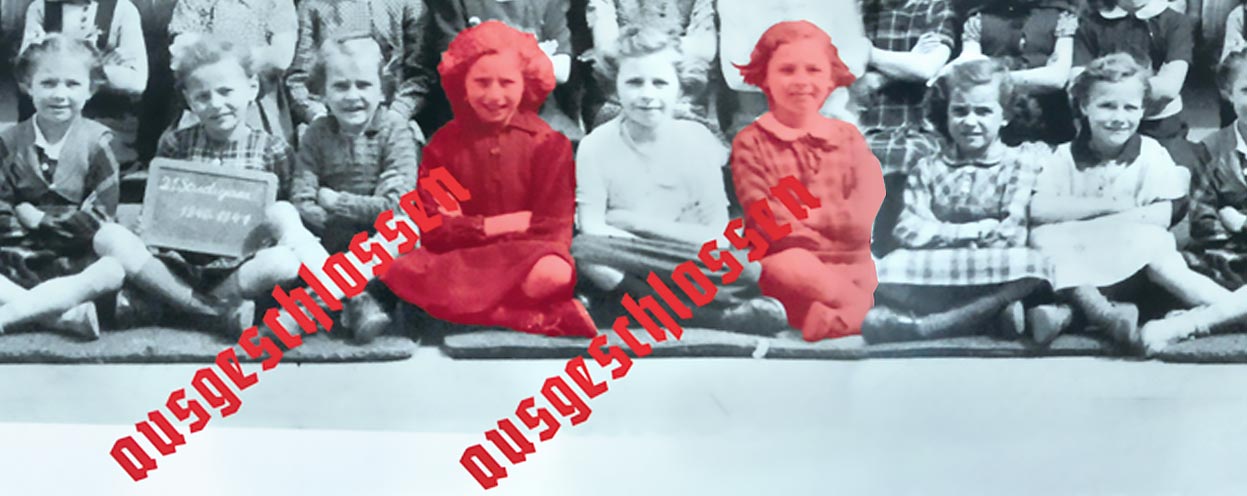
The idolatrous cult of progress and science
It should be noted that every criminal ideology – whether in the twentieth century or earlier (e.g., during the French Revolution) – referred to the categories of progress and science.
Communism was “scientific socialism”. Hitler’s National Socialism also referred to science, using the “science of races” for its criminal purposes.
The latter arose from a certain intellectual climate (not just characteristic of Germany), which was determined by the growing fascination with biological sciences.
Biology and progress in this field of knowledge took on, in the eyes of some scientists and politicians, at the beginning of the 20th century, a key role which made it possible to learn the secrets of the natural environment surrounding us. But it also – and perhaps above all – it was seen as a universal remedy for all civilization and social problems.
Undoubtedly, the impetus for this was provided in the mid-19th century by Charles Darwin and his theory of human evolution. In a short time, Darwinism – even without the author’s intention – began to be associated with terms such as “struggle for existence” and “survival of the fittest”.
These biological categories began to be applied to social conditions at the end of the 19th century. This is how social Darwinism was created, and one of its manifestations was eugenics – the dream of breeding a new, better human being.
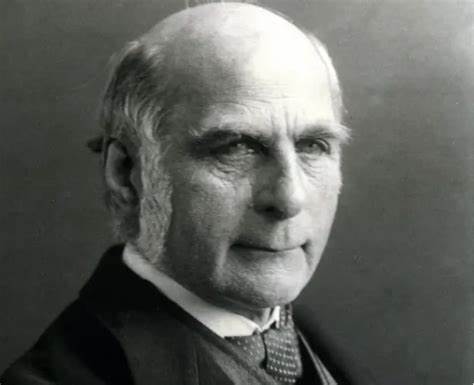
As Francis Galton, a British scientist (a distant relative of Darwin) and the creator of this terminology, said: “if humanity reproduces spontaneously, evolution will begin to regress.”
This “regression”, according to Galton and all his disciples and followers, both in Europe and America, meant that those who should be the least in number, i.e., “people of low value”, would gain the numerical advantage. By this last term, Galton understood primarily people from the so-called lower social classes suffering from various incurable diseases, such as epilepsy or alcoholism.
Very quickly, however, racism entered eugenics, and its synonym became “racial hygiene”.
The primary enemy: human fertility
Eugenicists did not limit themselves to diagnosing the danger they considered that was the aforementioned “regression of evolution”. They claimed to have found a way to avoid it. This was made possible by intervening in the process of human procreation so that those whom eugenicists labelled “low value” would no longer reproduce.
Of course, all this was dressed in phraseology in which the words “progress”, “science” and “civilization” were modified in all cases. The poster of the 1921 eugenics congress held in the United States had a significant slogan: “Eugenics is self-directed evolution.”
The most important enemy of all – past and present (although they deny this name) – eugenicists is human fertility. However, the basic tool in the process of “self-directed evolution” turned out to be the mass sterilisation of people classified as “having low-value genetic material”.
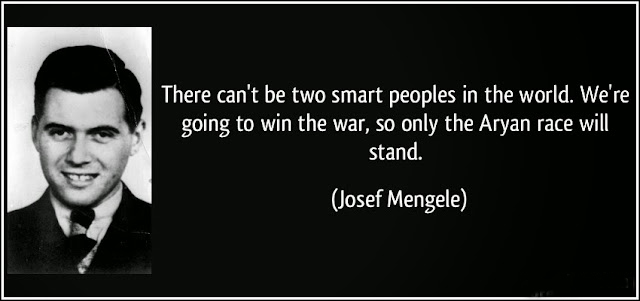
One of Hitler’s first decisions after coming to power was to issue a decree on May 26, 1933, on the forced sterilization of deaf people and all those who were described as “simple”.
Under this inhumane law, approximately 300,000 people were forcibly sterilised in Germany between 1934 and 1939. During the war, the Nazi regime went a step further and simply mass murdered such people.
The German law on forced sterilization was by no means the first or last legal directive of this type. It can be said that the Nazi regime was imitating . . . the Americans in this respect.
By 1933, as many as 38 American states had passed laws allowing forced sterilization for eugenic reasons. In 1927, the case came before the US Supreme Court, which found the laws on forced sterilization of “low-value” people to be constitutional. The justification for this judgment stated:
“We have often seen that the common good may require the best citizens to sacrifice their lives. It would be strange if less sacrifice could not be demanded from those who are already weakening the power of the state. (…) The rule under which compulsory vaccination is allowed is broad enough to also cover the cutting of the fallopian tubes.”
Let us note that for those who signed this ruling, people who “weakened the power of the state” were people who were sick or came from families with serious illnesses (e.g., tuberculosis, epilepsy or schizophrenia). Mere vaccinations were equated with the forced deprivation of people of the gift of fertility; a gift whose Giver is not the state, not even a democratic state.
Before World War II, the epidemic of sterilization laws, which were supposed to support the breeding of a “new, fully valuable human”, also spread to Europe. The leaders in this respect were the Scandinavian countries, considered to this day to be models of law-abiding democracies and the so-called welfare state.
Between 1928 and 1938, sterilization laws were passed in Denmark, Sweden, Finland and Norway. In some cases, it turned out that Scandinavian sterilisation legislation was more restrictive than the above-mentioned Nazi law.
For example, the Swedish Sterilization Act amended in 1941, compared to the German one, significantly expanded the scope of people who were to be subject to compulsory sterilisation.
In Sweden, this affected people leading an “anti-social lifestyle” or people whom officials found were “manifestly unsuitable to care for children in the future.” These terms were so vague that virtually no Swedish citizen could feel safe.
World War II and the genocidal crimes committed by Nazi Germany in the name of “racial consciousness” began the retreat from cruel eugenic legislation. First in the United States, then in Europe. However, it was not a quick process.
It was only in the mid-1960s that the last American states abolished their sterilisation laws. In 1974, Sweden abandoned the forced sterilisation of its citizens. It is estimated that between 1928 and 1974, 350,000 Germans, over 60,000 Swedes, 40,000 Norwegians, 58,000 Finns and 6,000 Danes were sterilized.
People as weeds to be pulled out (via abortion)
As already said, sterilization was perceived by eugenicists as the best means of implementing “scientific” prescriptions leading to breeding a better human being. But it was not the only instrument.

Eugenicists attributed such a “noble” – because it was “scientific” – goal to abortion. It is no coincidence that many representatives of the eugenics movement were also pioneers of the “family planning” movement, understood as the promotion of abortion and contraception.
In this context, it is worth mentioning the figure of Margaret Sanger – a leading American feminist and organizer of the “birth control” movement in America after World War I.
In one of her books (Woman and the New Race), Sanger wrote: “Many will perhaps think that it is not worth dwelling any longer on demonstrating the immorality of large families, since there is more than enough evidence, it can be used to set before those who still find it difficult to adapt old-fashioned concepts to reality. The best that such a family can do for a new infant is to kill it out of mercy.”
In an article published in 1925, Sanger directly equated people with weeds. She wrote: “America (…) is like a garden in which the gardener pays no attention to the weeds. Weeds are criminals, weeds multiply quickly and are extremely resistant. They need to be eliminated. Prevent further reproduction of criminals and weaklings.
We maintain large insane asylums and other such facilities throughout the country where defective individuals and criminals are bred instead of exterminated. Nature eliminates weeds, but we allow them to parasitise and reproduce.”
Margaret Sanger can be called a femi-nazi without exaggeration. From understanding people as weeds, it is only a step to the category of “sub-humans” who must be subjected to the “Final Solution” procedure in the gas chambers.
In 1997, the Swedish press published the story of Barbro Lysen, who in 1946, when she was twenty years old, was forced to sign a consent to sterilisation. The reason? One of the doctors, without conducting detailed specialist tests, concluded that she suffered from epilepsy.
However, the case was complicated because the twenty-year-old was six months pregnant. However, the eugenics law in force in Sweden did not provide for mercy either for the mother or the unborn child. . . In 1997, Mrs. Lysen recalled events from 50 years ago: “I wanted to have a child, even a sick one. I slumped in the corner and started crying. I told the doctors: ‘I don’t want surgery. Let me keep the child.’ They replied: ‘Impossible.’ You signed the papers, surgery tomorrow. They were completely insensitive. That was awful”.
Human breeding: the left says yes, Catholics say no
Researchers dealing with the history of eugenics have noticed that its great propagators in the 20th century were in circles that defined themselves as progressive and left-wing. For example, Scandinavian sterilisation laws were introduced by social democratic governments, and politicians from descended from this stream of the political scene were loud apologists for breeding “fully valuable people”. Let’s quote only one of them here, Arthur Engberg – the social democratic minister of education in Sweden in the 1930s.
In 1921, he’d already written in the party press: “Our happiness is that we have a race that is not yet destroyed, a race that is a bearer of great and extremely noble features (…). However, it is strange that although we care deeply about the pedigrees of our dogs and horses, we do not care at all about ensuring the preservation of our Swedish human resources”.
Before Hitler implemented the German sterilisation law, its basic assumptions were developed in the Weimar Republic (democratic Germany), and the first violins in this work were also played by representatives of those broadly understood to be in leftist circles.
Similarly in pre-war Poland. On the Vistula River, it was primarily the representatives of moral liberalism and the “reform of customs” in a libertine direction (e.g., Tadeusz Boy-Żeleński) who opted for eugenic solutions.
However, it failed in Poland, as in other countries where the influence of Catholic religion and culture was strong. This is another truth that has not escaped the attention of historians studying this issue.
Very characteristic in this respect is the position taken by Mussolini’s Italy, which rejected the principles of eugenics understood as pushing sterilisation and other forms of the so-called birth control.
Fascist Italy, as we know, agreed with the Third Reich on many issues, but not on this issue. In 1934, commenting on the German sterilisation law, the Italian daily “L’Italiano” wrote: “You cannot imagine the brutality that prevailed among German doctors (…) when they were convinced that they were acting in the name of the fatherland and science (…), you can even guess what they are willing to do to protect the race, what madness can be found in their books.”
Legal sterilisation or any such manifestation of “racial consciousness” also had no chance of taking place in Spain ruled by General Franco.
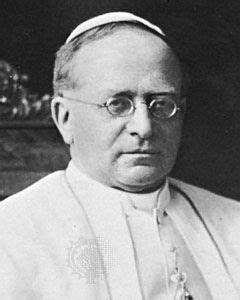
The Church reacted very quickly to inhumane eugenic practices. Pope Pius XI in the encyclical Casti connubii from 1930, devoted to the Catholic vision of family, marriage and the sexual sphere, wrote: “The family is more important than the state. (…) people are born not so much for earth and eternity, but for heaven and eternity. (…) The state has no direct authority over the body of its subordinates. If there is no guilt and therefore no reason for corporal punishment, it may not violate the entire body or mutilate it, either for reasons of eugenics or for any other reasons”.
The voice of the Church’s Magisterium was supported by outstanding Catholic writers and publicists. In this context, it is impossible not to mention G.K. Chesterton – an outstanding English Catholic writer who for years fought against various forms of idolatry of the “progressive” intelligentsia, including the idolatry of the so-called the scientific procedure of breeding a better human being.
In his characteristic style, not devoid of sharp irony, he drew attention to the pseudoscientific jargon used by eugenicists. Their vocabulary, as Chesterton noted, has no place for words such as “family” or “marriage.” Instead, there are “intersexual relationships” – “as if man and woman were pieces of wood placed at an angle to each other, like furniture in a room.”
Eugenics, as this Catholic writer wrote in 1921, is an invitation to the “tyranny of experts”: “This is what true eugenicists essentially mean. That humanity would be given to them, not as pagans to be converted, but as material for experiments. This is the cruel, barbaric idea behind eugenics legislation.
Eugenicists (…) don’t know what they want, except that they want your body and my body and soul – so they can figure it out for themselves. This is (…) the first experimental religion, not a doctrinal one.”
Chesterton summarized the essence of his criticism of the programme and the actions of the animators of the eugenics movement in two very apt sentences: “[Eugenicists] claim that they have discovered a law that stands above love. “Just reflect on this fact and the entire eugenic structure will collapse.”
And what is it like in our times? There are no sterilisation laws (yet), but the way of thinking behind the old eugenics has not gone away.
The logic of eugenic thinking also lies behind the so-called in vitro treatments. On what basis are people selected (called embryos) – those fit and unfit to live in the mother’s body? This is an example of law that stands above love.
24/02/2024